
Beyond Pink Glitter: Why a New “Teen Zone” Signals a Shift in STEM Outreach
For years, initiatives aimed at encouraging girls in science, technology, engineering, and mathematics (STEM) have often focused on early childhood, deploying brightly colored toys and simplified experiments. While valuable, this approach risks treating a systemic problem as a matter of simply “fixing” girls’ perceived lack of interest. A more nuanced strategy is emerging, one that acknowledges the complex social and developmental factors influencing career choices during adolescence. This shift is particularly evident in the expansion of CBS Colorado’s annual “Girls & Science” month, which this year introduces a dedicated “Teen Zone” at the Denver Museum of Nature & Science on March 6th, 2026. This isn’t just about adding more activities; it’s a recognition that sustained engagement requires evolving programming that meets girls where they are – navigating the pressures and interests of their teenage years.
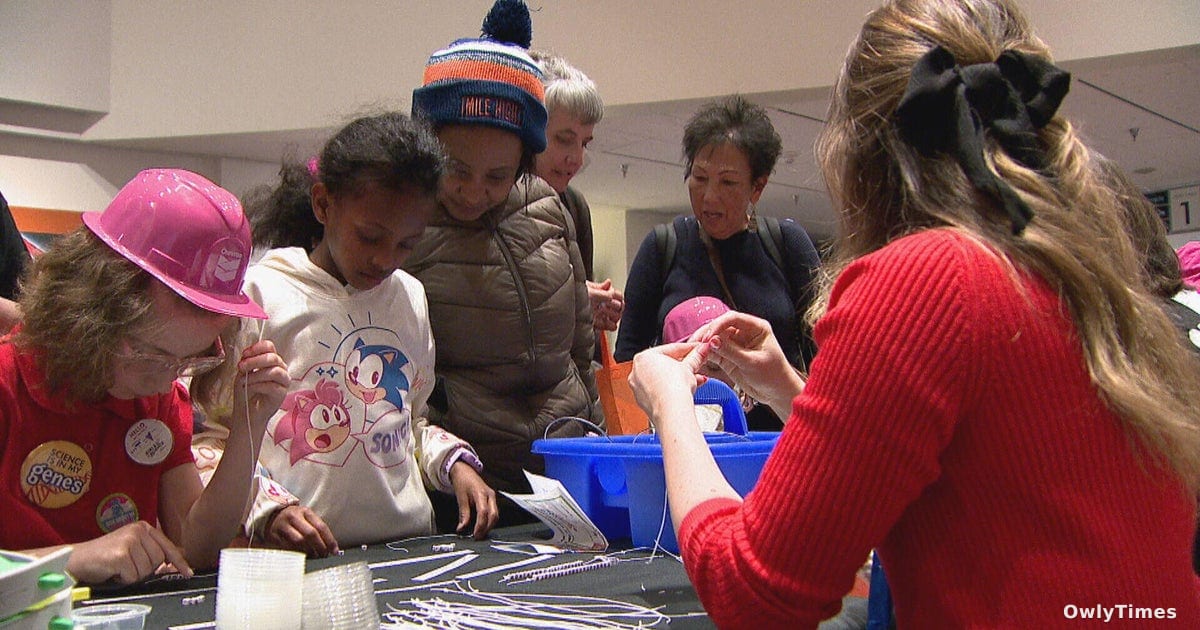
The 12th annual “Girls & Science” event, a partnership between CBS Colorado, Ping Identity, Girls Inc of Metro Denver, DaVita, Xcel Energy, and Denver Health, traditionally offers hands-on STEM activities for a broad age range. Thousands of girls and families attend the free event at the museum, exploring the diverse career paths within STEM fields and celebrating the contributions of women in these areas. However, Amariah Jean-Baptiste, Teen Programs Manager with Girls, Inc, explained the impetus for the new Teen Zone: “The Teen Zone is really important this year because we wanted a way for every age group to connect with topics in STEM. The Teen Zone helps sort of spark that early curiosity so we can keep that momentum going.” This isn’t about assuming younger girls lack curiosity, but rather acknowledging that maintaining it through the turbulent teenage years requires targeted interventions. The data supports this approach; national statistics consistently show a decline in girls’ expressed interest in STEM fields between middle and high school, often coinciding with increased social pressures and the solidification of gender stereotypes.
Original reporting: CBS News.
The programming within the Teen Zone reflects this understanding. Allison Barrett, Director of Public Relations and Government Affairs with Swire Coca-Cola, highlighted their contribution: repurposing Coca-Cola syrup barrels into rain barrels for home gardens. This isn’t a simplistic “build a volcano” experiment. It’s a demonstration of sustainability principles, engineering design, and potential career paths within a major corporation – a tangible link between STEM and real-world impact. Swire Coca-Cola is also offering sustainably-made prizes, including t-shirts and hats crafted from recycled materials, further reinforcing the connection between STEM and environmental responsibility. The inclusion of a “sustainability focused trivia wheel” with prizes isn’t merely gamification; it’s a deliberate attempt to tap into a growing area of interest for many teenagers, framing STEM as a solution to pressing global challenges.
Perhaps most telling is the “Science of Self-Care” activity offered by Girls, Inc of Metro Denver. Girls will create lip scrubs while learning about the underlying chemistry. This activity cleverly addresses a common teenage interest – personal care – and uses it as a gateway to explore scientific principles. Jean-Baptiste notes, “the girls are going to be able to make a really fun lip scrub all while learning the chemistry and science involved in the whole process.” This approach is significant because it moves beyond the expectation that STEM must be presented as purely academic or abstract. It acknowledges that girls are multifaceted individuals with diverse interests, and that STEM can be integrated into areas they already value. This is a departure from older models that often presented STEM as something “other” than their everyday lives.
However, it’s crucial to acknowledge the limitations of even this thoughtfully designed initiative. A single event, even one expanded to include a Teen Zone, cannot dismantle deeply ingrained societal biases. The success of “Girls & Science” will depend on sustained mentorship opportunities, equitable access to STEM education in schools, and ongoing efforts to challenge gender stereotypes in media and popular culture. Furthermore, the focus on corporate partnerships, while providing valuable resources, raises questions about potential influence on the curriculum and messaging. It will be important to monitor whether the activities genuinely empower girls to pursue STEM careers or primarily serve as public relations exercises for participating companies. The event’s registration system, while helpful for gauging attendance, doesn’t capture data on long-term impact or participant demographics beyond age.
Looking ahead, the key question isn’t simply whether the Teen Zone is popular, but whether it demonstrably shifts girls’ perceptions of STEM and their confidence in their ability to succeed in these fields. Will CBS Colorado and its partners track participant outcomes – enrollment in advanced science courses, participation in STEM clubs, or expressed interest in STEM careers – over the next several years? The true measure of success won’t be the number of rain barrels built on March 6th, but the number of young women who, inspired by experiences like these, choose to pursue a future powered by science and innovation.