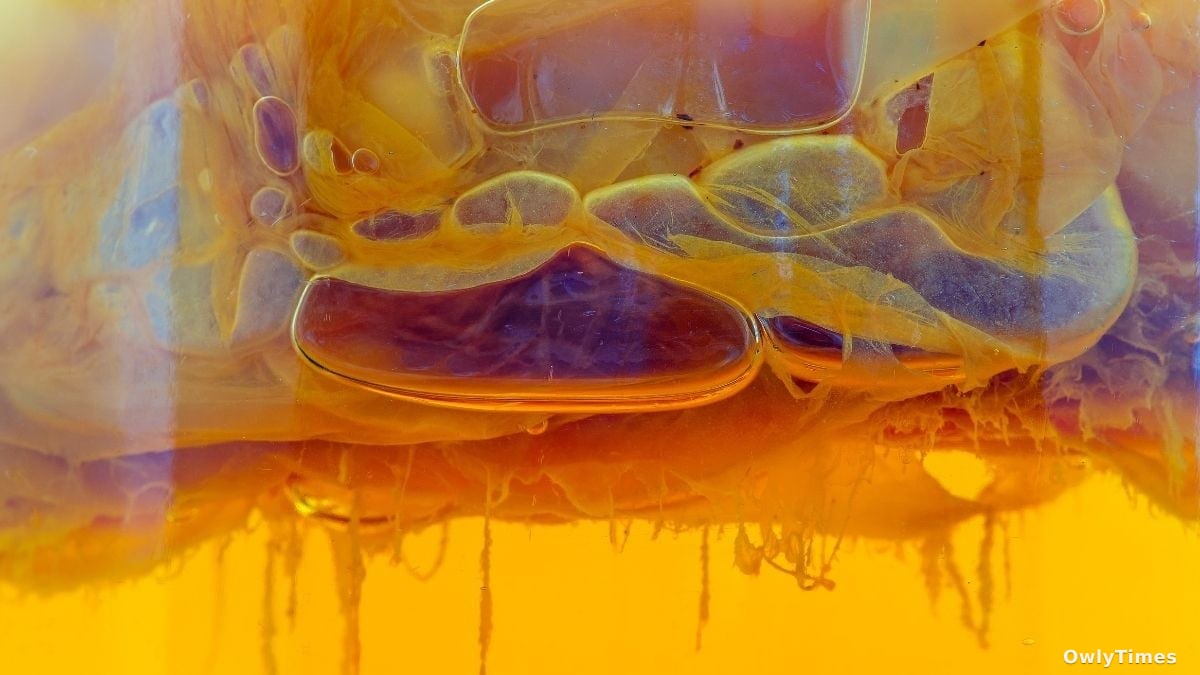

The search for life’s origins has long focused on a “primordial soup” – a watery environment teeming with organic molecules. But a growing body of research suggests the story might be stickier than we thought. A new framework, detailed in a recent paper by an international team led by Tony Jia of Hiroshima University and published in ChemSystemsChem (Khanum et al., 2025), proposes that life didn’t begin in water, but within a gel-like substance – a prebiotic goo clinging to rocks and surfaces on early Earth. This isn’t simply a refinement of existing theories; it’s a potential paradigm shift, altering where and how we search for evidence of life’s beginnings, both on our planet and beyond.
The Challenge of Building Complexity from Simplicity
The fundamental problem in origin-of-life research is explaining how simple inorganic molecules transformed into the complex organic building blocks of life – RNA, DNA, proteins – and eventually, self-replicating cells. Traditional theories struggle with this transition. Dilute solutions, like the hypothesized primordial soup, make it difficult for molecules to concentrate and interact frequently enough to form these complex structures. The intense ultraviolet radiation and extreme temperatures of early Earth further destabilize fragile organic compounds. The team’s gel-first hypothesis offers a solution to these challenges by proposing a protective and organizing environment. As Jia explains, “While many theories focus on the function of biomolecules and biopolymers, our theory instead incorporates the role of gels at the origins of life.”
Source material: ScienceAlert.
How Gels Could Have Jumpstarted Life’s Chemistry
The researchers posit that prebiotic gels – structures similar to the biofilms found today on rocks, pond surfaces, and even unbrushed teeth – acted as a scaffold for early chemical reactions. These gels, composed of a network of polymers, could have concentrated monomers like activated nucleotides and amino acids, effectively increasing their local concentration and the probability of interaction. Crucially, gels aren’t indiscriminate collectors; they selectively retain and interact with certain chemicals, creating a microenvironment conducive to specific reactions. This selective retention is vital, as it would have favored the formation of complex polymers over their breakdown through hydrolysis. The paper explicitly outlines this “prebiotic gel-first framework,” suggesting early life emerged within these surface-attached matrices (Khanum et al., ChemSystemsChem, 2025).
Beyond Protection: Energy and Early Metabolism
The benefits of a gel environment extend beyond mere protection and concentration. The researchers suggest that gels could have facilitated early forms of metabolism. Within the gel matrix, chemicals could have exchanged electrons, initiating rudimentary metabolic processes. Furthermore, the gel itself could have harnessed energy from ultraviolet light, much like photosynthesis in plants, driving chemical reactions. This is a significant departure from theories reliant solely on geothermal energy or lightning strikes. The team’s model suggests that the interplay between light, gel structure, and chemical composition could have created a self-sustaining system, a precursor to the complex metabolic pathways we see in living organisms today.
Limitations to Consider: From Hypothesis to Evidence
While compelling, the gel-first hypothesis remains largely theoretical. The precise composition of prebiotic gels on early Earth is unknown, and recreating those conditions in a laboratory is a formidable challenge. The ChemSystemsChem paper provides a detailed framework, but lacks direct experimental evidence demonstrating the spontaneous formation of complex polymers within prebiotic gels under realistic early Earth conditions. It’s also important to note that this theory doesn’t negate the importance of water; rather, it proposes a different initial environment. The transition from gel-bound chemistry to free-living cells still requires explanation. The team acknowledges this, stating their work focuses on the “key barriers in prebiotic chemistry” and doesn’t fully address the subsequent steps toward cellular life.
The Search for Slimy Signatures in Space
This research has profound implications for astrobiology. If life could have originated within gels, our search for extraterrestrial life should broaden beyond looking for liquid water and specific organic molecules. Structures resembling prebiotic gels – biofilms, mineral coatings, or even complex organic deposits – could be potential biosignatures on other planets, particularly Mars. Future missions should prioritize analyzing these structures for evidence of chemical organization and potential metabolic activity. The question now isn’t just where life might exist, but in what form – and whether that form might be more akin to a sticky, semi-solid matrix than a swimming cell. Will upcoming missions to icy moons like Europa and Enceladus, known to harbor subsurface oceans, also investigate the potential for gel-like environments on their rocky floors? That’s a question that could redefine our understanding of life in the universe.