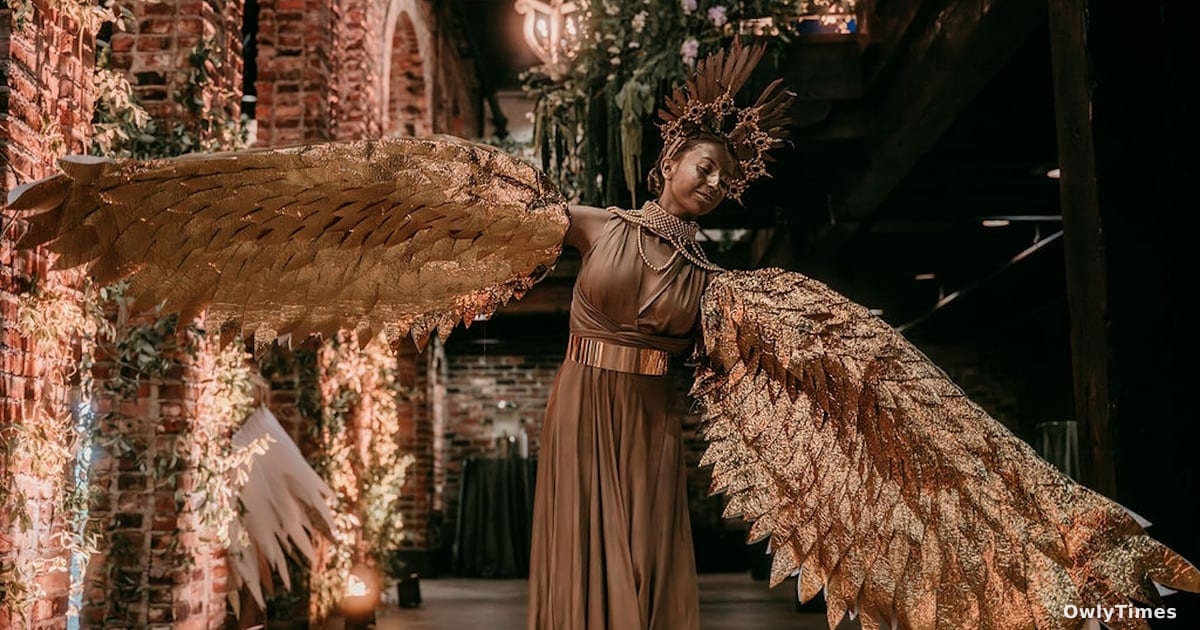

The air crackled with anticipation, not from a concert’s booming bass, but from the hushed reverence of attendees at Nashville’s Fantasy Ball. Guests didn’t simply watch the entertainment; they navigated a gothic dreamscape populated by living statues, aerialists suspended from ornate chandeliers, and characters who seemed to materialize from the shadows. This wasn’t an event with entertainment, it was an event as entertainment – a distinction Grace Good, founder and creative director of Goodness Gracious Creative Entertainment, is pioneering. It’s a shift that speaks to a larger cultural hunger for immersion, for experiences that blur the line between spectator and participant, and it’s reshaping the $107.6 billion event industry, according to recent data from the Events Industry Council.
From Halftime Shows to Holistic Design
Good’s journey began not in a boardroom, but on stage. A contemporary circus artist specializing in hoop choreography, fire performance, and aerial work, she spent years touring nationally, performing at NBA halftime shows and major venues. “It isn’t just technical skill—it’s pacing, scale, and how a performance feels in the room,” she explains. This firsthand experience became the bedrock of her approach. Clients initially sought her out for her performance act, but soon began requesting help with broader event design. This organic evolution led to the launch of Goodness Gracious Creative Entertainment, a company built on the radical idea that entertainment shouldn’t be an afterthought, but an integral component of the overall design strategy. This isn’t simply about booking a band or hiring a magician; it’s about crafting an environment where performance is the environment.
Drawn from bizbash.com.
The Rise of “Experiential” and the Demand for Authenticity
The shift towards immersive experiences isn’t accidental. We’re living in an age of peak content, bombarded with stimuli from every direction. Audiences, particularly younger generations, are increasingly discerning, craving authenticity and demanding more than passive consumption. The $31.3 billion experiential marketing sector, a 15% increase from 2022, demonstrates this demand. Good recognizes this, drawing inspiration from sources beyond traditional event spaces – halftime shows, immersive theater, fashion, and large-scale public productions. “Audiences today are incredibly visually literate,” she notes. “Expectations are high.” This means generic decor packages and “stock entertainment” simply won’t cut it. Goodness Gracious Creative Entertainment invests heavily in original costuming, LED elements, large-format props, and custom apparatus, ensuring each event feels uniquely tailored.
Innovation Beyond Flash: A Focus on Emotional Resonance
The word “innovation” is often bandied about in the events industry, frequently equated with flashy technology or novel concepts. Good offers a more nuanced definition. “Innovation in events isn’t about doing something flashy just to be new,” she asserts. “It’s about creating environments that people genuinely remember.” For her, this often means integrating performance directly into a space’s architecture, rather than confining it to a stage. The Nashville Fantasy Ball exemplifies this philosophy. The “living statues” weren’t simply performers holding poses; they were sculptural installations, seamlessly blending with the event’s gothic aesthetic. This level of cohesion, where guests are immersed in a fully realized environment, is where Good believes event design is heading. It’s a move away from spectacle at the audience, and towards a shared experience with the audience.
The Blurring Lines and the Future of Event Production
The lines between traditionally separate disciplines – sports production, theatrical staging, brand activations, and experiential marketing – are dissolving. This crossover is creating exciting opportunities for companies like Goodness Gracious Creative Entertainment, which expertly navigates these converging worlds. Good envisions a future where entertainment is embedded within spatial design, interactive and roaming performance formats become commonplace, and custom visual worlds replace standardized decor. This isn’t just about aesthetics; it’s about emotional engagement. The goal, she says, is to “continue merging performance and production design in ways that feel cohesive, intentional, and emotionally engaging.” But will the industry be able to keep pace with rising audience expectations, and more importantly, will it prioritize genuine connection over superficial spectacle? That’s the question event professionals – and audiences – will be watching closely in the years to come.