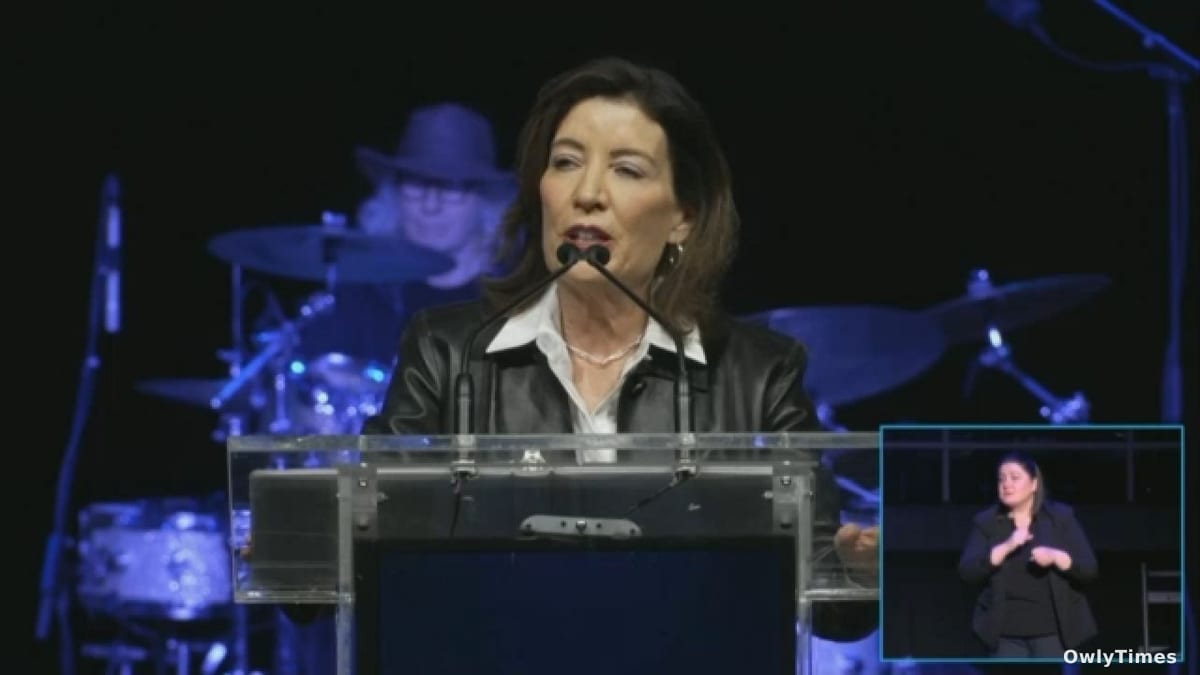

Is New York quietly admitting its decade-long experiment in austerity for public workers was a mistake? Governor Kathy Hochul’s recent public support for revising Tier 6 of the state’s public pension plan, alongside a rally in Albany featuring union members, isn’t just about fairness – it’s a tacit acknowledgment that squeezing public sector employees has consequences beyond the budget sheet. The real story here isn't simply a pension dispute; it’s a looming workforce crisis in essential services, and a growing recognition that short-term savings can create long-term pain for everyone.
The Tier 6 Trade-Off: Longer Hours, Less Reward
Enacted in 2012, Tier 6 was designed to address New York’s burgeoning pension obligations. The state, facing pressure to control costs, shifted the burden onto its employees. Approximately 780,000 workers – teachers, nurses, firefighters, and other public servants – found themselves subject to longer vesting periods, increased contribution rates, and reduced benefit formulas compared to their predecessors. Think of it like this: you sign up for a job expecting a certain retirement safety net, and then the rules change mid-game, forcing you to run faster just to stay in the same place. Union members argue this created a two-tiered system, demoralizing newer employees and making it harder to attract talent to vital public sector roles. The state comptroller currently administers the New York State and Local Retirement System, overseeing a substantial $273 billion in assets, but even that massive fund can’t insulate against the effects of a shrinking, disgruntled workforce.
Based on the original Spectrum News report.
Hochul’s Incremental Shifts and the Recruitment Problem
Governor Hochul isn’t proposing a wholesale overhaul, at least not yet. The changes implemented in 2022 – shortening the vesting period from ten to five years and shifting the calculation of final average salary from five to three years – are incremental, but they signal a shift in approach. “We’re taking a shorter vesting period…down to five,” Hochul stated at the rally. This isn’t altruism; it’s pragmatism. The state is facing genuine difficulty recruiting and retaining qualified individuals, particularly in fields like education and healthcare. A less attractive pension plan directly impacts the ability to fill these critical positions, potentially leading to larger class sizes, longer wait times for medical care, and reduced public safety. The governor’s explicit mention of recruitment – “it’s essential that we continue recruiting people” – underscores this point.
Beyond Albany: The Ripple Effect on Local Budgets
The implications of Tier 6 extend far beyond Albany. Local governments, already grappling with property tax caps and limited revenue streams, rely heavily on a stable public workforce. Increased employee turnover due to pension dissatisfaction translates to higher recruitment and training costs, further straining local budgets. Consider a small upstate city struggling to find qualified firefighters. If potential candidates opt for jobs in neighboring states with more generous pension plans, that city is forced to spend more on recruitment, potentially delaying critical infrastructure projects or cutting other essential services. This isn’t just a problem for union members; it’s a problem for taxpayers. The state’s attempt to save money on pensions is, in effect, shifting costs onto local communities.
The Unspoken Question: Will Full Equity Follow?
The current adjustments are a start, but they don’t address the fundamental inequity at the heart of Tier 6. Employees still contribute a larger percentage of their salaries and receive comparatively lower benefits than those hired before 2012. The question now is whether Governor Hochul will push for full parity, or if these incremental changes are intended to appease unions without significantly impacting the state’s long-term financial outlook. My prediction? Watch closely for a renewed push to tie pension reform to broader discussions about state aid to municipalities. The state will likely frame full equity as too expensive without corresponding cuts to local services or increases in revenue sharing. In the next 18 months, New York will be forced to confront a difficult choice: continue to prioritize short-term fiscal discipline, or invest in the long-term health of its public workforce – and, by extension, the well-being of its citizens.