
The fundamental tension in modern atmospheric science is whether our ability to predict increasingly volatile weather can keep pace with our shrinking budget for the tools that make those predictions possible. On Wednesday morning, House appropriators released a fiscal 2027 funding plan that attempts to navigate this challenge by picking winners and losers in the research ecosystem. While the proposed legislation signals a commitment to immediate meteorological safety, it simultaneously pulls significant resources away from the broader scientific infrastructure that supports long-term climate understanding.
Prioritizing Forecasting Over Foundational Research
The House’s fiscal 2027 Commerce-Justice-Science bill carries a top-line budget of $77.34 billion. When placed against current spending levels, this represents a reduction of approximately $670 million, or a 1 percent decrease. In the context of federal budgeting, a 1 percent shift may seem marginal, but the distribution of these cuts highlights a distinct strategic pivot. The Republican majority has drafted this proposal to prioritize specific operational tasks, most notably the National Weather Service, which is slated for a budgetary boost and a new federal mandate to maintain specific staffing levels.
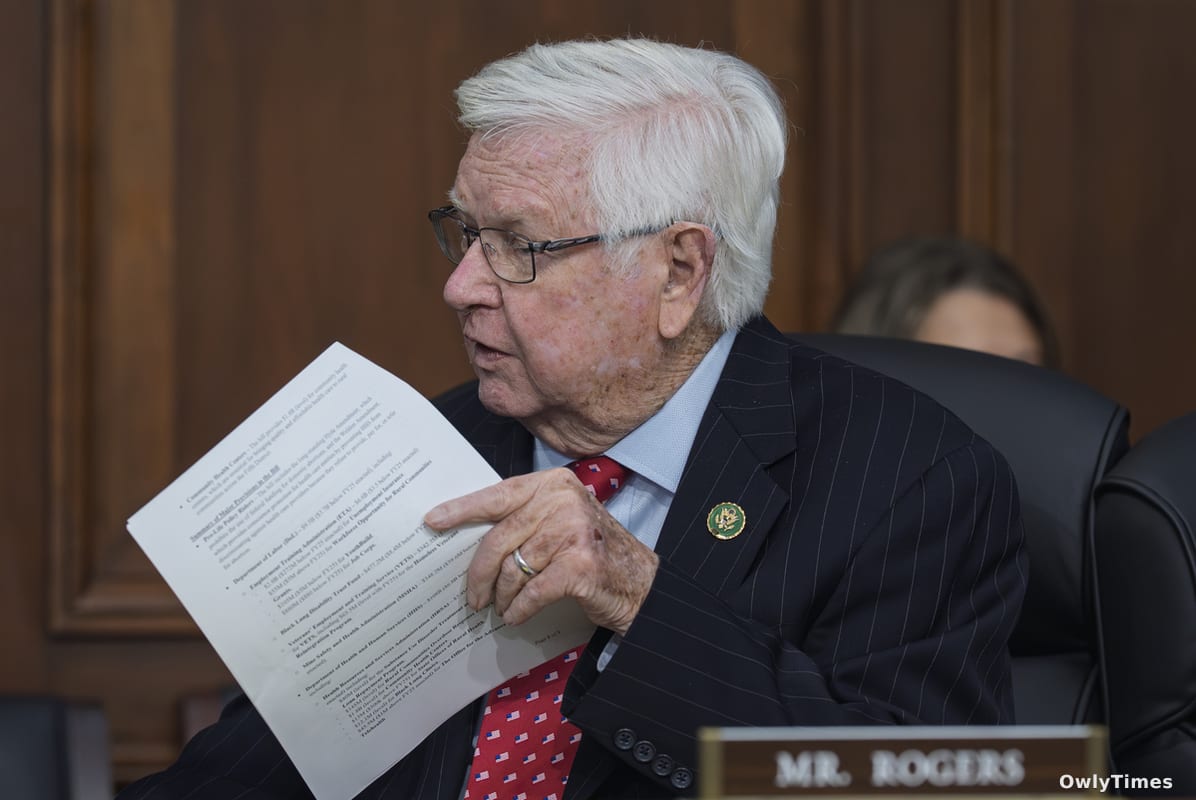
This focus on operational forecasting is spearheaded by Rep. Hal Rogers (R-Ky.), chair of the Commerce-Justice-Science Appropriations Subcommittee. As captured in a photograph by J. Scott Applewhite/AP, Rogers has been vocal in touting the bill’s commitment to weather forecasting as a primary objective. The rationale appears to be a focus on immediate, high-visibility public safety needs—ensuring that warnings for severe storms or natural disasters remain unimpeded by human resource shortages.
The Cost of Budgetary Contraction
The headlines surrounding this bill might lead one to assume a uniform tightening of the belt across all atmospheric and environmental sectors. However, the study of the bill’s text reveals a more nuanced reality: the cuts are not distributed evenly. Agencies such as NOAA and the National Science Foundation are facing direct proposed reductions. This is a critical distinction, as these agencies provide the foundational research and climate modeling that feed into the very weather forecasting models the subcommittee seeks to protect.
While the National Weather Service is being insulated from staff attrition, the research institutions that provide the underlying scientific data to improve those models are facing an uncertain fiscal future. When an agency like the National Science Foundation experiences a funding contraction, the ripple effects are rarely felt immediately. Instead, they manifest as deferred research grants, aging infrastructure, and a slower pipeline of scientific innovation. The tension here lies in the long-term risk of relying on high-quality forecasting tools while simultaneously starving the research engine that allows those tools to evolve.
Navigating the Legislative Markup Process
In addition to these research-heavy departments, appropriators have also unveiled their fiscal 2027 Legislative Branch bill. This secondary measure provides the necessary funding for the Government Accountability Office, the Congressional Budget Office, and other vital internal operations on Capitol Hill. By bundling these funding discussions, the House is framing the scientific budget within the broader context of governmental administrative costs.
The immediate future of these proposals depends on a series of procedural milestones. House Appropriations subcommittees are expected to vote to advance these bills on Thursday morning. The subsequent progress of these measures will be dictated by the full committee’s comprehensive markup process, which includes scheduled debates and amendment votes on May 13. The outcome of these votes will serve as the primary signal for whether the proposed cuts to climate research will be maintained or if the scientific community will successfully advocate for a reallocation of the $77.34 billion total.