
Beyond Recipes: How Iowa State is Redefining Culinary Education
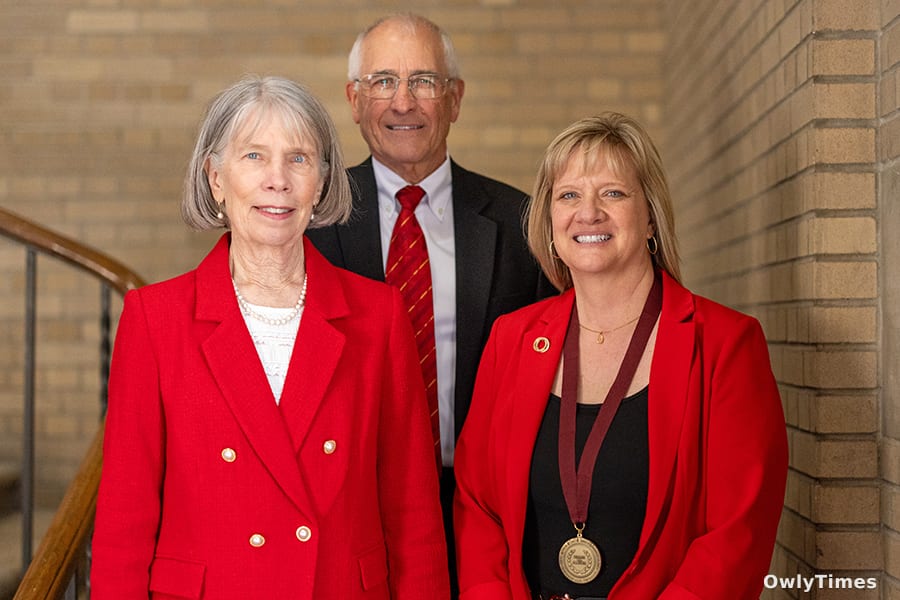
The recent establishment of the Nancy and Rich Degner Teaching Professorship in Culinary Food Science at Iowa State University isn’t simply an honor for Erica Beirman, the inaugural recipient. It’s a signal of a broader shift in how we approach culinary education, moving beyond technique to embrace the science underpinning our food systems – and a recognition that this shift requires dedicated, innovative educators. While celebratory announcements often focus on prestige, the story here is about a deliberate investment in a relatively young discipline attempting to establish itself as a vital intersection of agriculture, nutrition, and hospitality.
Source material: cals.iastate.edu.
The creation of the professorship, funded by Iowa State alums Rich and Nancy Degner, acknowledges Beirman’s pivotal role in building Iowa State’s culinary food science major from the ground up, launching in 2008. As Ruth MacDonald, interim chair of the Department of Food Science and Human Nutrition, stated, “She has taken what was an unknown major and built it into something that today is a nationally recognized program.” This isn’t merely about increasing enrollment numbers – though the program is thriving – it’s about responding to a growing demand for professionals who understand food not just as pleasure, but as a complex system. Consider that the food science field overall is projected to grow 8% from 2022 to 2032, according to the Bureau of Labor Statistics, faster than the average for all occupations. This growth isn’t driven by a desire for fancier restaurants, but by increasing concerns about food safety, sustainability, and the nutritional impact of what we eat.
Beirman’s approach reflects this holistic view. Her recent development of a culinary bootcamp focusing on food safety, meal prepping, and grocery shopping, born from her participation in the CALS Innovation and Entrepreneurship Faculty Fellows program, exemplifies this. It’s a pragmatic response to a public increasingly interested in practical culinary skills and a growing awareness of the risks associated with foodborne illness. The program’s success, and the Degners’ subsequent investment, highlights a crucial point: culinary education isn’t confined to professional kitchens anymore. It’s relevant to everyday consumers, and increasingly, to addressing broader public health challenges. The “For the Love of Food and Puerto Rico Study USA” program, co-led with Karla Boetel, further demonstrates this commitment to experiential learning and connecting students to real-world food systems.
However, it’s important to acknowledge the limitations of relying heavily on donor funding to support innovative programs. While the Degners’ generosity has been instrumental, the long-term sustainability of the culinary food science program – and its ability to expand – will depend on consistent state and university support. A program built on philanthropic contributions, however well-intentioned, remains vulnerable to fluctuations in economic conditions and donor priorities. Furthermore, the very definition of “culinary food science” remains fluid. Is it primarily a science-based approach to cooking, or a culinary approach to food science? The program’s continued success will hinge on clearly articulating its unique identity and demonstrating its value to a diverse range of stakeholders.
The Degners’ initial scholarship fund, established in 2011, and the subsequent enrichment fund in 2017, underscore a commitment to experiential learning. Students have benefited from travel opportunities to Puerto Rico and California, exploring diverse food systems. Nancy Degner’s statement, “I can only expect the culinary food science program to continue onward and upward and for Erica to find new things to do with the support she has now,” is optimistic, but also implicitly acknowledges the ongoing need for external support. The question now is whether Iowa State can leverage this momentum – and Beirman’s leadership – to establish culinary food science as a core component of its agricultural and life sciences offerings, rather than a niche program reliant on private funding. Watch for the program’s expansion into new areas of research, particularly concerning local food systems and the impact of climate change on food production – areas where a blend of culinary expertise and scientific rigor will be essential.





