
The Curious Spark: Why a Blush Can Launch a Scientific Inquiry
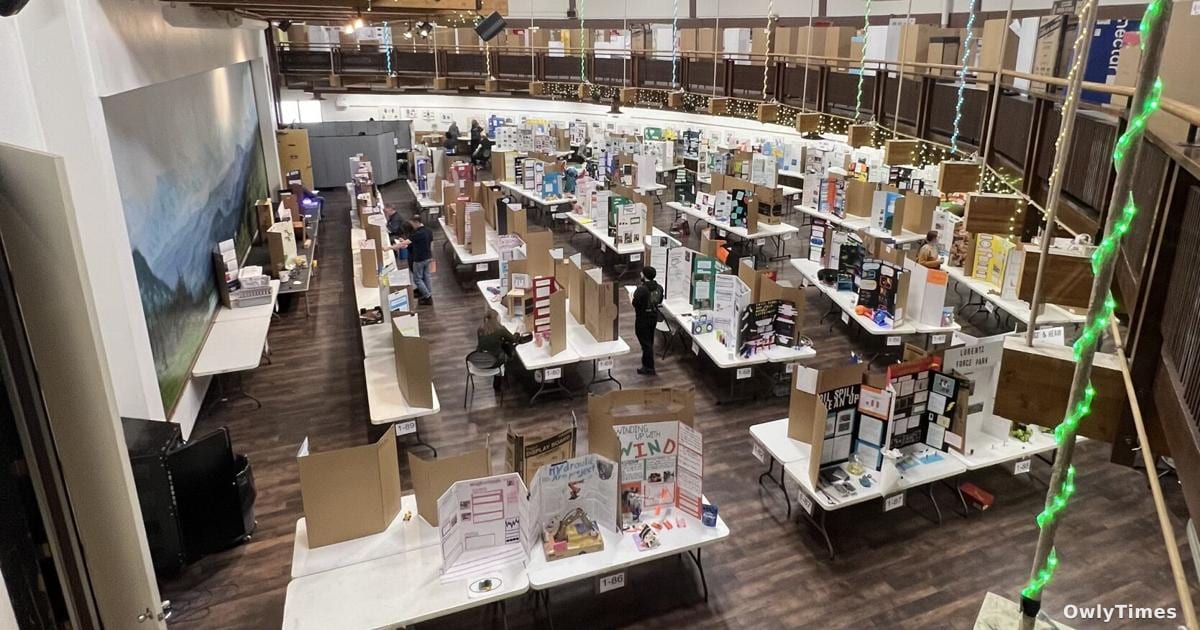
The Interior Alaska Science Fair, currently underway at Pioneer Park, isn’t just a showcase of meticulously constructed volcanoes and solar system models. It’s a vital demonstration of something far more fundamental: the innate human drive to understand why. This year’s fair, featuring roughly 400 projects from 27 schools, highlights how even the most personal questions – like the one posed by fourth-grader Lexi Snow about her own blushing – can become the catalyst for genuine scientific investigation. While headlines often focus on grand, lab-based discoveries, the fair underscores that scientific inquiry begins with observation, curiosity, and a willingness to test assumptions, even about oneself. This isn’t simply about training future scientists; it’s about cultivating a scientifically literate public capable of critical thinking.
This piece references the newsminer.com report.
Beyond the Volcano: The Breadth of Student Research
The projects on display span a remarkable range of disciplines. From the physiological – Lexi Snow’s investigation into blushing, which likely involved researching the vascular system and the role of adrenaline – to the technological, as evidenced by the fifth-grade students who compared learning outcomes from writing reports versus utilizing Artificial Intelligence. This latter project is particularly timely. While AI tools are rapidly becoming integrated into education, these students’ findings suggest a crucial benefit of traditional research methods: deeper comprehension through the active process of writing and synthesis. Their work isn’t a condemnation of AI, but a nuanced observation about how we learn, and what might be lost when we outsource cognitive effort. The fair’s organizers, including Michelle Daml and Naomi Mitchell, clearly understand the importance of fostering this kind of independent thought.
A Shift in Emphasis: Process Over Product
What’s striking about the Interior Alaska Science Fair isn’t necessarily the sophistication of the experiments – though many are impressively designed – but the emphasis on the scientific process. The fair isn’t solely about arriving at a “correct” answer; it’s about formulating a hypothesis, designing a method to test it, collecting data, and drawing conclusions based on evidence. This approach mirrors the methodology used by professional scientists, and it’s a deliberate choice by educators. The fact that a fourth-grader’s personal experience could spark a legitimate scientific question demonstrates the power of this approach. It’s a departure from rote memorization and a move towards empowering students to become active knowledge creators. This is especially important in a world saturated with information, where the ability to discern credible evidence is paramount.
Limitations to Consider: Equity and Access
While the fair is a celebration of scientific curiosity, it’s important to acknowledge potential limitations. Participation in science fairs, even at the local level, requires resources – time, materials, and supportive mentorship. Students from schools with fewer resources may face barriers to entry, potentially skewing the representation of projects and ideas. Furthermore, the focus on individual projects may not fully capture the collaborative nature of much modern scientific research. The fair’s success relies on the dedication of teachers and volunteers, but systemic inequities in education could limit access for some students. Addressing these disparities is crucial to ensuring that the benefits of scientific inquiry are available to all.
Looking Ahead: Cultivating the Next Generation of Questioners
The 2026 Interior Alaska Science Fair already has its visual identity, thanks to the artwork created by fourth-grader Alice McMillan of Arctic Light Elementary School. But beyond the t-shirts and displays, the real question is: how do we sustain this spark of curiosity beyond the fair itself? The next step isn’t simply to encourage more students to participate, but to integrate the principles of scientific inquiry into everyday classroom learning. We need to create environments where students feel safe to ask “why,” to challenge assumptions, and to embrace the iterative process of discovery. If we can do that, we’ll be fostering not just future scientists, but a more informed and engaged citizenry equipped to tackle the complex challenges facing our world. Will schools prioritize inquiry-based learning, or will the pressure of standardized testing continue to stifle this crucial element of education? That’s the question to watch.