
Is a peace agreement worth the paper it’s printed on if the ink is still wet while the artillery is firing? We often look at high-level diplomatic frameworks as the "software update" that will fix a broken system, but the real story here isn't the signing ceremony in Washington—it’s the fundamental incompatibility between the political architecture and the reality on the ground.
On Friday, June 26, 2026, Israel and Lebanon signed a US-brokered four-point framework intended to end months of hostilities that have displaced over 1.2 million people and claimed at least 4,192 lives in Lebanon, according to the BBC. Yet, by Sunday, the agreement was already under extreme duress. Both Al Jazeera and the BBC report that Israeli air strikes resumed in southern Lebanon over the weekend, resulting in the first casualty since the deal was signed.
The disconnect between policy and hardware
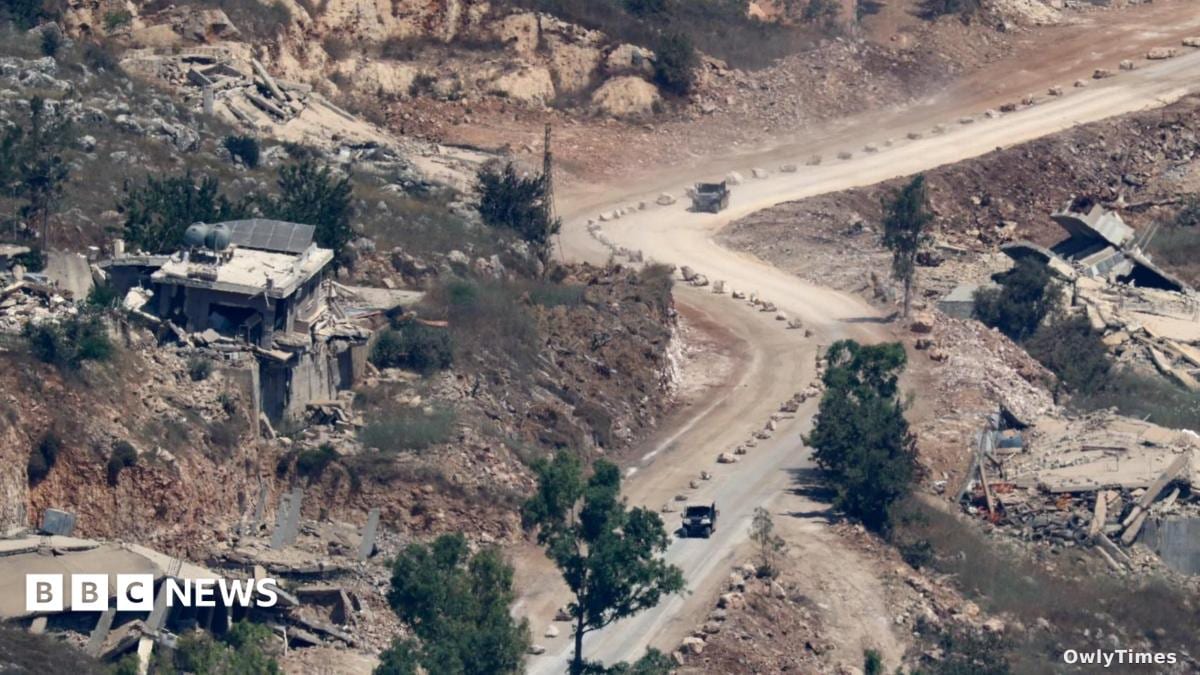
The technical specifications of the deal reveal why it is struggling to function in the real world. The framework dictates an Israeli withdrawal from the South Litani area, with the Lebanese army taking exclusive control. However, as NPR notes, the agreement explicitly excludes the primary combatant, Hezbollah, and does not include Iran.
This creates a "user error" in the diplomatic code: Israel’s defense minister, Israel Katz, has ordered troops to prepare for an "extended stay" in a buffer zone up to 10km (six miles) deep, according to both Al Jazeera and the BBC. While Israeli Prime Minister Benjamin Netanyahu has framed the agreement as a "historic" blow to Iran, the actual implementation is being met with kinetic resistance. The NPR report confirms that a Hezbollah-led attack in Deir Siryan killed an Israeli soldier, identified by Al Jazeera as Captain David Hazutt, 21.
Why the "patch" is failing
The situation on the ground highlights a common fallacy in crisis management: believing that a top-down policy change can override a deep-seated hardware conflict. Hezbollah leader Naim Qassem has flatly rejected the agreement, labeling it "humiliating" and a "surrender of sovereignty," as reported by the BBC. Meanwhile, Al Jazeera highlights that the deal is simultaneously being attacked from the opposite side, with Israel’s far-right National Security Minister Itamar Ben-Gvir arguing that the framework grants Hezbollah a "lifeline."
For the average citizen, this means the promised stability is essentially vaporware. The NPR report adds a layer of global complexity, noting that these border skirmishes are occurring alongside a massive escalation between the US and Iran over the Strait of Hormuz. With the US military hitting ten Iranian targets in response to tanker attacks, the "peace deal" in Lebanon is being treated as an isolated file in a much larger, corrupted operating system.
The next cycle of volatility
We are watching a system attempt to run a new protocol while the hardware is actively being sabotaged. The NPR coverage underscores that Iran’s Revolutionary Guard has threatened to halt negotiations entirely if US military actions continue.
Watch for the rhetoric coming out of the next planned conflict control unit meeting—if one occurs—as a primary indicator of whether this deal is a temporary firewall or if the entire regional architecture is about to experience a total system crash.