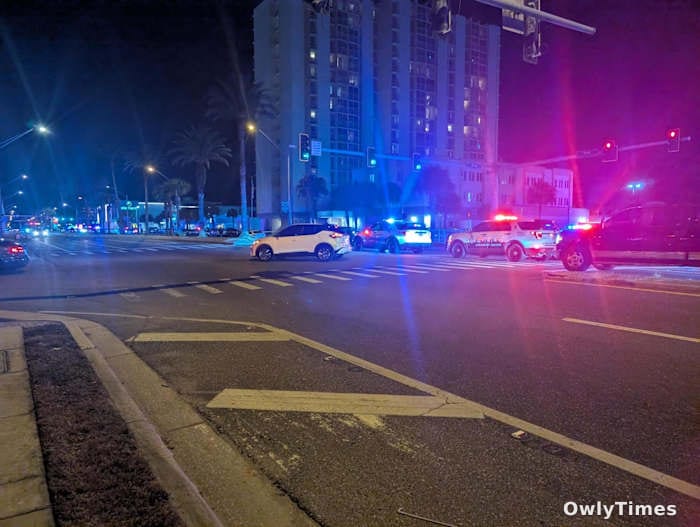

Five teenagers injured by gunfire – a 200% increase in shooting victims compared to the same weekend last year – underscores a rapidly escalating security cost for Jacksonville Beach businesses and a troubling trend of “teen takeover” events. While local coverage focuses on the immediate chaos and police response following Saturday’s incident near the intersection of Third Street South and First Avenue South, the financial fallout and preventative measures required represent a significant, and potentially growing, burden on the city’s tourism economy. Follow the money, and the story isn’t just about responding to violence; it’s about the escalating price of maintaining a safe environment for visitors and residents alike.
The Economic Disruption of Unplanned Events
The immediate economic impact is quantifiable. Commander T. Bingham of the Jacksonville Beach Police Department (JBPD) confirmed the forced shutdown of a “large popular music festival” attended by “thousands,” a decision directly linked to the shooting. While organizers haven’t released specific revenue figures, similar festivals in comparable coastal cities generate an average of $350,000 in direct spending per day, according to a 2023 report by the Florida Festivals & Events Association. Even a partial shutdown – Bingham indicated the festival was closed early – translates to tens of thousands of dollars in lost revenue for vendors, hotels, and local transportation services. Thomas Zavattiere, manager of Beachside Seafood, described the immediate impact on his business: locking down the restaurant and losing a night of service. While the cost to Beachside Seafood is likely in the thousands, multiplied across dozens of businesses in the area, the cumulative loss quickly becomes substantial.
Drawn from news4jax.com.
Beyond Lost Revenue: The Rising Cost of Security
The incident isn’t an isolated event. The term “teen takeover” – loosely defined as large, unsanctioned gatherings of young people – is gaining traction nationally, and Jacksonville Beach appears to be a growing hotspot. This necessitates a proactive, and expensive, security response. Greg Pratt, owner of Sneakers Sports Grille, praised the “obvious” police presence throughout the day, but that presence isn’t free. Increased patrols, potential for overtime pay, and the deployment of specialized units all add up. The JBPD’s budget for special events and security detail was $1.2 million in 2023; a sustained increase in “teen takeover” events will inevitably lead to calls for increased funding, potentially diverting resources from other essential city services. Consider the alternative: a perceived lack of security could deter future events and tourism, creating a long-term economic decline.
A Pattern of Reactive Spending
The current approach appears largely reactive. Businesses like Beachside Seafood and Sneakers Sports Grille are forced to absorb the costs of immediate disruption – lost revenue, staff time spent securing premises, and potential property damage. The city, in turn, responds with increased police presence after an event escalates. This cycle of reaction is fiscally inefficient. A 2022 study by the National Institute of Justice found that proactive community policing strategies, focused on youth engagement and preventative intervention, yield a return on investment of $5 to $7 for every dollar spent, compared to a return of $1.50 for reactive policing. Jacksonville Beach is currently operating in the lower-return scenario. Zavattiere’s comment – “kids just need a better positive outlook to do instead of getting in trouble” – highlights a critical gap in the city’s strategy.
What This Means for Your Wallet
The Jacksonville Beach shooting isn’t just a law enforcement issue; it’s a business issue, and ultimately, a consumer issue. Expect to see increased security fees added to event tickets, higher prices at local businesses to offset security costs, and potentially, increased local taxes to fund a more robust police presence. More subtly, the erosion of Jacksonville Beach’s reputation as a safe and family-friendly destination could lead to a decline in tourism, impacting property values and overall economic vitality. The key question for investors and residents is this: will the city proactively invest in preventative measures – youth programs, community engagement initiatives – or continue to rely on a reactive, and increasingly expensive, security model? The answer will determine whether Jacksonville Beach can maintain its economic momentum or succumb to a cycle of violence and financial strain.