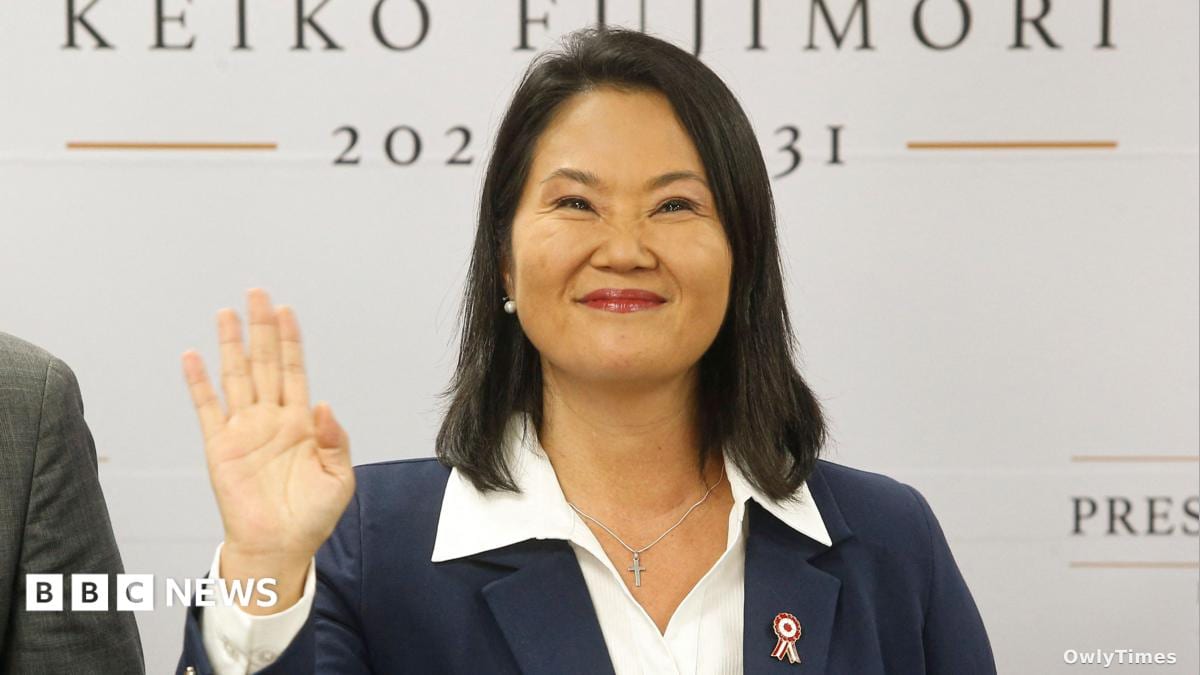

The strategic calculus behind the election of Keiko Fujimori as president of Peru rests on a platform of "iron-fist" security and economic continuity, a pivot designed to capitalize on voter exhaustion following a decade of chronic political instability. By framing the June 7 runoff as a binary choice between chaos and order, Fujimori successfully consolidated the support of the capital region of Lima and the decisive overseas electorate. Her victory, however, arrives with a thin mandate that mirrors the deep polarization seen during the 2008 global financial crisis, highlighting a nation fractured between urban investors and rural constituencies.
According to the BBC, the electoral court certified that Fujimori secured 50.135% of the vote against the 49.865% garnered by left-wing congressman Roberto Sánchez. ABC News provides the raw totals, noting that the victory was achieved with 9,223,000 votes for Fujimori compared to over 9,173,000 for Sánchez—a margin of approximately 50,000 votes out of 18 million cast. While CNBC agrees on the final percentages, it highlights that Sánchez led the count during the early stages of the tally, fueled by strong support in rural regions.
Beneficiaries and Political Precedents
The primary beneficiaries of this outcome are the Peruvian business community and regional conservative leaders. CNBC reports that Moody’s issued a statement suggesting a Fujimori administration will preserve policy continuity, a development expected to unlock delayed mining projects in the world’s third-largest copper producer. Conversely, the losers are the supporters of the former administration of Pedro Castillo, as Sánchez—seen as Castillo's political heir—has refused to recognize the results, alleging electoral fraud without providing evidence.
Fujimori’s victory echoes a broader regional trend toward the right, a shift ABC News notes is currently shared by Abelardo de la Espriella in Colombia and José Antonio Kast in Chile. This ideological realignment marks a departure from the "pink tide" era of leaders like Hugo Chávez. However, the internal political dynamics remain volatile; Fujimori will become the ninth president in a decade according to the BBC, or the tenth since 2016 per CNBC, reflecting the precarious nature of the executive office in Lima.
The Shadow of a Dynasty
The political baggage accompanying the president-elect is substantial. As the daughter of the late Alberto Fujimori, who governed during the 1990s, Keiko faces the dual challenge of leveraging her father’s reputation for crushing insurgency while distancing herself from his history of human rights abuses and authoritarianism. ABC News reports that her proposed security measures include militarizing borders and building a prison modeled after El Salvador’s CECOT.
These policies are aimed at addressing the soaring extortion and organized crime rates that defined the campaign. However, CNBC points out that the nation remains scarred by the clashes that followed Castillo’s ouster, which claimed over 60 lives. With Sánchez’s party holding the second-largest bloc in a fragmented Congress, the new administration will likely face immediate legislative gridlock.
The Chess Move to Watch
The immediate trigger for the next phase of this political transition is the scheduled swearing-in ceremony on July 28. Analysts will be watching whether Sánchez’s appeal to the Inter-American Commission on Human Rights gains any traction or if the street protests—which have been a recurring feature of Peruvian politics—intensify as the inauguration approaches. The resilience of the governing coalition in Congress will be the first measurable signal of whether this presidency can break the cycle of instability or if it will face the same fate as its predecessors.