
Is it possible for a nation to hold a funeral for a leader who died months ago, in the middle of a war, while simultaneously weaponizing the pageantry for a geopolitical chess match? The real story here isn’t the sheer scale of the mourning in Tehran—it’s that this days-long procession is a calculated display of regime stability, held on a stage that has been effectively militarized by both sides.
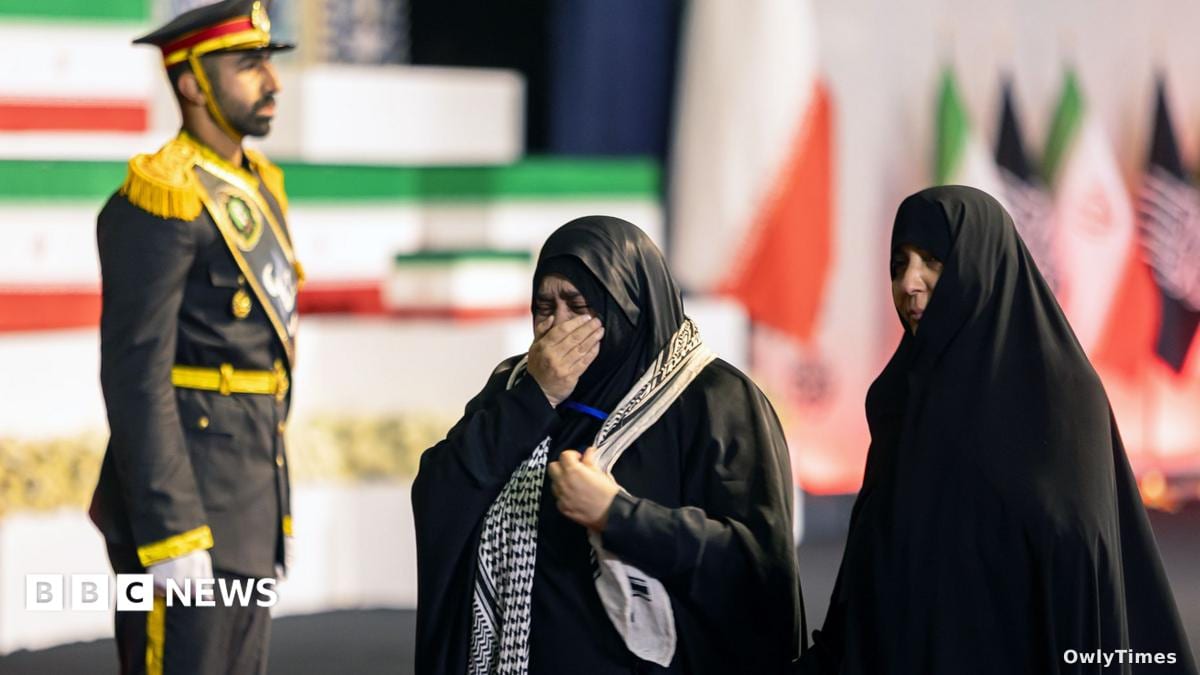
On Saturday, July 4, 2026, Iran began the formal funeral ceremonies for Ayatollah Ali Khamenei, who was killed alongside members of his family in a joint US-Israeli airstrike on February 28. According to the BBC, authorities expect between 15 and 20 million people to participate in the events across Iran and Iraq. However, Al Jazeera offers a more conservative estimate, reporting that more than 10 million people are expected to attend. Regardless of the final tally, the logistical undertaking is immense; Tehran has effectively locked down, with streets and airspace closed to facilitate the movement of the casket, as noted by NPR.
The decision to begin these ceremonies on July 4—the 250th anniversary of the United States' independence—was a piece of political theater that did not go unnoticed. While NPR points out that Iranian authorities did not explicitly acknowledge the symbolic timing, the crowds made their sentiments clear, reprising chants of "Death to America." This friction is a direct reflection of the volatile ceasefire currently in place. As ABC News reports, a June interim deal established a 60-day window for technical talks, currently underway in Qatar, to resolve issues like the Strait of Hormuz and Iran’s nuclear program.
The vulnerability of this transition is underscored by the absence of the new supreme leader, Ayatollah Mojtaba Khamenei. His son, who reportedly sustained injuries in the same February attack that claimed his father, has not been seen in public. As ABC News notes, the regime’s ability to project strength is currently being tested; the last thing the government needs is a repeat of the 1989 burial of Ayatollah Ruhollah Khomeini, where a stampede resulted in thousands of casualties. The BBC highlights that the body will travel through Qom, Najaf, and Karbala before a final burial in Mashhad, a route designed to reinforce the religious legitimacy of the theocracy.
Behind this public display lies a shadow war that has barely paused for the mourning. Euronews reports that Iranian Foreign Minister Abbas Araghchi confirmed Washington warned Tehran that Israel had previously targeted Iranian negotiators, including Araghchi himself and parliament speaker Mohammad Bagher Ghalibaf, during earlier ceasefire talks. The complexity of these negotiations is further complicated by the US stance. US President Donald Trump, speaking in South Dakota, claimed the US gave Iran a "week off for a funeral" because the government is "dying to settle" a peace deal, according to both NPR and the BBC.
For the average citizen, this isn't just about a funeral; it’s a bellwether for whether the current "uneasy ceasefire," as described by ABC News, will hold. The coming days will be defined by whether Mojtaba Khamenei makes a public appearance, a moment that will signal whether the new leadership is ready to step out of the shadows or if the internal instability is far greater than the regime’s carefully choreographed mourning suggests.