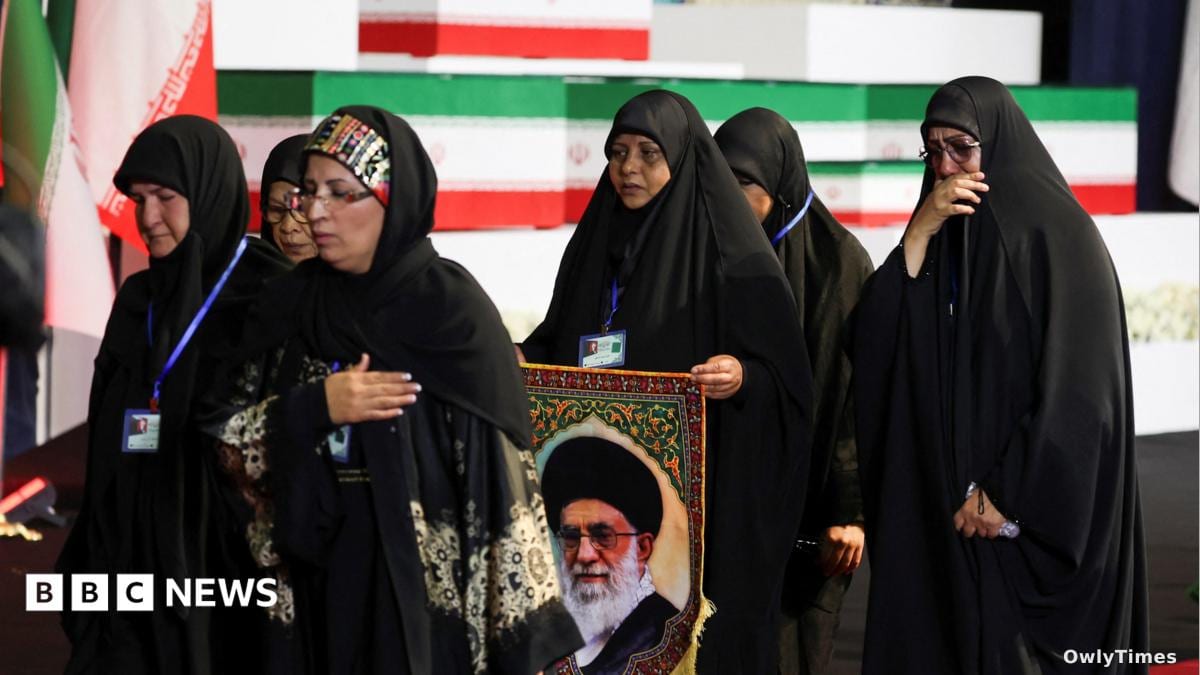

Is a funeral a mourning ritual or a high-stakes stress test for a regime on the brink? In the tech-saturated world we inhabit, where we measure the stability of systems by their uptime and capacity for load, Iran is currently attempting to perform a massive, analog-world “stress test” on its own societal infrastructure.
The real story here isn’t just the burial of Ayatollah Ali Khamenei—it’s the desperate attempt to manufacture a "referendum" of public support through a logistical feat that mirrors the complexity of a massive server migration. According to The Independent, officials are banking on a turnout of 20 million people to prove that the Islamic Republic’s revolutionary fervor remains intact after the leader was killed in joint U.S.-Israeli strikes this past February.
The timeline of these events remains as fragile as the ceasefire currently in place. While the BBC reports that the funeral proceedings officially kick off with the body lying in state at Tehran’s Grand Mosalla this Friday, ABC News notes that the actual display for the public begins on Saturday and Sunday. The logistical footprint is immense: authorities have ordered public and private offices in Tehran to shutter from Saturday through Monday, with the city center effectively cordoned off to private vehicles, as reported by the BBC.
This is a high-risk operation. Just as a poorly coded update can crash a platform, the Iranian government faces a genuine threat of physical instability. ABC News points out the grim precedent of the 1989 funeral of Ayatollah Ruhollah Khomeini, where a stampede left at least eight dead and 11,000 injured, and the 2020 funeral of Qassem Soleimani, which saw 56 killed in a crush. The state is essentially trying to manage a "crowd-density" problem that has historically proven fatal.
The digital and physical visibility of the new leadership is notably absent. While the BBC identifies the successor as the late leader's son, Mojtaba Khamenei, he has not been seen in public since assuming power. The Independent adds a layer of specific detail regarding his absence, citing Ayatollah Kakim Elahi, who claims security risks—specifically the threat of surveillance and the wounds Mojtaba allegedly sustained during the February strike—will likely keep the new leader in hiding throughout the weekend ceremonies.
As for the immediate future, we are watching a clock tick down. The ABC News report confirms that the interim deal reached in June established a 60-day window to negotiate a final resolution to the war. With technical talks currently underway in Qatar, the next major signal will be the conclusion of this mourning period, which will force the regime to pivot from manufactured pageantry back to the harsh reality of its nuclear program and the contested waters of the Strait of Hormuz.