
A Legacy of Discovery: 75 Years of Cultivating North Texas Scientists
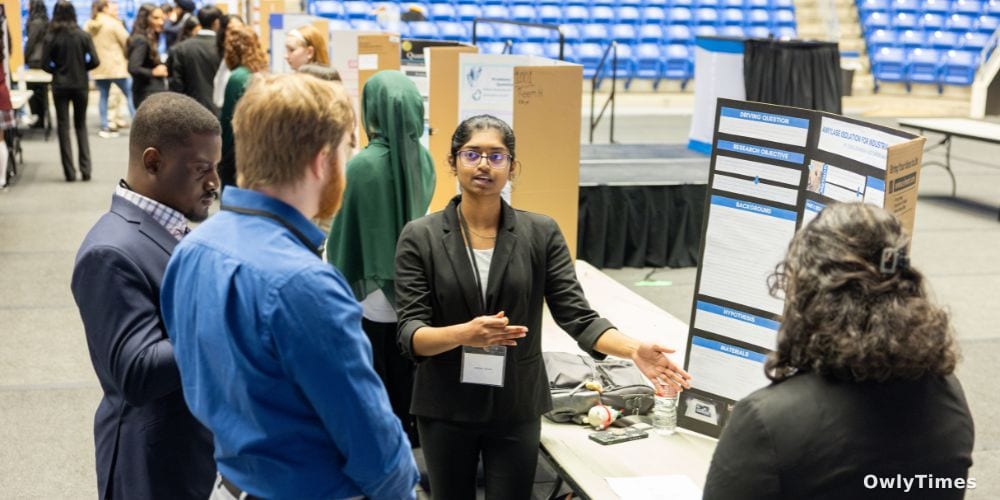
The upcoming 75th annual UTA-Fort Worth Regional Science and Engineering Fair, hosted by the University of Texas at Arlington on Monday, isn’t simply a showcase of student projects; it’s a reflection of a sustained, localized investment in the scientific pipeline. While national headlines often focus on STEM workforce shortages and declining interest in science among young people, this event – and its 75-year history – demonstrates a consistent, grassroots effort to nurture curiosity and rigorous thinking in North Texas students. The fair, welcoming nearly 600 students from 10 counties, represents a commitment to science education that extends beyond classroom curricula and into hands-on research experience, a crucial component often missing from broader discussions about STEM education.
This article draws on reporting from uta.edu.
Beyond Ribbons and Awards: The Fair’s Role in STEM Progression
The structure of the fair itself is designed to mirror, in miniature, the process of scientific advancement. Students in grades 6-12 will compete across 22 categories, ranging from the traditionally represented physics and astronomy to increasingly vital fields like material and bioengineering. This breadth is intentional, according to Yuan Bo Peng, UTA psychology professor and director of the fair, who notes the event’s aim is to “see the next generation of scientists and engineers showcase their projects.” What’s often lost in reporting on science fairs is the tiered system of competition. Winning entries don’t simply receive recognition at the local level; they advance to the Texas Science and Engineering Fair (TXSEF) at Texas A&M University in March, and potentially even the Regeneron International Science and Engineering Fair – the world’s largest pre-college science competition. This pathway provides students with increasingly challenging environments and exposure to a wider network of peers and mentors. The fact that UTA sponsors the fair without charging participation fees to schools or students is also significant, removing a financial barrier that could disproportionately impact access for students from lower socioeconomic backgrounds.
A Local Investment with Regional Economic Impact
The significance of the UTA-FWRSEF extends beyond individual student achievement. The University of Texas at Arlington, with a student body exceeding 42,700 and a Carnegie R-1 research designation placing it among the top 5% of research universities nationally, clearly views the fair as an extension of its own mission. UTA’s annual economic impact on the state is estimated at $28.8 billion, a figure directly linked to its research output and the skilled workforce it produces. By actively fostering scientific interest in middle and high school students, UTA is, in effect, investing in its own future talent pool and contributing to the continued economic growth of the Dallas-Fort Worth region. This isn’t simply altruism; it’s a strategic alignment of educational outreach with long-term economic development goals. The university’s commitment to student access and success, recognized by the Association of Public and Land Grant Universities, is demonstrably extended to the pre-college level through this fair.
What the Headlines Miss: Participation vs. Representation
It’s important to clarify what this fair doesn’t represent. While nearly 600 students are registered to compete, this number represents a fraction of the total student population across the 10 participating counties. The fair is a showcase of those already engaged in science and engineering, not necessarily a comprehensive measure of STEM interest across the region. Furthermore, data on the demographic breakdown of participants isn’t publicly available, raising questions about equitable representation across racial, ethnic, and gender lines. A high participation rate is encouraging, but a truly successful STEM pipeline requires proactive efforts to reach students who might not traditionally see themselves as “science people.”
Looking Ahead: Tracking the Long-Term Impact of Early Exposure
The public is invited to view the projects on Monday from 3 to 7 p.m., and the awards ceremony will follow from 7 to 8:30 p.m. at College Park Center. Beyond the immediate excitement of the competition, the crucial question is: what happens to these students after the fair? Tracking the long-term academic and career trajectories of past participants would provide invaluable data on the fair’s true impact. Are students who participate more likely to pursue STEM degrees? Do they enter STEM fields at higher rates? And, crucially, are those rates equitable across all demographic groups? Future research should focus on answering these questions, providing a more nuanced understanding of the role regional science fairs play in shaping the next generation of scientists and engineers – and whether that generation truly reflects the diversity of the communities they serve.