
Beyond the Ribbon: What a First-Time Catholic Schools Science Fair Reveals About STEM Education
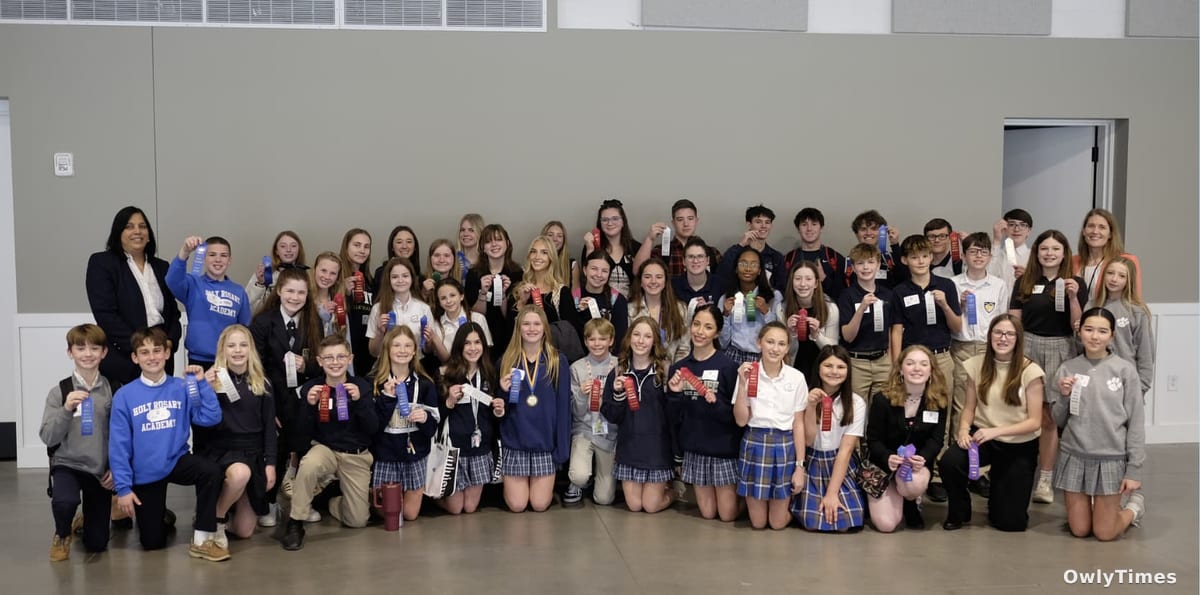
The narrative surrounding science education often focuses on national test scores and funding disparities, but a quieter story unfolded this February at the Catholic Pastoral Center in Nashville: the inaugural Diocese of Nashville Science Fair. More than 100 students from six schools – St. Ann, St. Henry, Holy Rosary Academy, St. Michael Academy, St. Patrick, and Pope Saint John Paul II Preparatory – presented projects spanning eleven categories, from physics to STEM for middle schoolers. While local news understandably highlighted the winners – and the charming photos of beaming students with Dr. Shana Druffner, superintendent of schools, and Amanda Peper, director of curriculum – the event’s true significance lies in what it demonstrates about fostering scientific curiosity within a specific educational context, and what that can tell us about broadening access to STEM fields. It wasn’t simply about identifying the “best” science project; it was about cultivating a culture where asking questions is valued as much as finding answers.
Drawn from nashvillecatholic.org.
The projects themselves offer a glimpse into the kinds of investigations that resonate with young scientists. Sixth-grader Chase Turner and classmate Nora Chudy from St. Michael Academy, for example, tackled a question many have pondered: does the “five-second rule” actually hold water? Their experiment, which earned them second place in the STEM showcase and the student choice award, investigated bacterial growth on dropped food. Meanwhile, Olivia Fulks, a seventh-grader at Pope Saint John Paul II Preparatory School, won the middle school grand champion award by challenging a common consumer assumption – that expensive dish soap is necessarily more effective. Her research demonstrated that the cheapest option performed just as well, a finding she wryly noted could save people money. These aren’t abstract, textbook-driven assignments; they’re investigations rooted in everyday observations, a crucial element in sparking sustained interest in science. What’s particularly noteworthy is the emphasis on practical application and questioning established norms, skills that extend far beyond the laboratory.
The success of the student choice awards – where peers voted for their favorite projects – underscores a critical, often overlooked, aspect of science communication. Carra Smits and Cora Smelcer from JPII, whose project explored vitamin C degradation in fruits, won both first place in high school chemistry and the student choice award. They attributed their success to connecting with a broader audience, noting the appreciation they felt from students they didn’t even know. This highlights the importance of being able to articulate complex scientific concepts in an accessible way, a skill that’s often undervalued in traditional science education. The ability to explain your work to a non-expert audience is paramount, not just for securing funding or public support, but for fostering a scientifically literate society. Savannah Hurst, the high school grand champion, echoed this sentiment, describing the fair as “fun” because of the opportunity to learn from others and ask questions.
However, it’s important to avoid overstating the implications of a single, localized event. The Diocese of Nashville represents a specific demographic and educational philosophy. While the participation of over 100 students is encouraging, it represents a relatively small sample size. Furthermore, the projects presented were, by definition, those deemed worthy of recognition by judges – we don’t know the full scope of projects attempted, or the experiences of students who may not have placed. It’s also crucial to acknowledge the role of dedicated teachers like Kelly Smelcer at JPII, who provided crucial support to students like Olivia Fulks. The success of this science fair isn’t solely attributable to student curiosity; it’s a testament to the quality of instruction and the resources available within these schools.
Looking ahead, Amanda Peper’s stated goal of expanding the event is a crucial next step. The real test will be whether the Diocese can broaden participation to include more schools and students, and whether they can sustain the momentum generated by this inaugural fair. More importantly, researchers should investigate how this type of event impacts students’ long-term engagement with STEM. Does participation in a science fair like this correlate with increased enrollment in advanced science courses? Does it influence career choices? And, crucially, can the elements that made this fair successful – the emphasis on real-world questions, peer-to-peer learning, and teacher support – be replicated in other educational settings, particularly those serving underrepresented communities? The question isn’t just whether we can hold more science fairs, but whether we can leverage these events to cultivate a more diverse and engaged scientific workforce.