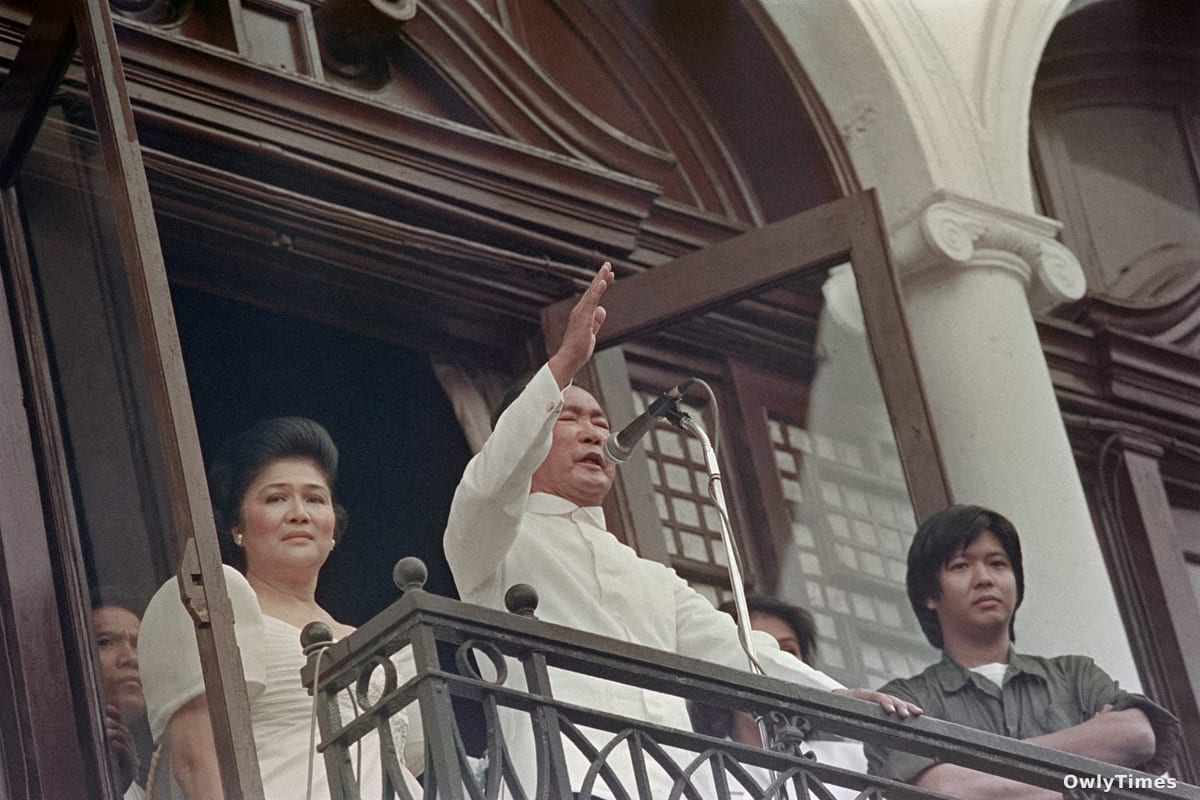

The unraveling of the Marcos Jr. presidency wasn’t a sudden shock, but a slow burn predicted by a father’s private anxieties half a century ago. In 1972, Ferdinand Marcos Sr., already entrenched in power, penned a diary entry revealing his “principal worry”: his son, Ferdinand “Bongbong” Marcos Jr., was “too carefree and lazy.” That assessment, initially a paternal concern about character, now reads as a chilling foreshadowing of a leadership defined by a lack of discernible plan and a resurgence of the corruption that defined the first Marcos era. The current crisis – a fractured alliance with Vice President Sara Duterte, a multi-billion dollar corruption scandal, and a plummeting approval rating – isn’t a deviation from the script, but a logical consequence of an electorate prioritizing dynastic rehabilitation over competent governance.
The strategic calculus behind Marcos Jr.’s 2022 landslide victory was simple: leverage name recognition and a carefully curated narrative of unity to overcome decades of historical baggage. He successfully tapped into a potent nostalgia, particularly among those who remembered the Marcos Sr. years through a rose-tinted lens, while simultaneously appealing to younger voters unfamiliar with the brutal realities of martial law. This wasn’t a campaign built on policy specifics, as noted by Susan Kurdli, assistant professor at De La Salle University in Manila, who observed that he “won the election largely by relying on the tried and tested tactics of tribalism, name recognition and alliance building.” The promise of “unity” functioned as a blank check, allowing expectations to be managed downwards and obscuring the absence of a concrete agenda. Who benefited? Primarily, the Marcos family, securing a return to power and an opportunity to rewrite their legacy. Who lost? The Filipino people, who were sold a vision of progress without the substance to deliver it.
Drawn from Al Jazeera.
The initial economic indicators offered a glimmer of hope, but a closer look reveals a troubling trend. While the Philippines boasts a youthful demographic – almost half the population is under 24 – economic growth has lagged behind expectations. In 2025, the economy posted a sluggish 4.4 percent growth, significantly below the government’s target of 5.5-6.5 percent. Andrew Masigan, a political analyst and economist, argues that Marcos Jr. “squandered” this demographic advantage, and that the country should be experiencing growth rates of 7-8 percent annually. This underperformance is compounded by a sharp decline in foreign investment, falling from $9.42 billion in 2024 to $4.7 billion in 2025 – the steepest drop in five years, according to the Philippine Statistics Authority (PSA). Simultaneously, unemployment rose from 3.8 percent to 4.2 percent, with only 172,000 jobs added to the market, marking the fifth-worst year for job creation in 25 years. The World Economic Forum’s 2026 Global Risks Report identifies a lack of economic opportunity and unemployment as the top risks facing the Philippines, a stark indictment of the administration’s economic policies.
The erosion of public trust, however, isn’t solely attributable to economic failings. The recent corruption scandal, involving billions of dollars in questionable infrastructure projects, has ignited widespread outrage. Allegations center around Ferdinand Martin Romualdez, the former Speaker of the House and a first cousin of the President, accused of manipulating the budget and concealing assets. Similar accusations have been leveled against Senator Maria Imelda Marcos, the President’s sister, and Ferdinand Alexander Marcos, his son. Public works department data reveals that these three Marcos relatives secured government projects worth at least $560 million over the past three years. The discovery of “ghost projects” – nonexistent infrastructure initiatives with allocated budgets – further fueled public anger, echoing the accusations of plunder that plagued the first Marcos regime. The scale of the alleged corruption, estimated at $2 billion in flood control projects alone between 2023 and 2025, is a potent reminder of the past, and a direct challenge to Marcos Jr.’s claims of good governance. This mirrors the historical pattern established by Marcos Sr., whose two decades in power were marked by accusations of emptying the Philippine treasury of up to $10 billion.
Despite the mounting evidence and public outcry, the situation isn’t a simple replay of 1986. Jan Credo, a political science professor at Silliman University, points to a key difference: the current military is “highly professionalized and no longer politicized.” Unlike the 1986 People Power Revolution, which relied heavily on military defection, there’s little indication of a similar movement brewing within the armed forces. This provides Marcos Jr. with a crucial layer of protection, even as calls for his removal grow louder. However, the fracturing of his alliance with Vice President Duterte – triggered by the International Criminal Court’s pursuit of her father, former President Rodrigo Duterte – introduces a new and unpredictable element. The Duterte family wields significant political power, particularly in the southern Philippines, and a full-scale break could destabilize the administration further. The current situation is reminiscent of the waning years of other authoritarian regimes, where internal divisions and external pressures converge to create a volatile environment.
The political chess move to watch next isn’t a military coup, but the response of Congress to the ongoing corruption investigations. Will the legislature, still dominated by Marcos allies, conduct a genuinely independent inquiry, or will it attempt to shield the President and his family? The passage – or failure – of an anti-political dynasty law will be equally telling. While Masigan and Credo both agree that such a law is crucial for long-term reform, its passage is unlikely given the composition of Congress. The question isn’t simply whether Marcos Jr. can survive this crisis, but whether he will use the remaining two years of his term to address the systemic issues that have plagued the Philippines for decades, or continue down a path of self-preservation and dynastic entrenchment. The answer will determine not only his legacy, but the future of Philippine democracy.