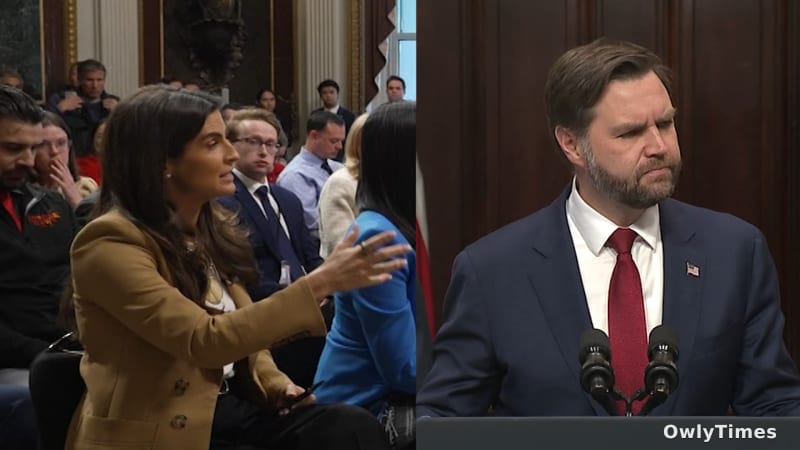

The halting of Medicaid payments to Minnesota isn’t simply about alleged fraud; it’s a calculated pressure point in a broader federal strategy to redefine the relationship between Washington and states resisting elements of the current administration’s agenda. Vice President JD Vance’s response to Kaitlan Collins of CNN, while framed as a matter of fiscal responsibility and accountability, reveals a willingness to weaponize federal funding to enforce compliance – a tactic with deep roots in American political history. The immediate impact is felt by Minnesota residents relying on Medicaid, but the long-term implications extend to any state perceived as challenging federal authority, creating a chilling effect on state-level autonomy.
The Calculus of Control: Funding as Leverage
The accusations of fraud within Minnesota’s Medicaid system, while serious and requiring investigation, conveniently align with a pattern of increased federal scrutiny towards states with Democratic leadership. This isn’t unprecedented. Throughout American history, federal funding has been used – and misused – as a tool for political coercion. The Reconstruction era following the Civil War saw federal funds withheld from Southern states as a condition for ratifying constitutional amendments guaranteeing rights to formerly enslaved people. More recently, the “New Federalism” movement under President Reagan sought to return power to the states, but simultaneously attached conditions to federal grants, effectively dictating policy choices. The current situation echoes this dynamic, albeit with a different ideological bent. The Biden administration, like its predecessors, is demonstrating that federal dollars come with strings attached, and those strings are being pulled tighter on states deemed politically adversarial.
Drawn from CNN.
Who Benefits and Who Loses in the Minnesota Freeze?
The immediate losers are the approximately 350,000 Minnesotans enrolled in Medical Assistance, the state’s Medicaid program. A disruption in funding, even temporary, creates uncertainty and potential hardship for vulnerable populations. Hospitals and healthcare providers also stand to lose revenue, potentially impacting their ability to deliver care. Politically, Governor Tim Walz and the Minnesota Democratic-Farmer-Labor party are positioned as defenders of their state’s programs against federal overreach, a narrative that could galvanize support.
However, the beneficiaries are less obvious, and more strategically positioned. The administration gains leverage in negotiations with Minnesota on other policy fronts, potentially related to energy policy, environmental regulations, or immigration. More broadly, the move sends a message to other states considering policies that diverge from the federal line: dissent will come at a cost. Conservative media outlets are amplifying the narrative of fraud and waste, bolstering the administration’s justification for the funding halt and appealing to a base concerned about government spending. The political calculus is clear: demonstrate toughness on alleged fraud to appease the base, while simultaneously exerting pressure on a political opponent.
Historical Echoes: The Southern Strategy Revisited
The tactic of targeting states for perceived transgressions resonates with the “Southern Strategy” employed by Richard Nixon in the late 1960s and early 1970s. While ostensibly focused on law and order, the strategy exploited racial anxieties and resentment towards federal intervention in Southern states. The current situation, while not explicitly racialized, shares a similar dynamic: framing states as irresponsible or corrupt to justify federal intervention and appeal to a specific segment of the electorate. The difference lies in the ideological framing. Nixon appealed to anxieties about social change; the current administration appeals to concerns about fiscal responsibility and government accountability. But the underlying principle – using federal power to punish political opponents and consolidate control – remains consistent.
Beyond Minnesota: The Expanding Scope of Federal Oversight
The focus on Minnesota isn’t isolated. CNN’s reporting also highlights scrutiny of other states, including investigations into potential fraud in programs administered by states with Democratic governors. This suggests a broader pattern of increased federal oversight and a willingness to use financial pressure to enforce compliance. Simultaneously, the administration is facing criticism for its handling of border security and immigration, issues where states like Texas have actively resisted federal policies. The halting of Medicaid funds to Minnesota, therefore, should be viewed as part of a larger, coordinated effort to assert federal authority and redefine the balance of power between Washington and the states.
The political chess move to watch next isn’t whether Minnesota will resolve the alleged fraud – that’s almost a formality. It’s whether the administration will escalate this tactic, targeting other states with similar accusations and leveraging federal funding to achieve its policy objectives. Specifically, will we see similar actions taken against states challenging federal environmental regulations or immigration policies? The answer to that question will reveal the true extent of this administration’s willingness to wield federal power as a political weapon.