
The Calculated Risk: Trump Leverages Messi’s Presence for Political Capital
The invitation to Inter Miami CF to celebrate their 2025 MLS Cup victory at the White House wasn’t about soccer; it was a calculated maneuver by Donald Trump to reassert his cultural relevance and project an image of mainstream acceptance. While championship team visits are a long-standing tradition, the context of a deeply polarized America – and the conspicuous presence of Lionel Messi alongside the former president – transforms the event from a sporting honor into a potent political statement. The strategic calculus is clear: normalize Trump’s image by associating it with global icons, even if that icon actively avoids political entanglement.
The dynamic immediately highlights a classic power imbalance. Trump benefits from the reflected glory of Messi’s star power, potentially softening his image among moderate voters and internationally. Inter Miami and owner Jorge Mas benefit from the global stage and the prestige of a White House celebration, further solidifying the club’s brand. But Messi and his supporters – and a significant segment of the American electorate – lose control of the narrative, facing the unavoidable perception of an implicit endorsement. This echoes a pattern seen throughout history, where political leaders have strategically leveraged cultural figures for legitimacy. Consider Richard Nixon’s outreach to Elvis Presley, or John F. Kennedy’s cultivation of artists and intellectuals – attempts to project an image of dynamism and cultural understanding.
This piece references the The New York Times report.
The situation was further complicated by the backdrop of ongoing geopolitical tensions. Trump used the event as a platform to deliver a lengthy update on military actions in Iran, detailing “24 ships in three days” and framing the situation as a decisive victory. This jarring juxtaposition – celebrating a sporting achievement while detailing military conflict – underscores the inherent political risk Messi took by attending. The presence of key cabinet members – Secretary of State Marco Rubio, Treasury Secretary Scott Bessent, and Transportation Secretary Sean Duffy – signaled the administration’s intent to use the event for broader political messaging. The fact that Trump referenced his son Barron’s fandom and his prior hosting of Cristiano Ronaldo alongside Saudi Crown Prince Mohammed bin Salman further illustrates the deliberate construction of a narrative around soccer and international relations.
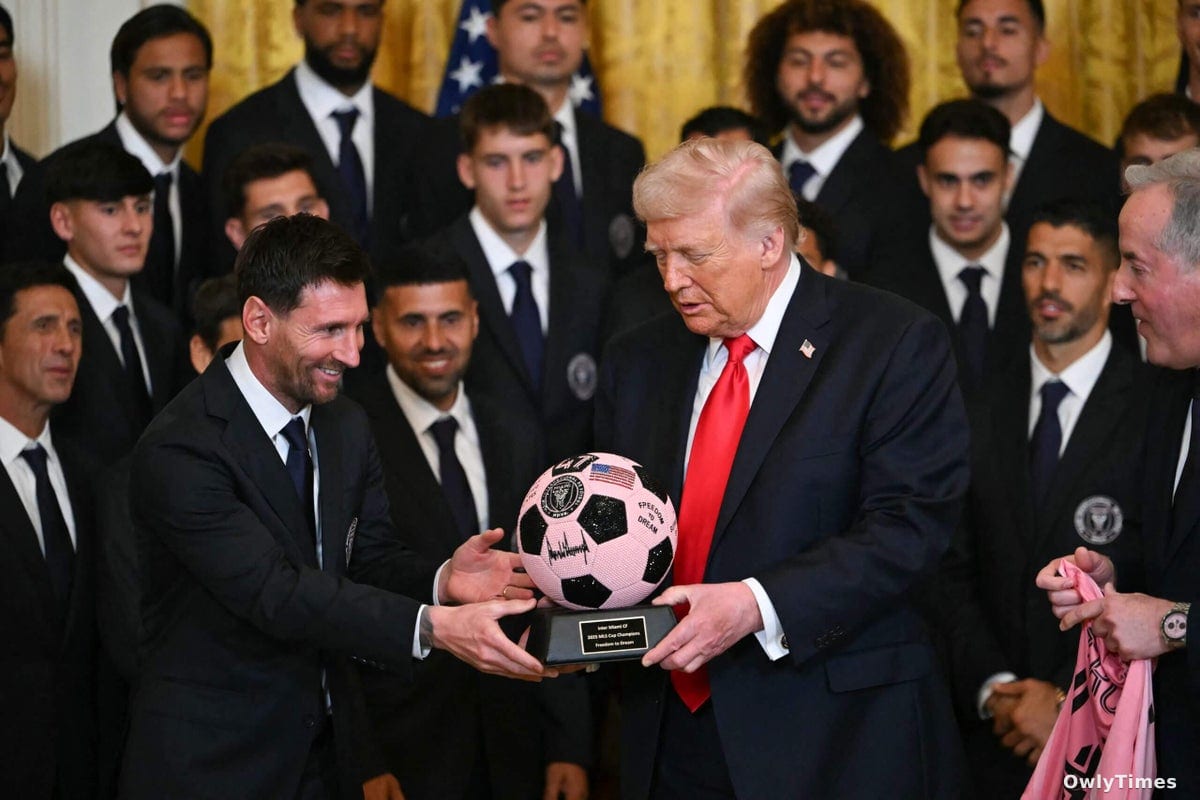
The careful choreography of the event – Messi positioned slightly behind Trump, occasionally glancing at his feet – speaks volumes. Messi’s team, acutely aware of his aversion to political statements, likely hoped to navigate the situation with minimal damage. This strategy proved partially successful; Messi avoided direct political pronouncements, and his limited English fluency provided a degree of plausible deniability. However, the images of Messi shaking Trump’s hand and presenting him with a signed ball and jersey are indelible, and will inevitably be used in political campaigns and media narratives. This mirrors the predicament faced by athletes during the Cold War, who were often pressured to participate in events designed to showcase ideological superiority.
Inter Miami appears to have achieved its primary objective: a high-profile celebration of their championship. Trump, too, can claim a win, having secured a photo opportunity with one of the world’s most recognizable figures. But the long-term consequences for Messi and the MLS remain to be seen. The vocal backlash from left-leaning supporter groups is already evident, and the incident could alienate a segment of Messi’s fanbase. The critical question now is whether Trump will actively leverage the images and association with Messi in his ongoing political activities. Will he feature Messi in campaign ads, or use the event to bolster his claims of widespread support? That is the political chess move to watch next.