
Global sporting spectacles are rarely just about athletic prowess; they are high-stakes arenas for political branding, diplomatic alignment, and soft-power projection. President Donald Trump's public endorsement of Argentina ahead of the 2026 FIFA World Cup final represents a calculated attempt to align his personal brand with a legendary global icon while signaling support for a key ideological ally in South America. By backing the defending champions, Trump sought to leverage the immense cultural capital of Lionel Messi and Argentina's leadership, only for the final whistle to invite fresh scrutiny over the strategic risks of his high-profile endorsements. This political calculus backfired on the pitch, illustrating how quickly sports diplomacy can transform into a liability when the final score defies executive expectations.
Geopolitical Soft Power and the Battle for MetLife Stadium
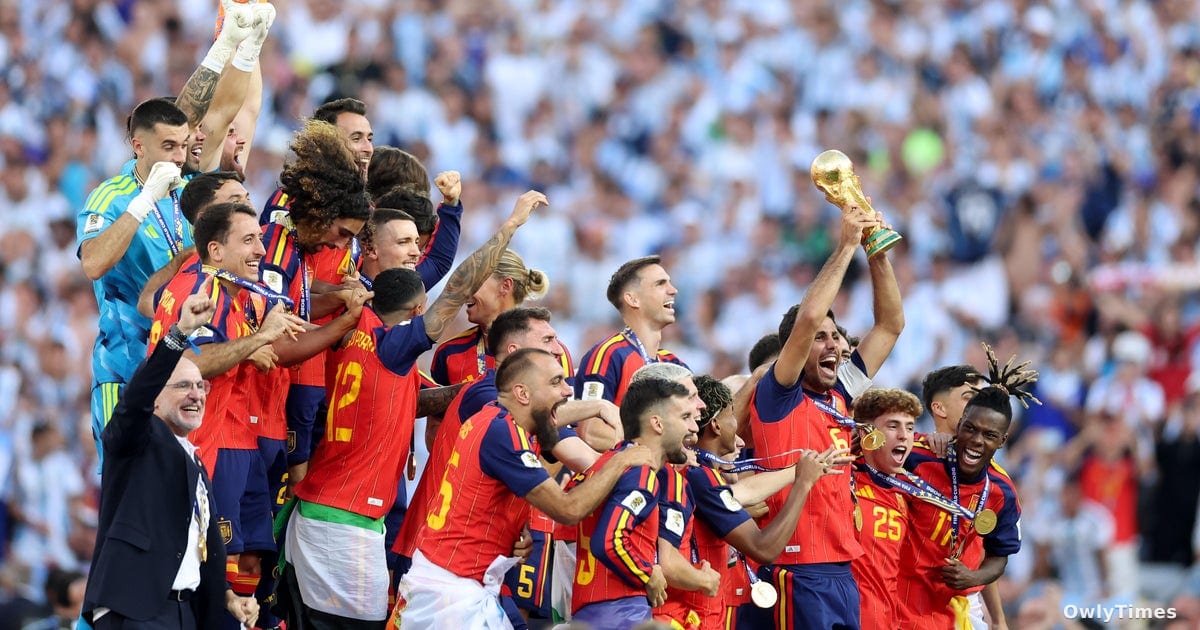
The final match on July 19, 2026, at MetLife Stadium in East Rutherford, New Jersey, concluded a massive 39-day tournament that tested the logistical and security capabilities of three host nations. Spain captured its second World Cup title with a grueling 1-0 victory over Argentina, secured in the 106th minute of extra time. According to CBS News, substitute Ferran Torres scored the decisive goal, capitalizing on a loose ball in the penalty box to beat Argentina goalkeeper Emiliano Martínez. The match was defined by intense physical play, culminating in a red card for Argentina's Enzo Fernández in stoppage time of the second half after a reckless challenge on Spanish defender Pau Cubarsi.
Despite Spain’s absolute dominance in regulation—outshooting Argentina 15-0 and taking nine corners to Argentina's one—Martínez kept the South American side alive. The goalkeeper recorded 12 saves, the most ever in a World Cup final, including a spectacular dive to deny a 22-yard free kick from Spanish prodigy Lamine Yamal. As reported by NBC News, the tournament showcased a mix of established legends like Messi and rising stars, culminating in a dramatic finish that left the Argentine squad sitting on the turf in disbelief while Spanish players celebrated their historic dual-crown achievement.
Who Benefits and Who Loses in the Expanded Tournament Arena
Evaluating the tournament through the framework of who benefits and who loses reveals the shifting power dynamics of global soccer. Under the newly expanded format featuring 48 nations and 104 matches, the clear beneficiaries are FIFA and the North American hosts, who successfully managed over six million fans across three countries. Smaller, historically marginalized soccer nations also benefited immensely from the expanded field. As highlighted by NPR, Cape Verde’s 40-year-old goalkeeper Vozinha emerged as a breakout star of the tournament, demonstrating that the expansion did not dilute the quality of play as critics had feared.
Conversely, the losers of this tournament cycle include the traditionalists who chafed at the introduction of mandatory hydration breaks and a commercialized, American-style halftime show. From a competitive standpoint, the biggest loser was the Argentine national team, which failed to register a single shot on target during regulation play. Argentina’s notorious reputation as slow starters—which served them well during their 2022 championship run and their narrow escape against England earlier in this tournament—ultimately failed them when confronted with Spain's relentless defensive structure.
The Presidential Endorsement and the Specter of the Curse
Trump’s pre-match intervention added a distinct political dimension to the sporting event. In a pre-recorded interview with Fox's Jenny Taft, Trump stated that "it’s hard to bet against Messi" and explicitly noted his friendship with the head of Argentina, praising his leadership. This endorsement quickly became a liability. As documented by The Independent, critics and social media observers immediately revived the narrative of the "Trump curse," pointing out that the president's favored teams frequently suffer high-profile defeats.
This pattern of political involvement in sports has a clear precedent. Earlier in the tournament, Trump intervened to get a red card overturned for USA striker Folarin Balogun so he could participate in the round of 16. The strategic move failed to pay off, as the U.S. squad was subsequently eliminated in a crushing 4-1 loss to Belgium. Similar sporting failures have followed Trump's public alignments, including his attendance at a New York Knicks playoff game in June and a Washington Commanders game in November 2025, both of which ended in defeats that broke winning streaks or derailed seasons.
Historical Milestones and the Next Global Chess Moves
Spain's triumph establishes a remarkable historical precedent, making them the first nation to simultaneously hold both the men's and women's World Cup titles. The victory also cemented a personal milestone for Spain's head coach, Luis de la Fuente, who at 65 became the oldest coach to ever win a World Cup. The victory also reversed a historical precedent dating back 60 years to the 1966 World Cup, when Argentina defeated Spain 2-1 during the group stage. Furthermore, Spain’s defense allowed only one goal across eight matches, setting a tournament record for the fewest goals conceded by a champion, while extending their unbeaten streak to 38 matches—surpassing the previous European record of 37 held by Italy.
The final political chess move to watch next will play out in the administrative and diplomatic planning for the upcoming CONCACAF Nations League matches scheduled for this fall, alongside the potential 2028 Copa América in the United States. These upcoming tournaments will serve as critical indicators of whether the surge in North American soccer enthusiasm can be sustained and successfully monetized. Meanwhile, the geopolitical focus shifts toward the 2030 World Cup, which will be hosted in part by Morocco, offering African soccer another prominent stage to challenge the traditional European and South American duopoly.