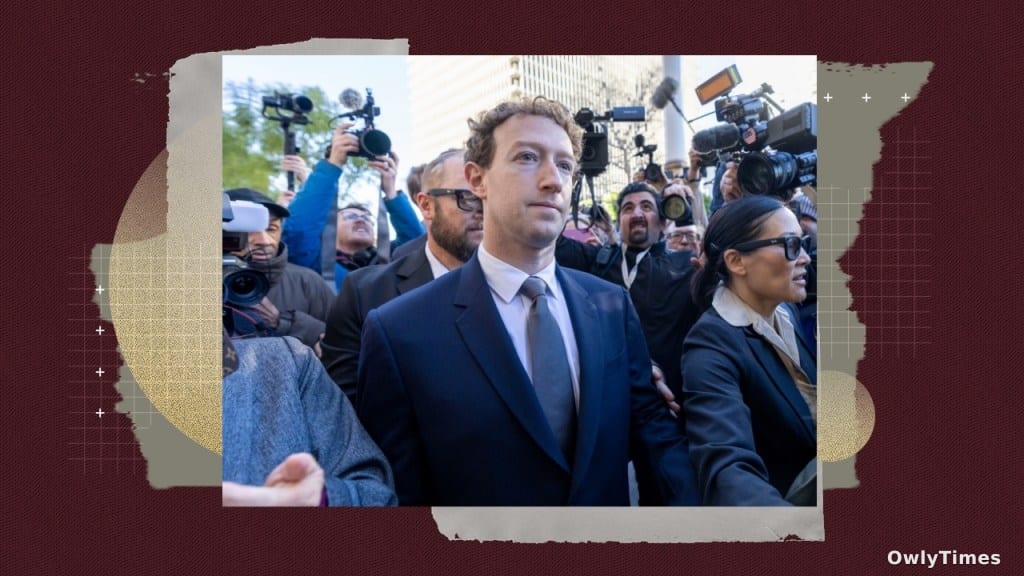

The courtroom felt less like a space for justice and more like a digital autopsy. Last week in Los Angeles, Mark Zuckerberg, CEO of Meta, sat before a jury, defending not just his company, but an entire business model predicated on capturing – and holding – attention. The case, known as the “KGM Trial,” isn’t about Facebook’s algorithms recommending political content or the spread of misinformation. It’s about whether platforms like Instagram, TikTok, and YouTube are intentionally designed to addict children, and the devastating mental health consequences that follow. But beyond the headlines of tech giants facing existential threats, this trial is a seismic shift that could redefine the relationship between entertainment, engagement, and responsibility – a shift the sports industry, with its increasingly sophisticated fan engagement strategies, can’t afford to ignore.
The plaintiff, Kaley G.M. (KGM), a 20-year-old, alleges that her addiction to Instagram, TikTok, and YouTube fueled anxiety, body dysmorphia, and online bullying. While Snapchat and TikTok have already settled with KGM, Meta is fighting, arguing that her problems stem from pre-existing issues, specifically her parents’ divorce when she was three years old. This defense highlights a crucial tension: even proving negligence, the plaintiff must demonstrate a direct causal link between platform use and harm. But the core of the case isn’t about individual circumstances; it’s about the architecture of addiction built into these platforms. Features like “infinite scrolling,” autoplay, and dopamine-triggering reward systems – “likes,” comments, push notifications – are presented as deliberate tools to keep users hooked, exploiting the developing brains of young people who are particularly vulnerable to their influence.
This isn’t simply a legal battle; it’s a cultural reckoning. We’ve normalized a world where attention is the ultimate currency, and platforms are locked in a relentless competition for our eyeballs. Leah Plunkett, a Harvard Law School professor specializing in digital privacy, frames social media as “stages” where children perform for attention, often monetized, while others “pay” with their time, data, and even their well-being. This framing is particularly resonant when considering the sports world. Leagues, teams, and athletes are increasingly reliant on these same platforms to cultivate a new generation of fans, using similar tactics to drive engagement. The NBA, for example, boasts a highly successful TikTok presence, leveraging short-form video and viral trends to reach younger audiences. But if the very tools used to build that fanbase are deemed inherently harmful, what does that mean for the future of sports marketing?
The implications extend far beyond social media. The lawsuit invites scrutiny of any app designed to maximize user engagement, including those in the rapidly expanding sports betting and fantasy sports industries. A 2023 NCAA study revealed that a staggering 67% of college students engage in sports betting, with 41% wagering on their own schools. This is a demographic particularly susceptible to addictive behaviors, and companies like DraftKings are already facing legal challenges. A recent case brought by the Public Health Advocacy Institute (PHAI) alleges unfair and deceptive practices related to DraftKings’ bonus sign-up promotions, with a Massachusetts judge allowing the case to proceed to a jury trial. Mark Gottlieb, PHAI’s executive director, points out the parallels: “Much like the social media companies on trial in Los Angeles, the leading sports gambling platforms all use…advanced algorithms created by tracking every click and demographic detail of each of their users to maximize time on device and engagement with their products.”
See the original sportico.com story for the full account.
The legal arguments are complex, invoking Section 230 of the Communications Decency Act, which generally shields social media companies from liability for user-generated content, and the First Amendment’s protection of free expression. But the tide may be turning. Australia has already banned social media for children under 16, and prominent U.S. politicians, including California Governor Gavin Newsom, are advocating for similar reforms. The KGM Trial, regardless of its outcome, is forcing a conversation about the ethical responsibilities of tech companies and the need for greater regulation. It’s also raising a critical question for the sports industry: are current privacy policies, which often state services aren’t directed at children, enough to mitigate potential legal risks?
The outcome of the KGM Trial will undoubtedly shape the future of social media regulation. But the more pressing question for the sports industry isn’t just about legal compliance. It’s about proactively addressing the potential harms of addictive engagement strategies. Will leagues and teams prioritize long-term fan well-being over short-term engagement metrics? Will they invest in responsible marketing practices and explore alternative models that don’t rely on exploiting psychological vulnerabilities? The answer will determine whether the sports industry can navigate this evolving landscape ethically and sustainably, or risk becoming the next target in the reckoning over the attention economy.