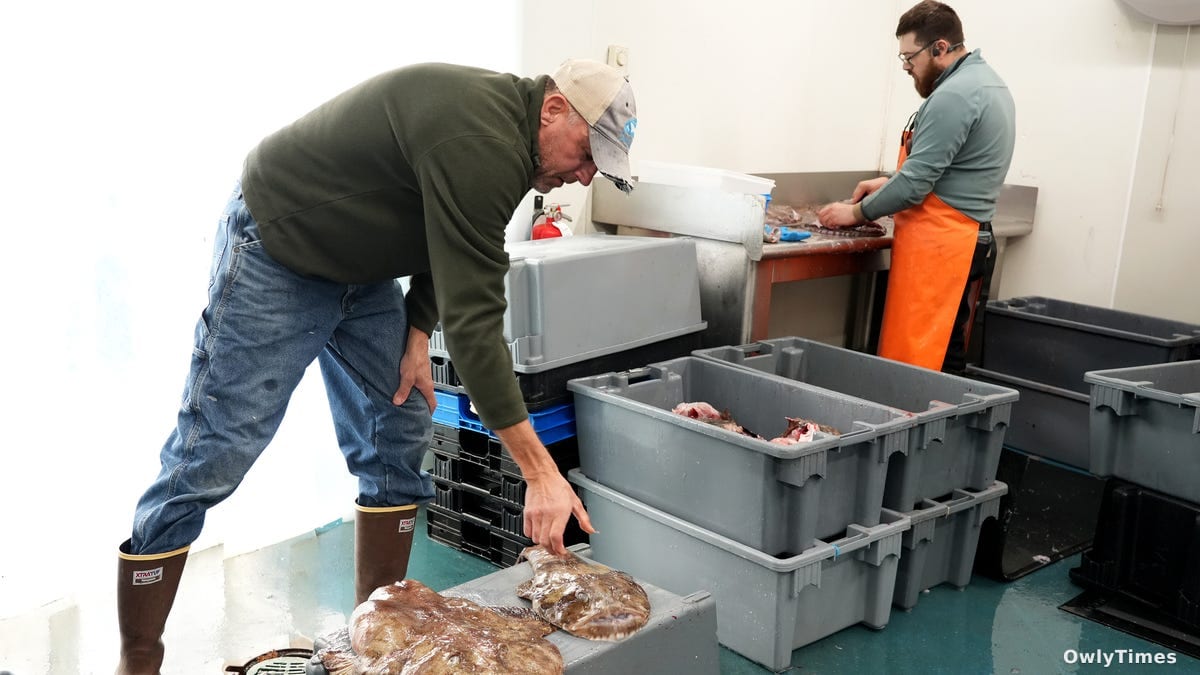

The story of the monkfish, a bottom-dwelling species prized for its firm, lobster-like texture, isn’t simply about a fishery – it’s a case study in how well-intentioned conservation can misfire when data collection doesn’t reflect real-world conditions. Recent collaborative research, born from frustration within the New England fishing community, reveals a critical flaw in how monkfish populations are assessed, a flaw that led to unnecessarily restrictive catch limits following the disruptions of the COVID-19 pandemic. The issue isn’t that scientists are doing bad science, but that the standard tools for evaluating fish stocks are particularly vulnerable when applied to a species with limited existing biological data and a fishery heavily influenced by economic factors.
For decades, monkfish stock assessments have relied on a combination of federal bottom trawl surveys – where research vessels systematically drag nets across the ocean floor – and commercial catch data. This approach works reasonably well for many species, but monkfish present a unique challenge. As Steve Cadrin, a professor at the UMass Dartmouth School for Marine Science & Technology, explains, monkfish are considered a “data poor” stock, meaning scientists lack comprehensive information on their age, growth rates, and natural mortality. Consequently, assessments are highly sensitive to fluctuations in catch numbers. When seafood markets shuttered and fewer boats went out during the pandemic, the resulting drop in landings was interpreted as a sign of declining monkfish populations, triggering lower catch limits for fishermen.
See the original capecodtimes.com story for the full account.
Greg Connors, a gillnet fisherman based in Chatham, Massachusetts, experienced this disconnect firsthand. He recounted passing a federal research vessel towing gear through an area he knew to be barren of monkfish, sharing his observation through the Cape Cod Fishermen’s Alliance. “They were just burning fuel and not collecting data,” he said. This sentiment – that the surveys weren’t accurately reflecting the fish’s presence – sparked a collaboration between the Fishermen’s Alliance and researchers at UMass Dartmouth. The project, spearheaded by graduate student Sierra Richardson, aimed to incorporate fishermen’s knowledge and a more nuanced understanding of fishing effort into the stock assessment model. In 2023 alone, commercial monkfish landings in the U.S. totaled approximately 15.4 million pounds, valued at $11.8 million, with Massachusetts accounting for 61% of that haul, highlighting the economic importance of an accurate assessment.
The core of the new research lies in shifting the focus from how many monkfish are caught to how often fishermen are actively targeting them, and with what success. The team analyzed decades of fishing data, factoring in variables like water depth, time of year, and even the presence of other species – like skates – that might deter fishermen from pursuing monkfish. This is crucial because fishermen don’t operate on a fixed schedule; they respond to market prices, bycatch, and their own accumulated knowledge of where the fish are likely to be. Melissa Sanderson, Chief Operating Officer of the Fishermen’s Alliance, explains that traditional assessments often fail to account for these shifts in effort, leading to inaccurate conclusions about population size. “When fishermen’s effort shifts, and monkfish catch decreases as a result…it resulted in a decrease in future allowable harvest. Not necessarily because there were less monkfish in the ocean, but because vessels were tied to the dock during COVID.”
However, it’s important to acknowledge the limitations of this approach. While incorporating fishing effort provides a more realistic picture, it relies on the accuracy of fishermen’s logbooks and dealer records. The research team addressed this by cross-referencing data from at-sea observers and validated seafood landings, but inherent biases in self-reported data can still exist. Furthermore, the study focuses on factors influencing catch rates, not necessarily the overall health of the monkfish population. A high catch rate doesn’t guarantee a thriving ecosystem; it simply indicates where and when fishermen are finding fish. The inherent movement of monkfish in concentrated bands also presents a challenge, as fixed survey routes may miss these aggregations, leading to underestimates of abundance.
The next critical step is the integration of these standardized catch rates into the official monkfish stock assessment conducted by the New England Fishery Management Council. The research was presented to a subpanel of the Council’s Scientific and Statistical Committee on March 13th, and the potential impact on future catch limits remains to be seen. But beyond monkfish, this collaborative approach offers a valuable template for managing other “data poor” fisheries. Consider the implications for black sea bass, another commercially important species in the region where traditional assessments struggle to capture the full picture. If future research adopts a similar methodology – actively incorporating the expertise of fishermen and accounting for the dynamic nature of fishing effort – we might avoid repeating the cycle of overly conservative regulations based on incomplete data. The question now is whether regulatory bodies will fully embrace this collaborative model, or revert to relying solely on traditional, and potentially flawed, methods.