
Beyond Hormones: A New Approach to Contraception Gains Momentum
The persistent challenge of developing effective, non-hormonal contraception isn’t simply a scientific hurdle; it’s a global health and economic imperative. While headlines often focus on the latest pharmaceutical breakthroughs, the underlying story is often one of incremental progress and complex trade-offs. A new initiative led by the UNC Structural Genomics Consortium (SGC-UNC), funded by the Gates Foundation, is attempting to leapfrog these limitations by focusing on a highly specific target within sperm cells – a strategy that could redefine contraceptive options for millions. This isn’t about replacing existing methods, but about expanding choice, particularly for those for whom hormonal contraception presents unacceptable side effects or health risks.
Reporting from unc.edu informs this analysis.
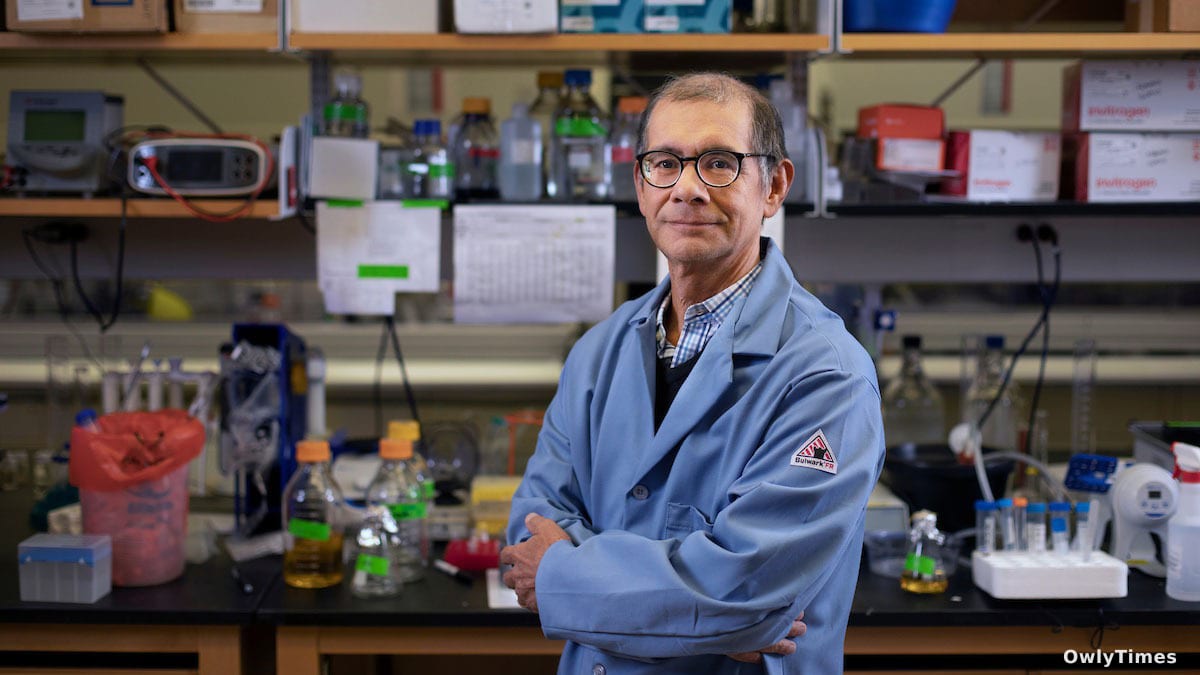
Tim Willson, Harold Kohn Distinguished Professor in Open Science Drug Discovery and chief scientist for SGC-UNC, frames the issue with stark clarity: “Pregnancy is one of the major drivers of poverty in many of these countries.” This statement underscores the project’s broader aim – empowering women with greater control over their reproductive lives as a pathway to economic stability. The SGC-UNC team isn’t simply searching for a molecule to block fertilization; they’re operating within a larger framework of global health equity, recognizing that access to reliable contraception is inextricably linked to social and economic well-being. Their work is central to the Gates Foundation’s Contraceptive Drug Accelerator (CoDA), a network designed to accelerate the identification and validation of new drug targets.
The team’s focus is phosphoglycerate kinase 2 (PGK2), an enzyme almost exclusively expressed in sperm cells and vital for their energy production and motility. This specificity is the core of the strategy. Unlike hormonal contraceptives, which circulate throughout the body and interact with a wide range of systems, a drug targeting PGK2 could, in theory, exert its effects locally within the reproductive tract, minimizing systemic side effects. Willson explains, “What makes PGK2 so interesting is that it’s almost exclusively expressed in sperm cells.” The envisioned contraceptive would temporarily inhibit PGK2, effectively immobilizing sperm by depriving them of the adenosine triphosphate (ATP) needed to swim and fertilize an egg.
What distinguishes this project from many others in the pharmaceutical pipeline is its commitment to “open science.” All data, compounds, and findings are shared freely and immediately among collaborators at Baylor College of Medicine in Texas and the Institute for Stem Cell Science and Regenerative Medicine in Bangalore, India. Weekly meetings facilitate real-time data exchange, a practice Willson highlights as a key driver of their rapid progress. Since the project’s launch in May 2025, the team has already synthesized five highly selective “probe compounds” – a remarkably fast pace for early-stage drug discovery, typically a process spanning years. This accelerated timeline isn’t accidental; it’s a direct result of the collaborative, data-sharing ethos.
However, it’s crucial to understand what these “probe compounds” are and aren’t. They are not contraceptives themselves. They are tools used to investigate the biological effects of inhibiting PGK2, to confirm that the target is indeed viable and to understand potential off-target effects. The current phase involves distributing these probes across the CoDA network for rigorous testing in models of sperm function. This is a critical step, as initial selectivity in laboratory settings doesn’t guarantee the same outcome in more complex biological systems.
Limitations to consider include the potential for unforeseen interactions with other proteins, the challenge of achieving sufficient drug concentration in the reproductive tract via oral administration, and the possibility of sperm developing resistance to the inhibitor over time. Furthermore, the success of this approach hinges on the assumption that PGK2’s role in sperm function is truly indispensable – a hypothesis that requires continued validation. The focus on sperm-specific targets also doesn’t address the need for emergency contraception or protection against sexually transmitted infections.
The next steps involve extensive biological testing of the probe compounds, followed by optimization to improve their potency, bioavailability, and safety profile. If these initial tests are successful, the team will move towards preclinical studies in animal models, and eventually, human clinical trials. The critical question now isn’t simply if a non-hormonal contraceptive targeting PGK2 is possible, but how to translate this promising early-stage discovery into a safe, effective, and accessible option for women worldwide. Researchers will be closely watching for any indications of off-target effects during the biological testing phase – any evidence that the probe compounds are impacting cells beyond sperm could signal a significant setback.





