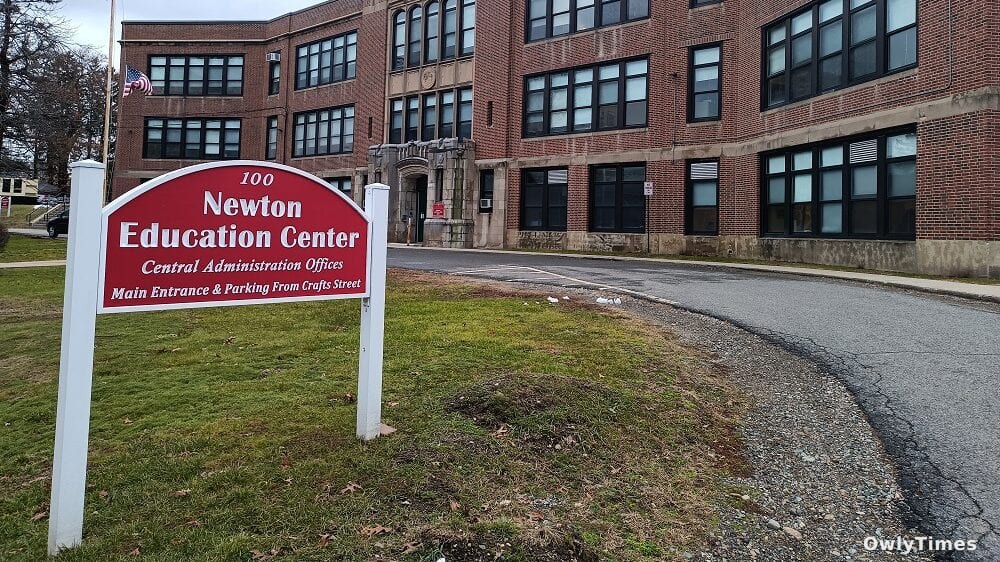

$107,000. That’s the projected surplus for Newton Community Education (NCE) this fiscal year – a figure that, on the surface, signals a remarkable turnaround for the organization. But a deeper look reveals a recovery built on austerity, raising questions about NCE’s long-term capacity for growth and innovation. Follow the money, and a clear pattern emerges: NCE’s financial health is now directly tied to reduced staffing, a reliance on volunteer labor, and a strategic shift in program structure, all while grappling with a uniquely challenging fiscal cycle.
Founded in 1991 as a self-sustaining entity within Newton Public Schools, NCE historically operated with a $1.9 million annual budget, offering a diverse catalog of classes from woodworking to yoga. However, the COVID-19 pandemic triggered a cascade of financial problems. Enrollment plummeted, and fixed costs – notably a roughly $160,000 annual pension bill and custodial service fees – remained constant, resulting in a $300,000 deficit reported in 2024. The solution, implemented by Kate Carpenter Bernier, NCE’s executive director, wasn’t increased funding or new revenue streams, but significant personnel cuts.
The most impactful decision was the elimination of the Director of Finance and Administration position, alongside the reduction of 1.2 office positions. This represents a nearly 16% reduction in core administrative staff. While this immediately addressed the deficit, it created a dependency on volunteer support – specifically, a part-time bookkeeper and two volunteers, one of whom is a member of the NCE commission, to handle financial analysis, projections, and budgeting. This reliance on unpaid labor isn’t a sustainable long-term strategy; as Carpenter Bernier herself acknowledges, it’s a “catch-22.” The cost savings are essential for the current surplus, but rebuilding internal capacity is crucial for future expansion.
The shift in program structure also played a key role in the rebound. NCE conducted focus groups and subsequently redesigned its after-school clubs to be longer and run for an entire semester. This resulted in fewer individual enrollments, but a 25-30% increase in revenue per enrollment. This demonstrates a successful, albeit limited, strategy of prioritizing revenue per customer over sheer volume. Adult programming also saw a nearly 50% surge compared to the previous fall, but summer camps remain the dominant revenue driver, accounting for approximately half of NCE’s total income. This concentration in a single seasonal program creates inherent vulnerability.
Drawn from newtonbeacon.org.
The timing of NCE’s expenses is particularly noteworthy. As highlighted by Claire Wadlington, a member of the NCE commission, the organization’s lowest revenue period – fall – coincides with its highest expense period, driven by the substantial pension obligation and summer camp labor costs. This creates a consistent cash flow challenge that necessitates careful financial management and, in the recent past, drastic cost-cutting measures. The current surplus, while positive, doesn’t erase this underlying structural imbalance.
Looking ahead, John Rice, the city’s chief of community services, is collaborating with NCE to explore new programs and revenue opportunities, including relocating art classes to the Cooper Center and partnering with the Parks and Recreation Department on a carpentry program for adults with disabilities. These initiatives, coupled with cross-promotion between city events and NCE offerings, represent a proactive attempt to diversify revenue streams and increase enrollment. However, Carpenter Bernier emphasizes that sustained growth hinges on restoring internal capacity. “You need staff in order to really deliver your product well,” she stated.
The question now isn’t whether NCE can maintain a surplus, but whether it can do so without sacrificing the internal expertise necessary for long-term success. Will the organization prioritize reinvesting in staff, potentially eroding the current surplus, or continue to rely on volunteer support, risking burnout and limiting its ability to capitalize on new opportunities? Investors – in this case, Newton residents who fund NCE through program fees and potential future city allocations – should watch closely to see if the current financial stability translates into a sustainable model for growth, or simply a temporary reprieve achieved through austerity.