
$300 Million in Potential Costs: Long Island Towns Confront the Waste Crisis
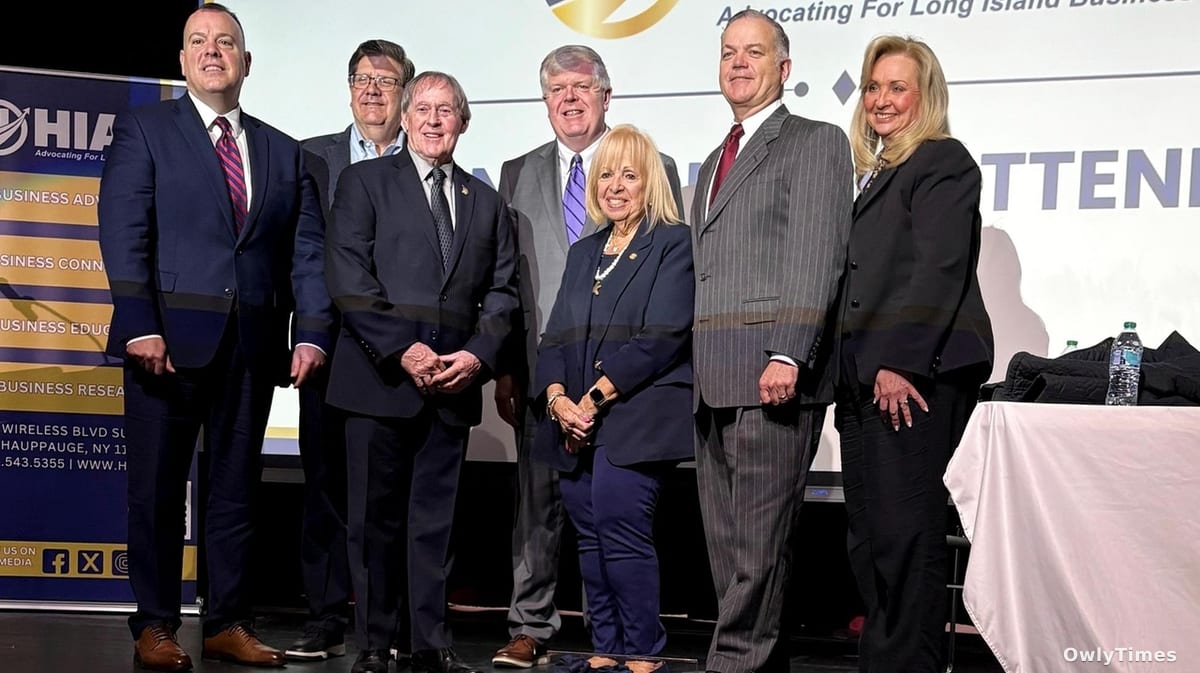
A looming $300 million price tag for waste disposal – that’s the unspoken financial weight hanging over Thursday’s Suffolk County supervisors’ panel discussion hosted by HIA-LI at the Suffolk Y Jewish Community Center in Commack. While the event, featuring Rich Schaffer (Babylon), Dan Panico (Brookhaven), Ed Smyth (Huntington), Angie Carpenter (Islip), and Ed Wehrheim (Smithtown), touched on topics ranging from sewer infrastructure to airport expansion, the escalating cost of garbage removal emerged as the most critical, and potentially destabilizing, economic factor facing the region. Panico’s blunt assessment – “It’s a cliche — ‘I have to throw out my garbage’ — but you don’t throw anything out, it goes someplace” – underscores a fundamental truth often obscured by municipal logistics: waste isn’t disappearing, it’s becoming exponentially more expensive to manage. Brookhaven’s landfill, slated for permit expiration in July, is seeking a five-year extension, a temporary fix that merely postpones a systemic problem.
Source material: newsday.com.
The urgency stems from a confluence of factors. Long Island’s geographic constraints – surrounded by water, limiting landfill options – coupled with a steadily increasing population, are driving up disposal costs. While precise figures vary depending on technology and transportation distances, current estimates place the cost of exporting waste to out-of-state landfills at approximately $150-$200 per ton. Brookhaven Town alone generates roughly 1.5 million tons of waste annually; a $50/ton increase in disposal fees translates to a $75 million annual burden on residents and businesses. This isn’t merely an environmental issue; it’s a direct tax on affordability, impacting housing costs, business operating expenses, and overall economic competitiveness. The supervisors’ discussion of alternative energy sources, championed by Panico, represents a proactive attempt to mitigate these costs, but the scale of investment required to significantly reduce waste volume through recycling and waste-to-energy initiatives remains substantial.
Beyond the landfill crisis, the panel revealed a broader pattern of localized infrastructure investments aimed at stimulating economic growth. Wehrheim highlighted a post-2018 surge in development in Smithtown, directly attributable to infrastructure improvements in Kings Park, Smithtown, and St. James. This mirrors a national trend: a 2023 study by the American Society of Civil Engineers estimates that every $1 invested in infrastructure yields $3.50 in economic output. Schaffer’s focus on sewers for Deer Park, projected within five years, and a Route 231 overlay district, are similarly designed to unlock development potential by addressing fundamental infrastructure gaps. These projects, however, rely heavily on municipal bonding and state funding – a precarious position given New York State’s ongoing budget challenges. Cara Longworth, Long Island regional director at Empire State Development, attended the event, signaling a potential willingness to collaborate, but concrete commitments remain elusive.
The discussion around housing stock revealed a critical tension between developer incentives and community needs. Smyth’s pointed critique of developers focusing solely on rental units – “If you’re in the development community, you have to have an owner-occupied component to your development or you’re going to have a very, very rough road ahead” – highlights a growing concern that an oversupply of rentals could depress property values and exacerbate affordability issues for long-term residents. Huntington’s Melville Town Center Overlay District, designed to foster a walkable downtown with mixed housing options, represents a model for balanced development, but its success hinges on attracting developers willing to prioritize owner-occupancy. This is particularly relevant given that Long Island’s median home price remains 35% higher than the national average, according to the latest data from the National Association of Realtors.
Finally, Carpenter’s mention of a potential expansion at Long Island MacArthur Airport, including a new north terminal, underscores a strategic bet on regional connectivity. While the economic impact of airport expansions is often debated, a 2022 study by the Airports Council International found that every $100 million invested in airport infrastructure generates 11,569 jobs. However, the feasibility of MacArthur Airport’s expansion depends on securing funding and navigating environmental concerns, particularly given the airport’s proximity to residential areas. The supervisors’ collective emphasis on local control – as articulated by moderator Joe Campolo, who stated the “buck stops” with the towns – suggests a cautious approach to large-scale projects, prioritizing community input and fiscal responsibility.
What this means for your wallet: Expect to see increased property taxes and service fees across Suffolk County as towns grapple with the rising costs of waste disposal and infrastructure improvements. The key question for residents and investors is whether these investments will translate into tangible economic benefits – increased property values, job creation, and improved quality of life – or simply become another burden on an already expensive region. Watch closely for the outcome of Brookhaven’s landfill permit extension request and the details of any state funding commitments for infrastructure projects in the coming months.