
Is legacy in professional sports just a depreciating asset, or is it a battery that eventually runs dry? We often talk about tech giants like Intel or legacy software firms struggling to pivot while agile, AI-native startups eat their lunch. We assume the "incumbent" has the institutional memory to survive, but the reality is that eventually, the sheer speed of the new guard makes the old guard look like they’re running in molasses.
The real story here isn’t that Novak Djokovic lost a tennis match; it’s the clinical, algorithmic efficiency with which Jannik Sinner dismantled a man who has spent two decades defining the ceiling of his sport.
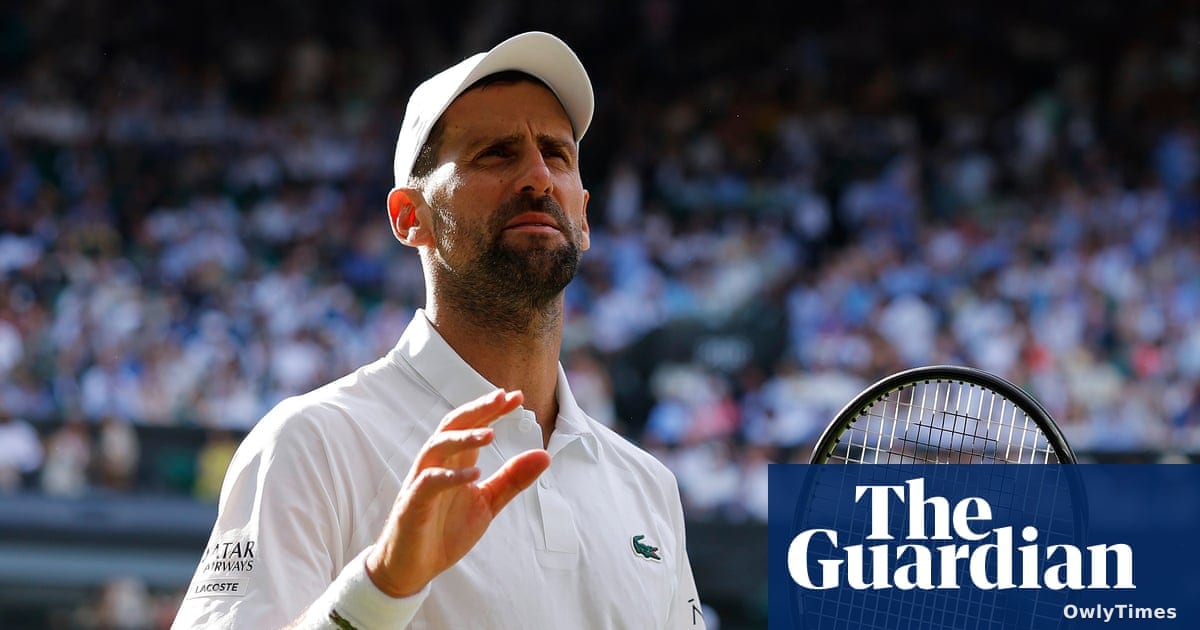
On Friday, the 24-year-old Sinner secured a straight-sets victory over the 39-year-old Djokovic at Wimbledon, winning 6-4, 6-4, 6-4, according to Sky Sports. While The Guardian and the BBC both confirm the outcome effectively ends the Serb’s pursuit of a 25th Grand Slam title and an eighth Wimbledon crown, the technical disparity on the court was the defining feature of the day. Sky Sports reports the match lasted just two hours and 20 minutes, a remarkably short duration for a high-stakes semi-final that typically demands a grueling, multi-hour tactical war of attrition.
The Cost of Peak Performance
For the average user, this looks like a simple loss, but the technical breakdown suggests a shift in "processing power." Sinner’s performance was defined by a ruthless serving display, losing only four points on his serve during the entire first set, per Sky Sports. Djokovic, meanwhile, admitted to being "half a step late" on his shots, describing himself as not sharp or reactive enough to counter Sinner’s pace.
This mirrors the classic Silicon Valley "technical debt" problem. Djokovic has spent two years fighting through physical fatigue, having played through several matches at this tournament that required immense recovery, including a five-hour and 15-minute quarter-final against Felix Auger-Aliassime, as noted by The Guardian. When you push hardware—or a human body—past its warranty period, you aren't just battling your opponent; you’re battling the inevitable decline of your own internal systems.
When the Disruptor Becomes the Standard
Sinner’s victory sets up a final against Alexander Zverev, who advanced by defeating Arthur Fery 7-6, 6-2, 6-4, according to Sky Sports. It is a passing of the torch that feels less like a surprise and more like a necessary market correction. While Djokovic remains defiant, stating he proved he can still compete as a top-five player and plans to return next year at age 40, the industry consensus is clear: the level required to win at the top is rising.
For the casual fan, the takeaway is simple: even the greatest legends cannot beat the clock forever. Djokovic noted that while he is "blessed and cursed" to be accustomed to the highest level of achievement, he had to accept that on Friday, Sinner was simply playing at a level above him. We are watching the transition from the era of the "Big Three" into a new, faster, more power-oriented iteration of the game.
The measurable signal to watch now is Sunday’s final. If Sinner maintains this level of clinical, high-percentage serving against Zverev, it will confirm that his dominance isn't just a byproduct of Djokovic’s decline, but a fundamental upgrade in how the game is played at the elite level.