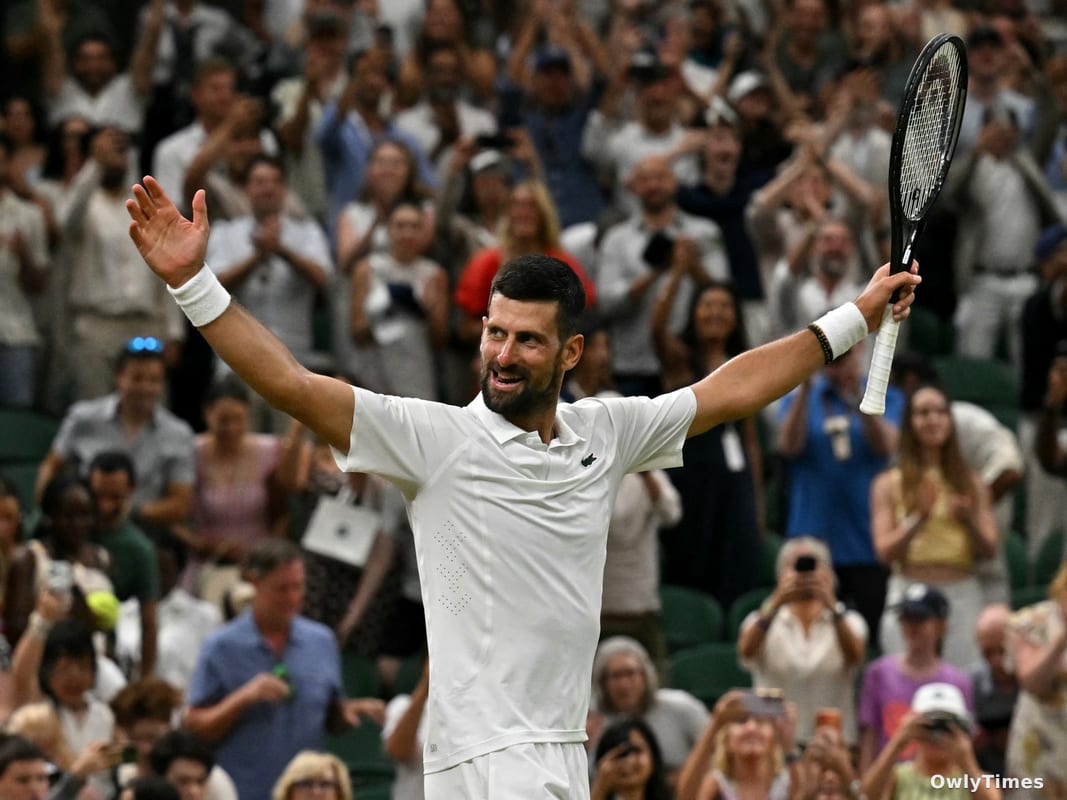

Is professional sports longevity just an elaborate software update for the human body, or are we witnessing a glitch in the aging process? At 39, Novak Djokovic is proving that while hardware eventually degrades, the right operating system—a ruthless combination of mental processing and tactical efficiency—can keep a legacy running long past its expected expiration date.
The real story here isn't just that Djokovic reached another Wimbledon semifinal; it’s the sheer, grinding infrastructure required to stay relevant in a field of younger, faster challengers. On Tuesday, July 7, 2026, Djokovic secured a 7-6 (12/10), 3-6, 6-3, 6-7 (4/7), 7-6 (10/4) victory over third-seeded Felix Auger-Aliassime, a marathon that clocked in at five hours and 15 minutes, according to the BBC. Al Jazeera confirms this was the longest quarterfinal in the tournament's history, a data point that underscores the physical cost of Djokovic's continued dominance.
This match wasn't just about athletic output; it was a masterclass in risk management. CBS Sports notes that Djokovic became the only player to break Auger-Aliassime’s serve twice at this year’s tournament, a significant feat considering the Canadian had successfully defended 82 of his previous 83 service games. The win moves Djokovic into a record-extending 15th Wimbledon semifinal, his eighth consecutive appearance in the final four, as reported by The Guardian.
While the technical statistics are staggering, the human element—the "why" behind the effort—remains the most relatable aspect for any user of technology. Like an old device that struggles to hold a charge, Djokovic admitted to exhaustion, telling reporters, "I wish it was the final so I don’t need to worry about how the body will feel tomorrow." His frustration with tournament logistics, specifically a heated exchange with officials regarding when to close the roof at Centre Court, highlights the friction between rigid institutional protocols and the unpredictable nature of elite performance.
Beyond the men’s draw, the tournament is seeing a parallel shift in the women's bracket. Karolina Muchova overcame four-time Grand Slam champion Naomi Osaka in a match defined by high-stakes variance; while Muchova kept her unforced errors to 21, Osaka struggled with 42, according to Al Jazeera. Muchova will now face Coco Gauff, who has reached the semifinals of all four Grand Slams, a milestone that signals a definitive changing of the guard in women’s tennis.
For the ordinary user, these shifts serve as a reminder that even the most optimized systems are subject to entropy. Djokovic’s next test is a Friday showdown against world number one Jannik Sinner, a player who hasn't dropped a set since the opening round. Whether Djokovic can recover from five hours of "extreme tension" to compete with the current industry leader will be the definitive measure of whether his "bionic" approach can sustain one final push for a 25th Grand Slam title. Expect the outcome of this Friday’s match to be dictated entirely by recovery time—in tennis, as in tech, the winner is rarely the one who works the hardest, but the one who restores their resources the fastest.