
The Search for Other Earths: PLATO’s Camera Alignment and the Uncertainties Ahead
The quest to find planets beyond our solar system – exoplanets – is entering a new phase of precision. For decades, missions like Kepler have identified thousands of candidates, largely by observing the slight dimming of a star as a planet passes in front of it. But the next generation of telescopes, like the European Space Agency’s PLATO mission, scheduled for launch in early 2027, aims to do more than just find exoplanets; it intends to characterize them, and ultimately, assess their potential for habitability. A recent paper led by Juan Cabrera and a vast international consortium of over 70 researchers details the current understanding of PLATO’s capabilities, specifically focusing on the performance of its camera system and the inherent challenges in accurately detecting smaller, longer-period planets. What’s striking isn’t just the technical complexity, but the honest acknowledgement of the significant unknowns that remain, even as the mission nears launch.
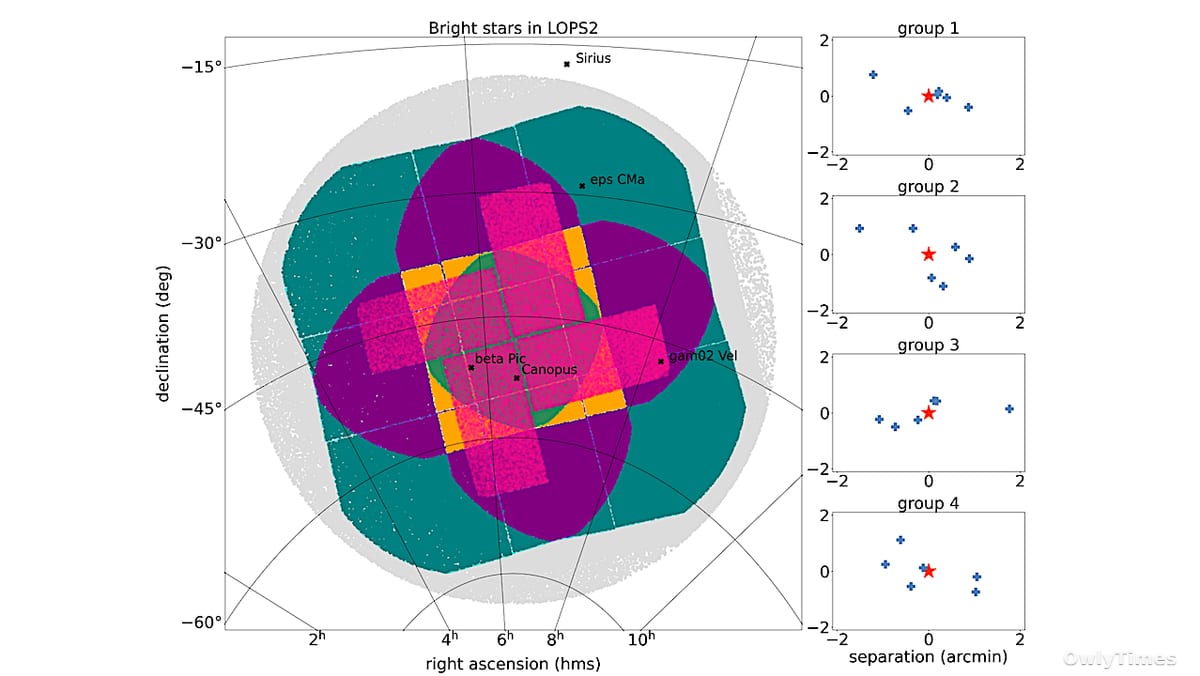
The core of PLATO’s design relies on an array of cameras observing a vast swathe of the sky. Unlike Kepler, which stared at a single field, PLATO will scan numerous star fields, offering a more comprehensive view. The paper, submitted to Experimental Astronomy, presents a detailed overview of the camera performance after extensive testing of all flight models integrated onto the optical bench. This isn’t simply a confirmation that the cameras work; it’s a rigorous assessment of their limitations. A key finding highlighted is the impact of misalignment between the “N-CAMs” – a group of nine cameras – and the commanded attitude of the spacecraft. These N-CAMs are offset by 2° from the Z axis of the payload, co-aligned with the primary “F-CAMs.” While seemingly small, this misalignment introduces a critical complication. The researchers demonstrate that certain stars, particularly those observed by the PIC (Planck Instrument Centre) catalog, may fall outside the field of view of the LOPS2 instrument – a crucial component for follow-up observations – due to this pointing error. This means that some potentially habitable planets, previously identified as targets, may be lost to detailed study.
Original reporting: astrobiology.com.
This revelation isn’t a failure, but a crucial calibration point. The team isn’t claiming PLATO won’t find planets, but rather that the initial yield estimates – the number of planets expected to be discovered – need to be refined. The paper explicitly addresses the tension between optimistic and conservative predictions. Current estimates of planet occurrence rates, especially for small planets with long orbital periods (years, even decades), are highly uncertain. Detecting these planets is further complicated by stellar variability – the natural fluctuations in a star’s brightness – and instrumental noise. The researchers tackled this uncertainty by running simulations using a range of planet occurrence rates and detectability rates, incorporating an estimate of the noise contribution from stellar activity. This approach doesn’t provide a single definitive answer, but a spectrum of possibilities, acknowledging the inherent limitations in our current understanding. In 2025, the estimated planet detection yield will provide constraints to planet occurrence rates, which in turn will help constrain planet formation models.
The paper’s careful framing of expectations is particularly noteworthy. Headlines often proclaim the imminent discovery of “Earth 2.0,” but the reality is far more nuanced. The authors are clear that PLATO’s success isn’t solely about the number of planets it finds, but about the quality of the data it provides. This data will be invaluable for refining our models of planet formation and evolution, even if it doesn’t immediately reveal a perfect analog to Earth. However, the limitations to consider are substantial. The study acknowledges that the accuracy of the planet yield estimates is directly tied to the accuracy of our knowledge of stellar variability and instrumental noise. If stellar activity is more significant than currently estimated, or if the instruments exhibit unexpected noise patterns, the actual number of detectable planets could be significantly lower. Furthermore, the paper doesn’t address potential challenges related to data processing and analysis, which could introduce further uncertainties.
Looking ahead, the next crucial steps involve continued calibration of the instruments and refinement of the data analysis pipelines. The team is actively working on algorithms to mitigate the effects of stellar variability and instrumental noise. More importantly, they are preparing for the influx of data that PLATO will generate, which will require significant computational resources and expertise. The real test will come when PLATO begins its observations in 2027. A key question to watch for is how well the initial planet yield estimates align with the actual discoveries made by the mission. Will PLATO confirm the optimistic predictions, or will the uncertainties highlighted in this paper prove to be more significant than anticipated? The answer will not only shape our understanding of exoplanets, but also inform the design of future missions dedicated to the search for life beyond Earth.





