
Beyond the Fun: Why a Popsicle Stick Catapult is a Lesson in Applied Physics
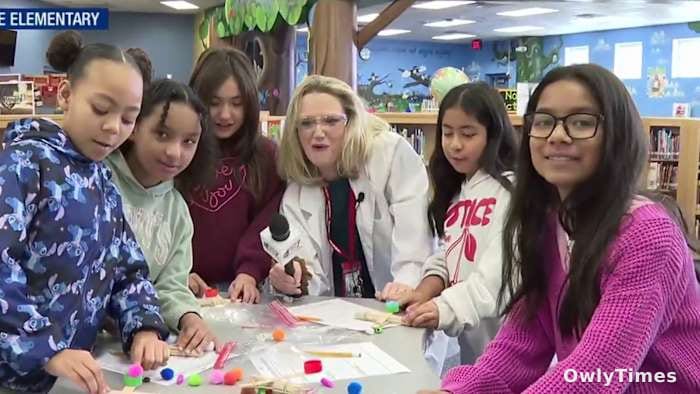
The image is deceptively simple: a handful of popsicle sticks, rubber bands, and a bottle cap transformed into a miniature launching device. But the recent demonstration by Sarah Spivey, meteorologist with the KSAT Weather Authority, isn’t just a playful activity for children; it’s a remarkably accessible illustration of fundamental physics principles, and a timely reminder of how hands-on learning can bridge the gap between abstract concepts and real-world understanding. While many science outreach programs focus on spectacular demonstrations, the power of the popsicle stick catapult lies in its deliberate simplicity, allowing students to directly manipulate the variables that govern projectile motion. This isn’t about building the most powerful catapult, but about understanding why certain designs perform better than others.
This article draws on reporting from ksat.com.
The experiment, detailed in a KSAT report published February 25, 2026, guides builders through five steps: notching two popsicle sticks, creating a stable base with the remaining eight, assembling the lever arm, and finally, attaching a launching platform – the bottle cap. The instructions emphasize visual cues, showing the expected outcome at each stage. This is a crucial element often overlooked in science communication. It’s not enough to tell someone how to do something; showing them, and providing a clear target for comparison, dramatically increases the likelihood of successful replication and, more importantly, genuine comprehension. Robert Samarron’s accompanying photojournalism further reinforces this, providing a visual record of the construction process. The report also encourages experimentation with different projectiles – pom poms, cotton balls, marshmallows – prompting students to consider how mass and aerodynamic properties affect distance.
What’s particularly noteworthy is the implicit introduction to the concept of simple machines. The catapult functions as a first-class lever, with the stack of popsicle sticks acting as the fulcrum, the notched stick as the effort arm, and the bottle cap as the load. By varying the position of the fulcrum (shifting the notched sticks), students can directly observe the trade-off between force and distance. A fulcrum closer to the load requires less force to launch, but results in a shorter distance; conversely, a fulcrum further from the load requires more force, but can achieve greater range. This isn’t a theoretical calculation presented in an equation, but a tangible experience felt in the hand as the catapult is operated. The suggestion to add rubber bands for fortification also introduces the concept of stored potential energy, and how increasing elasticity can enhance performance.
However, it’s important to acknowledge the limitations to consider. The instructions, while clear, don’t explicitly address the impact of rubber band tension or the precision of the notches cut into the popsicle sticks. These factors, while seemingly minor, can significantly influence the catapult’s performance. A poorly cut notch, for example, can create friction and reduce the efficiency of the lever arm. Furthermore, the experiment relies on qualitative observation – “see which ones fly farther” – rather than quantitative measurement. While this is appropriate for younger students, it misses an opportunity to introduce basic data collection and analysis skills. Measuring launch distances with a ruler, and recording the results for different projectiles, would elevate the experiment from a demonstration to a genuine scientific investigation.
Looking ahead, the next logical step is to integrate this simple catapult into a more structured curriculum. Spivey’s offer to visit schools and conduct live experiments, selected randomly via an online form, is a valuable outreach initiative. But beyond these individual demonstrations, educators could use the catapult as a springboard for exploring more complex concepts like trajectory, air resistance, and the relationship between force, mass, and acceleration. Imagine a classroom challenge: design a catapult that can accurately hit a target at a specific distance, using only the provided materials. This would not only reinforce the underlying physics principles, but also foster creativity, problem-solving skills, and collaborative learning. The question now isn’t just can we build a catapult, but how can we optimize its design to achieve a specific goal, and what data will we need to prove our success?