
Beyond the Lyrics: How Taylor Swift is Rewiring Our Brains to See Plants
The human brain is remarkably adept at filtering information, prioritizing what’s deemed important for survival. But this efficiency comes at a cost: we often miss what’s right in front of us. Increasingly, scientists are recognizing a peculiar blind spot – “plant imperception,” the consistent failure to notice plants in our environment. While this might seem a benign oversight, Glaucia Silva, a botanist and teacher at several Brazilian universities including the Federal University of Rio Grande do Norte, argues it has significant implications for environmental awareness and, surprisingly, botanical education. Her innovative solution? Leveraging the cultural phenomenon of Taylor Swift to reprogram how students – and potentially all of us – perceive the plant kingdom.
Original reporting: USA Today.
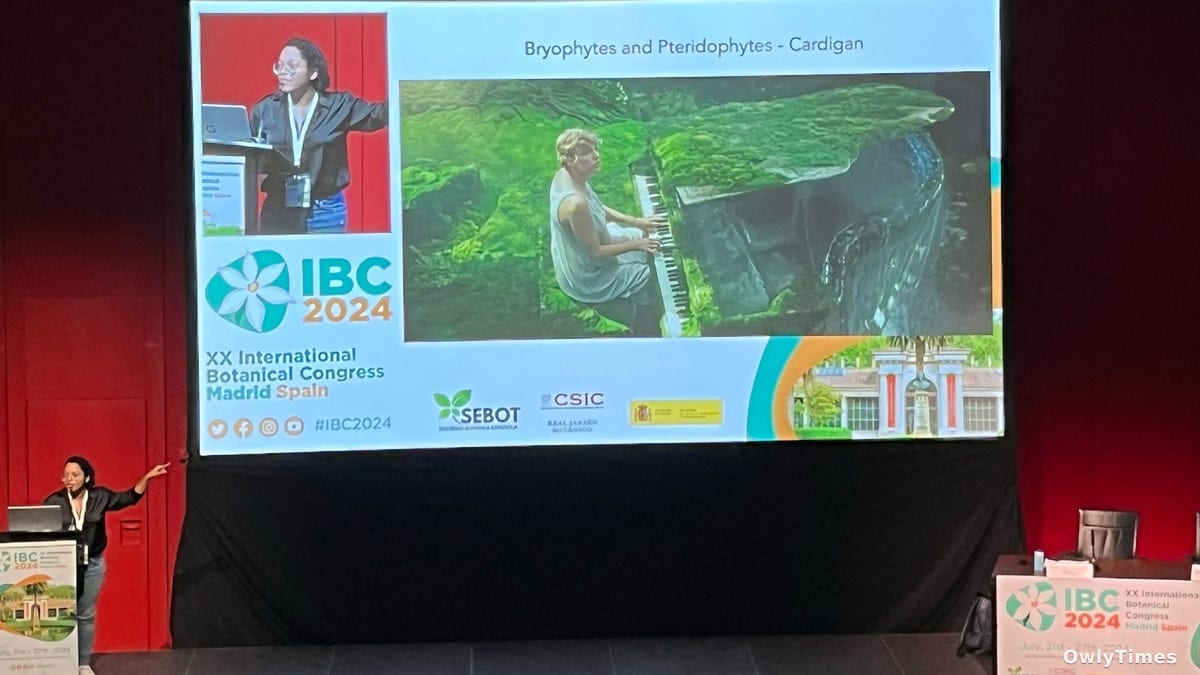
Silva’s work isn’t about simply adding flowers to a music video analysis. It’s rooted in cognitive science. She observed that during the pandemic, traditional botany instruction was failing to engage students, leading to widespread frustration – a quick search for “I hate botany” on Twitter confirms a significant level of student discontent. The core problem, she realized, wasn’t the complexity of the subject matter, but a fundamental lack of attention. “If plant imperception is not seeing plants, by using Taylor’s music videos, it helps students activate their cognitive structure, reprogramming, to start to notice plants everywhere,” Silva explained. The method is deceptively simple: show a Taylor Swift video – “Blank Space,” “Cardigan,” “Out of the Woods,” “Willow” – and ask students to describe what they see. Initially, focus centers on the glamorous elements: outfits, cars, settings. But when prompted, students begin to recognize the often-overlooked botanical details – the garden in “Blank Space,” the mosses and ferns in “Cardigan.”
The success of Silva’s approach isn’t anecdotal. She’s presented her findings at international conferences, including a gathering in Madrid, and continues to refine the method across multiple Brazilian institutions like the Oswaldo Cruz Foundation. What’s particularly striking is the lasting impact. Silva notes that students from her 2023 classes still recall botanical concepts, like what defines a gymnosperm, demonstrating a deeper, more memorable learning experience than traditional methods. This isn’t merely about memorization; it’s about cultivating a fundamental shift in perception. It’s worth noting that while Silva’s work focuses on student learning, the broader implications for public engagement with environmental issues are substantial. A population less attuned to the presence of plants may be less motivated to protect them.
However, it’s crucial to avoid overstating these findings. Silva’s research, while promising, hasn’t yet undergone the rigorous, large-scale controlled trials needed to definitively prove a causal link between Taylor Swift music videos and improved plant perception. The studies conducted thus far primarily rely on student self-reporting and observational data. Furthermore, the “Taylor Swift effect” – the pre-existing enthusiasm and engagement students bring to the videos – could be a confounding variable. It’s possible that any engaging visual stimulus, not just Swift’s work, could achieve similar results. The current wave of “Swiftie” academia, including events like the 2024 “Swiftposium” in Melbourne and Swift-themed courses at Harvard and Berkeley, demonstrates the broader cultural impact, but doesn’t necessarily validate the pedagogical effectiveness of Silva’s specific method.
Beyond the immediate educational benefits, Silva’s research highlights a fascinating detail about Swift’s artistry itself. She’s discovered that at least 78 of Swift’s songs contain references to botanical elements, and over 53 music videos feature botanical imagery. “She definitely loves roses, red roses,” Silva observes, suggesting a deliberate, if perhaps subconscious, inclusion of plant life in Swift’s creative vision. This raises a compelling question: will future research reveal that artists, through subtle visual cues, can actively counteract plant imperception and foster a greater appreciation for the natural world? As Silva’s work continues to evolve, we might soon find that the key to unlocking a deeper connection with nature lies not in textbooks, but in the lyrics and visuals of our favorite songs.