
The Shifting Landscape of Political Influence: Beyond Party Donations
The question of how populism gains traction in contemporary democracies isn’t simply about appealing to discontent; it’s increasingly about funding a specific cultural and media environment. New research by Liam Byrne, Labour MP and Chair of Parliament’s Business Committee, reveals a financial network exceeding £170 million channeled into UK media organizations, think tanks, and directly to politicians aligned with the populist right over the last five years. While headlines focus on the sheer amount of money, the more significant finding is where that money is going – overwhelmingly not to political parties themselves, but to shaping the information landscape. This isn’t a story about illicit funds, but about a legal, yet potentially corrosive, investment in a “media-political complex” designed to amplify specific narratives and, crucially, reward politicians who participate.
The study, undertaken to inform Byrne’s forthcoming book Why Populists Are Winning and How to Beat Them, meticulously analyzed nearly 500 transactions between January 2020 and February 2026, drawing data from the Electoral Commission, parliamentary registers, company filings, and civil society reports. The resulting picture isn’t one of shadowy backroom deals, but of transparent financial flows – a transparency that, Byrne argues, is precisely the problem. Over £133 million, representing 76% of the total identified, was directed towards just three media outlets: GB News, The Critic, and UnHerd. This contrasts sharply with the 14% that went directly to political parties or individual MPs. The concentration of funding isn’t accidental; these outlets demonstrably offer platforms to populist figures and perspectives, creating a self-reinforcing cycle of attention and influence.
Based on the original The Guardian report.
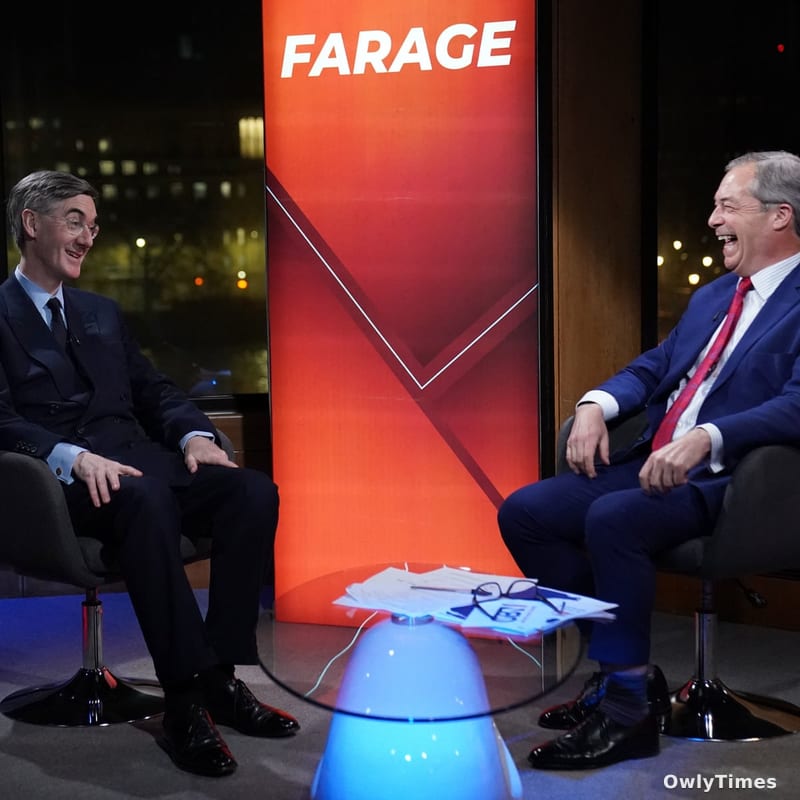
The financial architecture, as Byrne terms it, rests on a surprisingly small number of key donors. More than £130 million can be traced back to four individuals: crypto investor Christopher Harborne, hedge fund manager Paul Marshall, the Dubai-based investment firm Legatum, and financier Jeremy Hosking. This isn’t simply about ideological alignment; it’s about a strategic understanding of how influence operates in the digital age. As Byrne points out, these funders are acting on decades-old advice from political strategists like Alain de Benoist, Pat Buchanan, and Andrew Breitbart, who argued that “politics is downstream of culture.” The investment isn’t just about winning elections; it’s about shaping the cultural conversation and creating an audience receptive to populist messaging. The £770,000 in payments to Reform MPs for work with GB News, alongside earnings from social media platforms like X (formerly Twitter) declared by figures like Nigel Farage and Lee Anderson, further illustrates this blurring of lines between political representation and media participation.
It’s important to note that the narrative presented by Byrne isn’t universally accepted. Legatum, responding to inquiries, emphasized its investment in GB News as a commercial venture, highlighting the channel’s growth and editorial independence. They explicitly rejected the characterization of their funding as a “donation,” framing it as an equity investment. While legally distinct, the practical effect remains the same: substantial financial support for a media outlet that consistently provides a platform for populist viewpoints. This highlights a critical tension – the current regulatory framework doesn’t adequately address the influence exerted through investment in media organizations, even when those investments are made by individuals with clear political agendas. The claim of editorial independence also warrants scrutiny, given the demonstrable alignment between Legatum’s investment and GB News’ editorial direction.
Limitations to Consider
The study’s timeframe, ending in February 2026, means it doesn’t capture the full impact of recent political developments or potential shifts in funding patterns. Furthermore, tracing the full extent of influence is inherently difficult. While the research meticulously documents direct financial transactions, it’s harder to quantify the impact of informal networks, strategic partnerships, or the amplification of content through social media algorithms. The study also focuses primarily on financial flows to the right of the political spectrum, raising questions about whether similar patterns exist on the left. While Byrne argues this asymmetry is significant, a comprehensive understanding requires a broader analysis of funding across the entire political landscape.
The next crucial step in this investigation isn’t simply about uncovering more data, but about developing a regulatory framework that addresses the evolving nature of political influence. Byrne proposes several reforms, including a ban on cryptocurrency donations, extending media laws to cover digital platforms, and requiring disclosure of investments in media organizations by political donors. However, the most pressing question is whether these reforms can be implemented effectively without infringing on freedom of speech. Will policymakers be able to strike a balance between protecting democratic processes and safeguarding the principles of a free press? The coming months will reveal whether the alarm raised by this research translates into meaningful action, or whether the “media-political complex” continues to operate largely unchecked, shaping the political landscape in ways that remain largely invisible to the public.