
Beyond the Bricks: Why Targeted STEM Outreach Matters Now
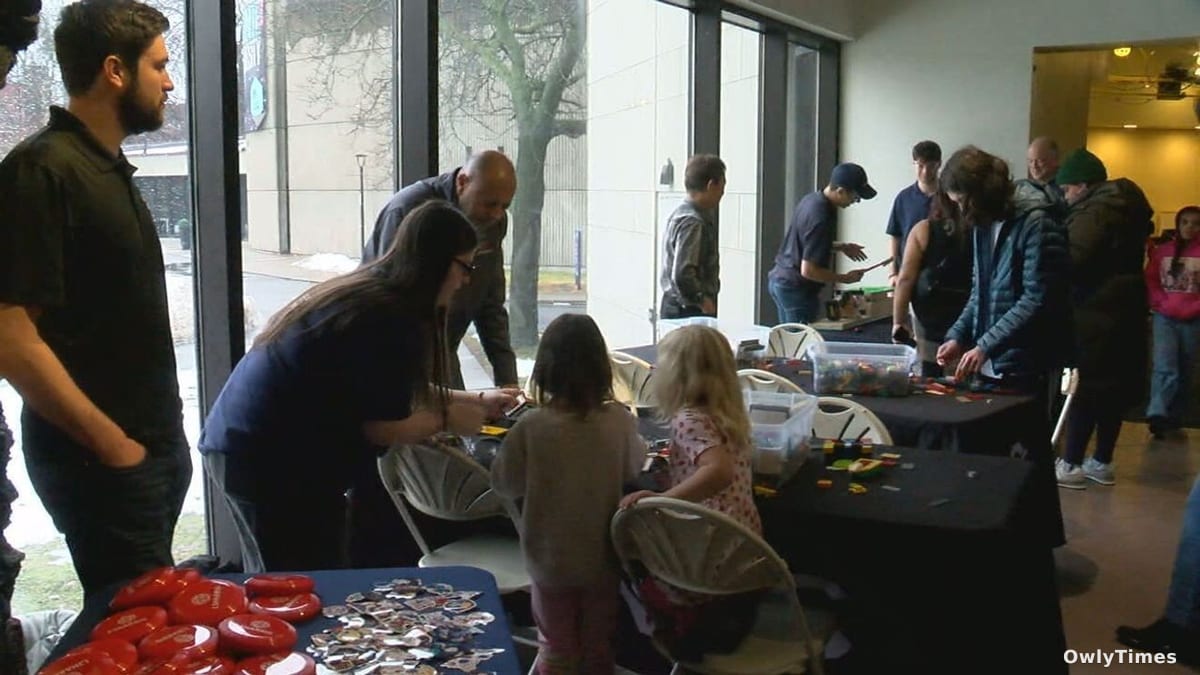
The image is familiar: children, engrossed in building with Legos, a scene repeated in classrooms and living rooms across the country. But the event held at the Rochester Museum and Science Center on February 20, 2026, during National Engineers’ Week, wasn’t simply about playful construction. It represented a deliberate, and increasingly urgent, effort to reshape perceptions of STEM careers – and to address a looming workforce gap that threatens not just technological advancement, but national economic security. While headlines often trumpet the need for more STEM professionals, the core issue isn’t simply more graduates, but a strategically diverse influx into fields currently facing critical shortages. The event, hosted by engineers from L3 Harris Technologies, aimed to do precisely that: connect tangible excitement with the often-abstract world of science, technology, engineering, and mathematics.
See the original 13wham.com story for the full account.
Defining STEM in a World Built On It
The framing of STEM as encompassing “everything we have today,” as articulated by Wendy Minotti, director of exquisite imaging at L3 Harris Technologies, is a crucial, yet often overlooked, point. It’s easy to associate STEM with specialized roles – rocket scientists or software developers – but the reality is far more pervasive. Minotti’s examples – cell phones, microwaves, GPS, satellites – highlight how deeply interwoven these disciplines are with daily life. This isn’t merely a rhetorical flourish; it speaks to a fundamental disconnect between public understanding and the breadth of opportunities available. A 2024 report by the National Science Foundation showed that while STEM degree attainment increased by 6% between 2018 and 2022, the distribution remains uneven. Computer and information sciences saw the largest growth (13%), while engineering disciplines experienced a comparatively modest 2% increase, despite consistent industry demand. This suggests that simply encouraging more students to pursue a STEM degree isn’t enough; targeted outreach is needed to steer talent towards areas of critical need.
The L3 Harris Approach: From Demonstration to Inspiration
The choice of the Rochester Museum and Science Center as a venue, and the use of Legos as a primary activity, wasn’t accidental. The museum provides a neutral, engaging environment, while the tactile nature of building with Legos bypasses the intimidation factor often associated with complex scientific concepts. This approach aligns with pedagogical research demonstrating the effectiveness of “hands-on” learning in fostering early interest in STEM. The goal, as implied by the event’s organization, wasn’t to turn eight-year-olds into engineers overnight, but to plant a seed of curiosity and demonstrate that engineering isn’t solely about abstract equations, but about creative problem-solving. This is particularly important given the persistent gender and racial disparities within STEM fields. Data from the U.S. Department of Labor consistently shows underrepresentation of women and minorities in engineering and computer science, a trend that limits innovation and perpetuates systemic inequalities.
Limitations to Consider: Outreach Alone Isn’t Enough
While initiatives like the L3 Harris event are valuable, it’s crucial to acknowledge their limitations. A single day of activities, however engaging, is unlikely to dramatically alter long-term career trajectories. Systemic barriers – including unequal access to quality STEM education in K-12 schools, financial constraints hindering higher education, and implicit biases within the STEM workforce – require far more comprehensive solutions. Furthermore, the focus on “STEM careers” can inadvertently reinforce the notion that success is solely defined by employment. The skills cultivated through STEM education – critical thinking, analytical reasoning, problem-solving – are transferable to a wide range of professions, and fostering a broader appreciation for STEM literacy is equally important. The event’s success, therefore, shouldn’t be measured solely by the number of children who declare an intention to become engineers, but by the extent to which it sparks a lifelong interest in scientific inquiry.
The Next Generation of Problem Solvers: What to Watch For
The event at the Rochester Museum and Science Center is indicative of a broader trend: a growing recognition within the private sector that investing in STEM outreach is not simply philanthropic, but strategically essential. The question now is whether this trend will translate into sustained, large-scale investment in STEM education and workforce development. Specifically, will companies like L3 Harris expand these initiatives beyond isolated events, partnering with schools and community organizations to provide ongoing mentorship and support? And, crucially, will policymakers address the systemic inequities that continue to limit access to STEM opportunities for underrepresented groups? Over the next five years, tracking the longitudinal impact of these outreach programs – monitoring the STEM degree attainment and career choices of participants – will be critical to determining whether these efforts are truly moving the needle. If we fail to see a demonstrable shift in the diversity and skillsets of the future STEM workforce, the consequences will extend far beyond a simple shortage of engineers; they will impact our ability to innovate, compete, and address the complex challenges facing our world.





