
Beyond the Trophy Case: What San Joaquin County Science Olympiad Reveals About STEM Access
The results from the 40th Annual San Joaquin County Science Olympiad Competition, held March 14th at Ronald E. McNair High School, are more than just a list of winning schools. They represent a snapshot of STEM engagement – and, crucially, access to opportunity – within the county. While headlines celebrate the victories of teams like Wicklund Elementary School – Black (Division B, first place) and Mountain House High School – Blue (Division C, first place), a closer look at the participating schools and the competition’s structure reveals a more nuanced story about who gets to excel in science, technology, engineering, and mathematics. The event, involving 30 middle school and 18 high school teams from nine districts and 34 schools, isn’t simply identifying future scientists; it’s reflecting existing disparities in resources and preparation.
Source material: sjcoe.org.
The Science Olympiad format itself is noteworthy. Unlike traditional science fairs focused on independent research, these tournaments – involving events mirroring popular games, TV shows, and even athletic competitions – emphasize breadth of knowledge and collaborative problem-solving. Students prepare year-round for events spanning biology, earth science, chemistry, physics, computer science, and technology, requiring both factual recall and practical application. This design intentionally moves away from rote memorization, instead rewarding students who can synthesize information and work effectively in teams. This shift in pedagogical approach is a deliberate response to criticisms of standardized testing and a growing need for STEM professionals who can innovate, not just replicate. However, the very structure demands significant time commitment and access to specialized resources – factors not equally distributed across all schools.
A striking pattern emerges when examining the top five teams in each division. The Lammersville Unified School District dominates the middle school rankings, with Wicklund, Sebastian Questa, and Julius Cordes Elementary Schools taking the top three spots. This isn’t necessarily indicative of superior student aptitude within Lammersville, but rather points to a consistent investment in STEM programming and dedicated teacher support. While Tokay High School and Mountain House High School demonstrate strong performance in the high school division, the concentration of success within a few districts raises questions about equitable access to quality STEM education county-wide. It’s important to note that the competition included charter and private schools, which often benefit from different funding models and parental involvement levels than public schools.
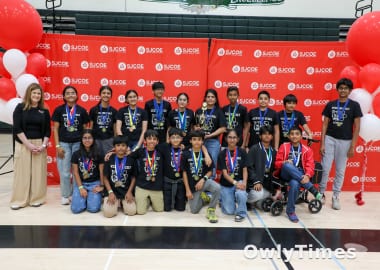
It’s easy to interpret the Science Olympiad results as a simple ranking of academic prowess. However, the fact that eight teams will advance to the NorCal State Finals – with a strict one-team-per-school limit – underscores the competitive nature of the event and the limited opportunities for broader representation. Franklin High School – Chlorine, representing Stockton Unified School District, is the only team from Stockton to qualify, highlighting a potential gap in STEM participation from the county’s largest city. This isn’t to diminish Franklin High School’s achievement, but to acknowledge that systemic challenges within the Stockton Unified School District may hinder wider student involvement in these types of extracurricular activities. The San Joaquin County Office of Education’s Facebook page offers event photos, providing a visual record of participation, but doesn’t offer data on student demographics or socioeconomic backgrounds.
Limitations to consider include the voluntary nature of participation. Students who choose to participate in Science Olympiad are already self-selected for an interest in STEM, meaning the results don’t reflect the overall STEM aptitude of the student population. Furthermore, the competition’s events, while designed to be broad, may still favor students with prior exposure to specific scientific concepts or access to advanced learning materials. The next crucial research step involves correlating Science Olympiad participation rates with school funding levels, student demographics, and access to STEM-focused extracurricular programs. Understanding these relationships will be vital for developing targeted interventions to ensure that all students in San Joaquin County have the opportunity to cultivate their scientific curiosity and pursue STEM pathways. Will the county prioritize equitable STEM access, or will these competitive disparities continue to widen, shaping the future of innovation for only a select few?