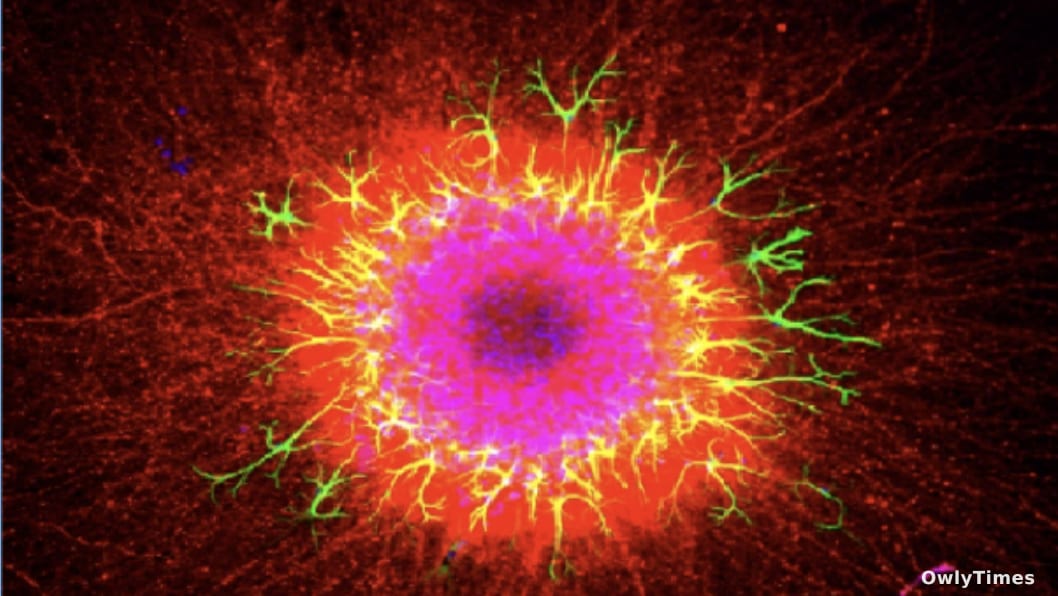

The question of what constitutes “scientific discovery” is undergoing a quiet but significant re-evaluation, and it’s playing out not in academic journals, but in the art galleries of university campuses. The 2026 Art in Science Competition, currently accepting submissions until Wednesday, March 4, isn’t simply a showcase of pretty pictures produced by researchers; it’s a deliberate attempt to redefine public perception of the scientific process itself. While headlines might focus on the visual appeal of images like Samantha Boeshore’s “Tiny Brain” – a striking depiction of neuronal and astrocyte growth – the competition’s deeper purpose is to demonstrate that scientific work is creative work, and that aesthetic value can be intrinsic to rigorous investigation.
The competition, sponsored by the Materials Research Society and hosted in Chapman Hall from March 9-20, invites students from all departments to submit high-resolution images representing their research. The technical requirements – JPG files under 10 MB, formatted to 8.5x11 inches at 300 dpi – are not arbitrary. As Trevohn Robinson, a Ph.D. candidate in analytical chemistry and a member of the Materials Research Society, explained, these standards ensure a level playing field for physical display and community voting. This emphasis on presentation isn’t superficial; it acknowledges that communicating scientific findings effectively requires not just accuracy, but also clarity and visual impact. The images will be printed and displayed, meaning the quality of the original data and its translation into a compelling visual form will be assessed.
What distinguishes this year’s competition from previous iterations is a nuanced approach to the role of artificial intelligence. While AI-powered image enhancement is permitted, submissions generated solely by AI are discouraged. This isn’t a rejection of AI as a tool, but a firm assertion that the competition seeks to celebrate genuine scientific inquiry. As Robinson articulated, the core question is whether there’s “really science” behind the image – whether it’s rooted in collected data and analytical processes. This stance reflects a broader debate within the scientific community about the ethical implications of AI-generated content and the importance of maintaining transparency in research. The Materials Research Society isn’t simply seeking beautiful images; they’re seeking evidence of a scientific process.
The emphasis on data and process is particularly relevant given the increasing public skepticism towards scientific authority. Often, scientific findings are presented as definitive conclusions, obscuring the iterative, often messy, reality of research. Robinson’s own work exemplifies this. He uses atomic force microscopy to study surface roughness, a technique that produces detailed 3D images. He described the process of data processing as time-consuming, but also creatively rewarding, recalling how images of graphene oxide reminded him of album covers. This personal anecdote highlights a crucial point: scientific exploration isn’t solely about objective analysis; it involves subjective interpretation and aesthetic appreciation. The competition, therefore, offers a rare glimpse behind the curtain, revealing the artistry inherent in scientific investigation.
Source material: college.unc.edu.
The competition’s ultimate goal extends beyond celebrating individual artworks. Robinson hopes the exhibit will inspire undergraduates to consider careers in research, emphasizing that “science is available for everybody.” This is a particularly important message at a time when STEM fields face persistent diversity challenges. By showcasing the creative aspects of science, the competition aims to broaden its appeal and dismantle the perception of research as an exclusive domain. The question now is whether this deliberate effort to humanize science – to present it not as a collection of facts, but as a process of exploration and discovery – will resonate with a wider audience and encourage a new generation to pursue scientific inquiry. Will seeing the artistry in science inspire more students to do science? That’s the experiment unfolding in Chapman Hall this March.