
Beyond the Textbook: Why Hands-On Science Matters Now More Than Ever
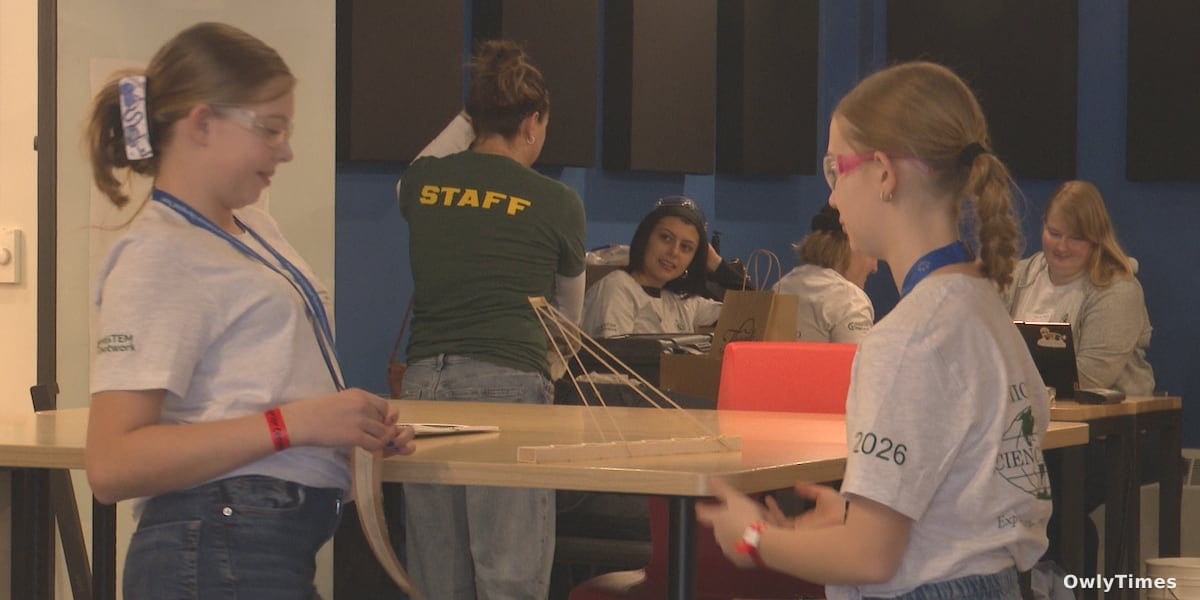
The steady hum of activity within Northern Michigan University’s Seaborg Center this past weekend wasn’t the prelude to a new research breakthrough by faculty, but rather the focused energy of over 300 middle and high school students participating in the 2026 UP Regional Science Olympiad. While local news often highlights athletic achievements, the enduring presence of this event – held annually at NMU since 1987 – speaks to a quieter, but equally vital, competition: the cultivation of practical scientific thinking. It’s a competition that, in an era increasingly defined by skepticism towards expertise, offers a crucial counterpoint to passively received information. The real story isn’t just that these students competed, but how they competed, and what that reveals about the evolving needs of science education.
This article draws on reporting from uppermichiganssource.com.
A Legacy of Applied Learning at NMU
For nearly four decades, the UP Regional Science Olympiad has provided a platform for students across the Upper Peninsula to engage with science beyond the confines of lectures and textbooks. The competitions themselves span a remarkable range – encompassing social science, physical science, engineering, and natural science – demanding students apply theoretical knowledge to real-world challenges. This isn’t about memorizing the periodic table; it’s about building devices, analyzing data, and collaborating to solve problems. Northern Michigan University’s commitment to hosting the event underscores a recognition that fostering this type of applied learning is a shared responsibility between educational institutions and the wider community. The longevity of the event – 39 years and counting – is a testament to its value, but also raises a question: why, after nearly four decades, is there still a perceived need for supplemental science experiences like this?
The “Hands-On” Difference: Student Perspectives
The answer, according to students themselves, lies in the unique learning environment the Olympiad provides. Bella Pearson, a senior at Iron Mountain High School, articulated a sentiment echoed by many participants: “I think it is important because it gets you more hands-on than what you do in school, and it is not just about the competition.” This isn’t simply about enjoying a different format; it’s about a fundamental shift in the learning process. Pearson further highlighted the collaborative aspect, noting the opportunity to “work with people in your school that you usually don’t work with.” This emphasis on teamwork and interdisciplinary problem-solving is increasingly crucial in modern scientific fields, where breakthroughs rarely occur in isolation. Headlines often focus on the “lone genius” scientist, but the reality is that most scientific progress relies on diverse teams with complementary skills. The Olympiad, in effect, simulates this collaborative environment, preparing students for the demands of future careers.
Beyond Regional Success: The State-Level Challenge and its Implications
The stakes extend beyond bragging rights. Winners of the UP Regional Science Olympiad earn a coveted spot in the State Olympiad, held downstate. This progression highlights a tiered system designed to identify and nurture promising young scientists. However, it also reveals a potential geographic disparity. Students from the Upper Peninsula face additional logistical and financial hurdles to participate in the state competition, potentially limiting access for those from less affluent schools or remote communities. While the regional event provides a valuable opportunity, ensuring equitable access to the next level is a critical consideration. The announcement of winners later this month will be a moment of celebration, but it should also prompt a broader conversation about resource allocation and support for STEM education across the entire state.
What’s Next for the UP’s Young Scientists?
The 2026 UP Regional Science Olympiad is not an isolated event, but a snapshot of a larger trend: a growing emphasis on experiential learning in STEM fields. The next crucial step isn’t simply to repeat the event next year, but to systematically evaluate its impact. What specific skills are students developing through participation? How does involvement in the Olympiad correlate with their future academic and career choices? And, crucially, how can the lessons learned from this model be integrated into regular classroom instruction? We should be asking whether the success of this program points to a need for more project-based learning, increased funding for science equipment, and greater collaboration between schools and universities across the Upper Peninsula. The future of scientific innovation depends not just on identifying talented students, but on cultivating a generation equipped with the practical skills and collaborative spirit to tackle the challenges ahead.