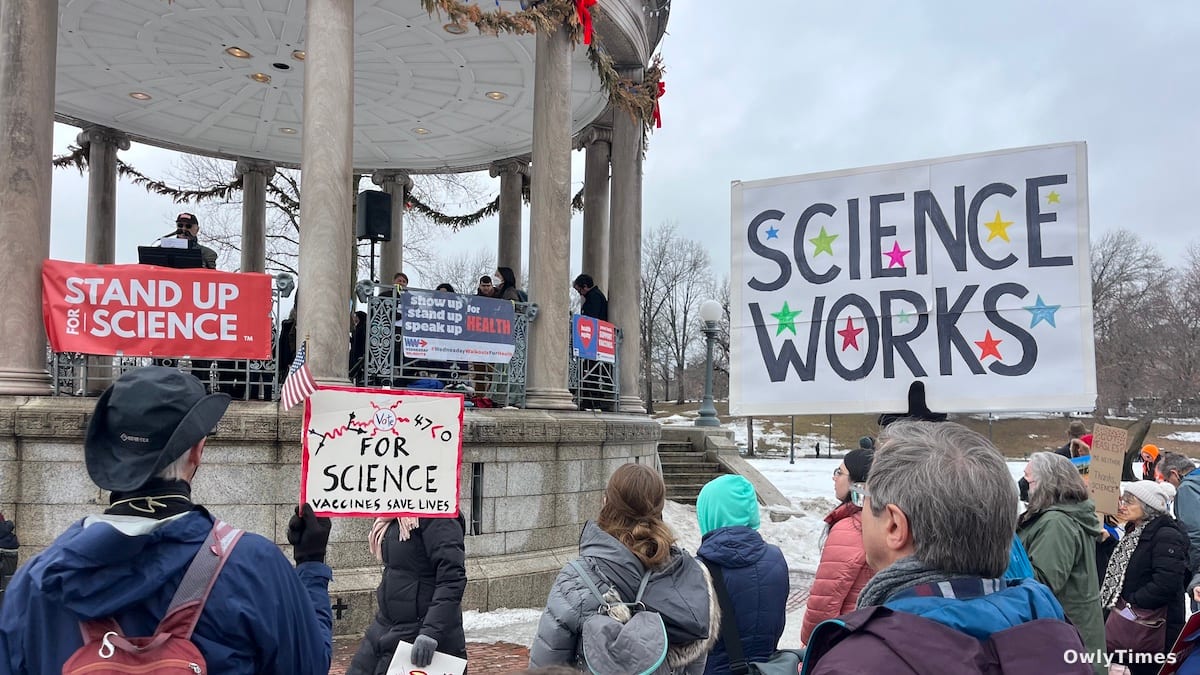

The resurgence of scientists taking to the streets isn’t about lab coats and beakers; it’s about a fundamental shift in how evidence is valued – or devalued – in public life. Today’s “Stand Up for Science” rallies, drawing thousands to 33 locations nationwide, aren’t simply a repeat of the 2017 March for Science sparked by concerns during the first Donald Trump administration. While funding anxieties remain, the core of the current unrest stems from a deeper worry: the active dismantling of scientific integrity within federal policy and a perceived weaponization of science to serve specific political and economic interests. This isn’t a protest about science; it’s a defense of the very idea that objective reality should inform decisions impacting public health, environmental protection, and national security.
The rallies, organized by the nonprofit Stand Up for Science, initially gained momentum in March 2025 as a response to ongoing challenges faced by the scientific community – funding uncertainties, staffing cuts, and a growing disregard for evidence-based policymaking. However, as Colette Delawalla, founder and CEO of Stand Up for Science and a psychology doctoral student at Emory University, explained, the focus has sharpened. “We’re fighting to save science, we’re fighting to protect health, and we’re fighting to defend democracy,” she stated, framing the issue not as a technical dispute but as a battle for the foundations of a functioning society. The shift in emphasis is crucial. It’s no longer solely about how much money science receives, but how that science is used – or suppressed – by those in power.
Based on the original eos.org report.
The concerns voiced by rally attendees and organizers like Gretchen Goldman, president and CEO of the Union of Concerned Scientists, point to specific instances of policy reversals and deliberate disregard for scientific consensus. Goldman, speaking at the flagship Washington, D.C. rally, described how the current administration “has gutted the scientific integrity infrastructure of the government,” citing instances of scientists being fired, federal programs dismantled, and congressional mandates on science ignored. These aren’t abstract accusations; they are illustrated by concrete examples like the recent rollback of the 2009 Endangerment Finding by the Environmental Protection Agency – a determination that greenhouse gas emissions pose a threat to public health and the environment – and controversial changes to childhood immunization recommendations. The EPA’s decision, in particular, highlights a troubling trend: the rejection of established scientific findings when they conflict with political or economic agendas.
What’s often lost in headlines about these rallies is the nuance of the situation. It’s not simply that science is being “ignored,” but that the process of scientific inquiry is being undermined. The administration, according to Delawalla, is creating a system where “the people who are deciding how science funding gets spent are political appointees who don’t want the scientific ecosystem to exist to benefit the public.” This isn’t a neutral act of budgetary constraint; it’s a deliberate attempt to reshape the scientific landscape to serve a specific ideological purpose. This concern extends beyond high-profile policy decisions. Researchers like Liam Synnott, an undergraduate biology student at Tufts University, report that funding cuts are already impacting research projects and hindering the training of the next generation of scientists. The ripple effects of these policies are being felt at every level of the scientific enterprise.
The specific policy campaigns championed by Stand Up for Science – preserving the NASA Goddard Space Flight Center Library collection, removing Health and Human Services Secretary Robert F. Kennedy Jr., halting the dismantling of the National Center for Atmospheric Research (NCAR), and blocking the confirmation of biotech investor Jim O’Neill as director of the National Science Foundation – reveal the breadth of the challenges. These aren’t isolated incidents; they represent a coordinated effort to undermine scientific institutions and prioritize political loyalty over expertise. The proposed appointment of O’Neill, a venture capitalist with limited scientific background, to lead the NSF is particularly alarming, signaling a potential shift away from fundamental research towards commercially driven innovation, potentially at the expense of long-term scientific progress.
Looking ahead, the immediate focus must be on holding policymakers accountable for their actions and advocating for policies that prioritize scientific integrity. But beyond specific legislative battles, a more fundamental question looms: how do we rebuild public trust in science and ensure that evidence-based reasoning is valued in public discourse? The rallies are a start, but sustained engagement – from scientists, educators, and concerned citizens – will be crucial. We should be watching closely for the outcome of the NSF director confirmation hearings, and specifically, how nominees articulate their commitment to supporting a diverse range of scientific inquiry, not just those with immediate commercial applications. The future of science, and perhaps even democracy itself, may depend on it.