
Beyond Protests: The Erosion of Public Trust in Scientific Infrastructure
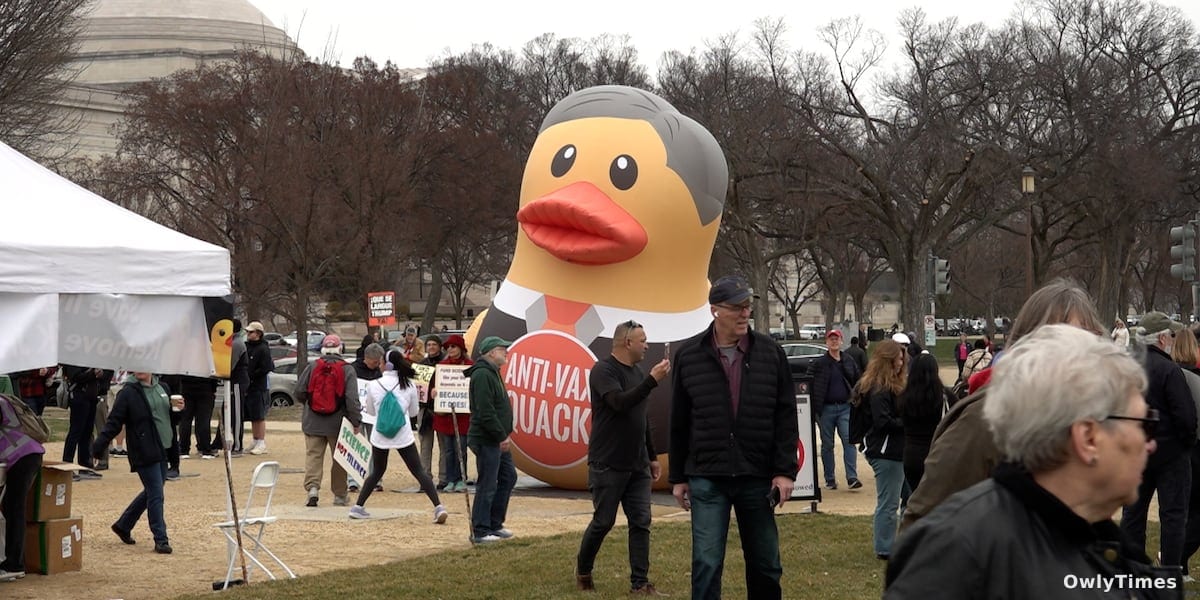
The gatherings this past Saturday, dubbed “Rally to Take Back Science” and held in 48 cities across the nation, weren’t simply about opposing a particular administration’s policies. They represent a deeper, and arguably more concerning, phenomenon: a growing anxiety about the very foundations of how we establish and utilize scientific knowledge in public life. While media coverage has focused on the visible protests – the speakers on the National Mall in Washington D.C., the educational booths, the DJs – the core issue isn’t a disagreement over specific findings, but a challenge to the process of finding them, and the perceived vulnerability of that process to political influence. This isn’t a new concern, but the scale of coordinated action by Stand Up for Science suggests a level of alarm not seen in decades.
The organization, founded by Colette Delawalla, initially formed in response to budgetary cuts to federal science programs. However, as Delawalla articulated, the scope of their concern has broadened. The rallies weren’t about abstract funding levels, but about the fundamental expectation that decisions impacting public health and safety should be “grounded in evidence.” This is a deceptively simple statement, because “evidence” itself is not a neutral concept. It’s generated through a complex system of research, peer review, and dissemination, all of which are susceptible to manipulation – whether through direct interference, strategic defunding, or the deliberate sowing of doubt. The current climate, where established scientific consensus is routinely questioned, creates fertile ground for such vulnerabilities.
Based on the original wlox.com report.
The timing of these protests is particularly pointed, coinciding with the second term of President Donald Trump and the leadership of Robert F. Kennedy Jr. as Health and Human Services Secretary. While the administration champions a “Make America Healthy Again” agenda, Kennedy Jr.’s well-documented skepticism regarding vaccines – occurring against a backdrop of increasing measles cases – has become a focal point for critics. It’s crucial to understand that the issue isn’t simply about disagreement with Kennedy Jr.’s views; it’s about the signal sent when a high-ranking public official actively undermines established scientific consensus on a matter of public health. This isn’t an isolated incident, but part of a broader pattern of questioning expertise and prioritizing ideological alignment over empirical data. The Centers for Disease Control and Prevention (CDC) reported a 32% increase in measles cases in 2025 compared to 2024, a statistic that, while alarming in itself, is further complicated by declining public trust in the agency’s reporting.
It’s important to clarify what the “Rally to Take Back Science” actually accomplished versus what headlines might suggest. These events weren’t likely to immediately alter policy. Instead, they served as a highly visible demonstration of concern, a rallying point for scientists, health professionals, and concerned citizens. The true impact will be measured by whether this translates into sustained political engagement – increased voter participation, advocacy efforts, and a renewed commitment to defending scientific integrity within government institutions. The organization’s stated intention to continue its work through Election Day, November 3, 2026, suggests a long-term strategy focused on influencing the political landscape.
Limitations to Consider
While the protests represent a significant expression of concern, it’s essential to acknowledge the limitations of interpreting their impact. The attendees represent a self-selected group, likely already predisposed to valuing scientific rigor. Gauging broader public opinion requires more comprehensive polling data. Furthermore, the definition of “political interference in science” is itself open to interpretation. Legitimate policy debates often involve differing interpretations of scientific evidence, and it’s not always clear where legitimate disagreement ends and undue influence begins. Accusations of politicization can be weaponized, and it’s crucial to avoid simplistic narratives.
The Future of Evidence-Based Policy
The next crucial step isn’t simply waiting for the outcome of the 2026 election. Stand Up for Science and similar organizations need to focus on building bridges with communities that feel alienated from the scientific establishment. This requires addressing legitimate concerns about accessibility, transparency, and the historical biases that have marginalized certain groups within STEM fields. More importantly, the scientific community itself needs to proactively engage in public communication, explaining not just what they know, but how they know it – the methodologies, the uncertainties, and the limitations of their findings.
Consider this scenario: in the coming months, a new public health crisis emerges – perhaps a novel infectious disease or an environmental contaminant. Will the public trust the information provided by government agencies and scientific experts? Or will skepticism and misinformation prevail, hindering effective response efforts? The answer to that question will depend not only on the actions of policymakers, but on the groundwork laid now to rebuild and reinforce the public’s faith in the scientific process itself.