
The recent surge in interest surrounding anti-aging interventions often focuses on mammalian models, and increasingly, human trials. But a quietly revolutionary line of inquiry is turning our attention to a far less conventional subject: the silkworm. New research from Southwest University in Chongqing, China, isn’t simply confirming what we already suspect about the importance of Nicotinamide adenine dinucleotide (NAD+) in aging – it’s demonstrating a surprisingly direct link between this crucial coenzyme, a specific gene responsible for its synthesis, and lifespan in an invertebrate, opening up new avenues for understanding the fundamental mechanisms of aging across species. The implications extend beyond theoretical biology, potentially influencing how we approach age-related decline in humans.
Silkworms as a Novel Aging Model
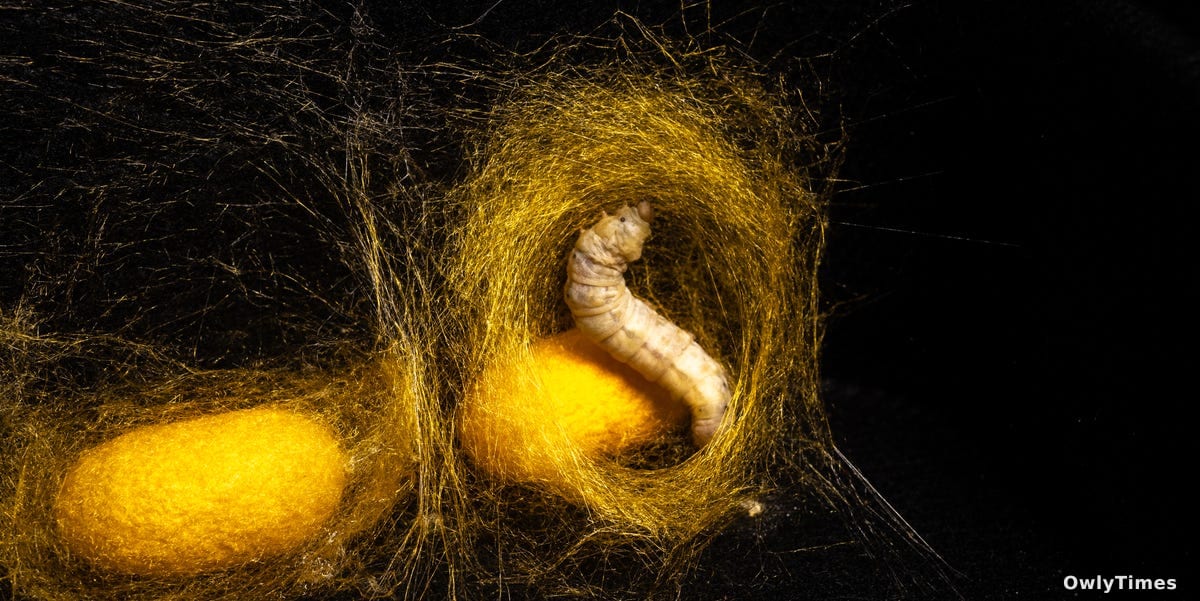
For decades, the study of aging has largely centered on organisms with longer lifespans and more complex systems, like mice and primates. However, these models are expensive, time-consuming, and often present challenges in translating findings to human biology. The silkworm, Bombyx mori, offers a compelling alternative. As the researchers noted in their study, recently published in Insect Science, the significance of NAD+ metabolism in invertebrate systems has been “underexplored.” This is despite the fact that silkworms boast a relatively short lifespan – allowing for quicker experimental turnaround – and, crucially, share surprising genetic similarities with humans. The recent, albeit unsettling, depiction of silkworms in the film The Ugly Stepsister, showcasing their remarkable silk-spinning abilities, ironically highlights their biological complexity and potential.
Drawn from popularmechanics.com.
The Southwest University team, led by researchers seeking to establish the silkworm as a “novel model for investigating NAD+-dependent lifespan regulation,” began by comparing different silkworm strains. They discovered a clear correlation: larvae with higher levels of NAD+ consistently lived longer, and this longevity was accompanied by increased expression of the gene BmNmnat1. BmNmnat1 is a key player in the synthesis of NAD+, acting as a catalyst in the metabolic pathways that ultimately produce this vital coenzyme. NAD+ isn’t just involved in energy production; it’s critical for DNA repair, mitochondrial function, neuronal protection, and mitigating oxidative stress – all hallmarks of healthy aging.
The Critical Role of BmNmnat1
The researchers didn’t stop at observation. To definitively establish the role of BmNmnat1, they conducted genetic experiments. Silkworm larvae with BmNmnat1 “knocked out” – meaning the gene was disabled – either failed to hatch or exhibited drastically shortened lifespans after emerging. This demonstrates that BmNmnat1 isn’t merely associated with longevity, but is fundamentally required for both development and a normal lifespan. The gene’s expression wasn’t constant throughout the silkworm’s life cycle, however. It was particularly high during the late pupal stage and early adulthood, specifically in the trachea, epidermis, and midgut – tissues crucial for respiration, protection, and nutrient absorption. This suggests BmNmnat1 plays a dynamic role, responding to or even driving fluctuations in NAD+ levels as the silkworm ages.
Interestingly, the team also investigated nicotinic acid (NA), a form of vitamin B3 and a precursor to NAD+. Supplementing silkworm diets with NA dramatically increased NAD+ levels, and, crucially, appeared to reverse some effects of aging. When exposed to D-Gal, an aging inducer, silkworms treated with NA showed improved cell proliferation. Even more compelling, moths that consumed NA-enriched leaves as larvae lived significantly longer as adults. This suggests a dietary intervention could potentially modulate NAD+ levels and extend lifespan, a finding that resonates with the growing interest in NAD+ precursors as potential anti-aging supplements in humans.
Limitations to Consider and Future Directions
While these findings are promising, it’s crucial to avoid overstating their implications. Silkworms are not humans, and the specific mechanisms governing aging can differ significantly between species. The study focused on a limited number of silkworm strains, and further research is needed to determine if these results are consistent across a broader genetic diversity. Furthermore, the precise mechanisms by which BmNmnat1 regulates NAD+ levels – whether it proactively maintains levels or responds to changes – remain unclear. The observed benefits of NA supplementation were also assessed primarily through lifespan extension; more detailed analyses of healthspan – the period of life spent in good health – are needed.
The next critical step, according to the researchers, is to delve deeper into the interplay between BmNmnat1, NAD+ metabolism, and the specific cellular processes affected by aging in silkworms. Understanding how NA impacts these pathways at a molecular level will be essential. But perhaps the most exciting prospect is to identify homologous genes in mammalian systems and investigate whether similar interventions can yield comparable results. Will boosting NAD+ levels, or manipulating genes analogous to BmNmnat1, translate into meaningful improvements in human healthspan and lifespan? That’s the question researchers will be racing to answer, and the humble silkworm may just hold a key piece of the puzzle.