
The Shifting Ground Beneath the Laureate’s Feet
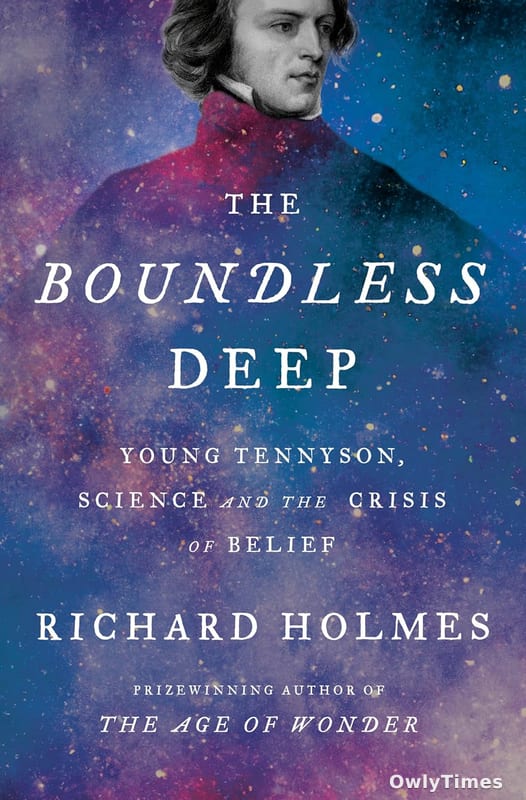
For generations, Alfred Tennyson has been the embodiment of Victorian poetic authority – the bearded figure on playing cards, the stately presence immortalized in stone at Trinity College, Cambridge. But a closer look at the poet’s formative years, as meticulously detailed in Richard Holmes’ new biography, reveals a figure far more unsettled, a mind grappling with the seismic shifts in scientific understanding that were quietly dismantling the foundations of Victorian belief. Holmes doesn’t seek to diminish the iconic image, but rather to excavate the anxieties and intellectual ferment that fueled the poetry, demonstrating how the “Laureate of England” was, in his youth, a man profoundly shaped by the era’s burgeoning geological and evolutionary thought. This isn’t simply a literary biography; it’s a portrait of a mind wrestling with a world undergoing a fundamental re-evaluation of its place in the cosmos.
Holmes begins by establishing the public perception of Tennyson – a figure of established grandeur – before turning to the surprisingly fragile core of the young poet. He highlights the contrast between the imposing statue at Cambridge, alongside giants like Isaac Newton and Francis Bacon, and the internal struggles of a young man emerging from a deeply troubled family. The author emphasizes that Tennyson wasn’t necessarily the most immediately promising of his three poetically inclined brothers at Cambridge, a detail that subtly challenges the narrative of inevitable genius. This framing is crucial because it underscores the formative influence of external pressures and internal doubts on Tennyson’s development, suggesting his success wasn’t preordained but earned through a process of intense self-scrutiny and artistic refinement. The early poem “The Kraken,” written at age twenty, serves as a compelling example, revealing not only poetic talent but also a fascination with geological forces and the anxieties they provoked.
The biography’s strength lies in its ability to connect Tennyson’s personal life to the broader intellectual currents of the Victorian era. Holmes demonstrates how Tennyson eagerly absorbed the new scientific discoveries of his time, particularly the work of Charles Lyell on geology and the implications of a deep, evolving Earth. This wasn’t passive consumption; the timeline of the planet’s development, and the fossil record it revealed, directly challenged fundamental religious assumptions, creating a crisis of faith that resonated deeply with Tennyson and informed the cyclical themes of destruction and renewal in poems like In Memoriam, Maud, and Idylls of the King. It’s important to note that while Charles Darwin was a contemporary at Cambridge, there’s no evidence of direct interaction between the two men. However, the idea of evolution, and the questions it raised about humanity’s place in the natural world, clearly permeated Tennyson’s thinking.
This piece references the calirb.com report.
Tennyson’s intellectual life wasn’t lived in isolation. Holmes skillfully portrays the network of friendships and rivalries that shaped the poet’s development. The complex relationship with Edward FitzGerald, translator of The Rubáiyát of Omar Khayyám, is particularly compelling. FitzGerald served as both a close friend and a brutally honest critic, pushing Tennyson to refine his work. This dynamic, alongside connections to figures like William Makepeace Thackeray, Thomas Carlyle, and the Brownings, reveals a vibrant intellectual community where ideas were fiercely debated and artistic boundaries were constantly being tested. However, the most devastating relationship of Tennyson’s youth was undoubtedly with Arthur Hallam, whose sudden death at twenty-two triggered a prolonged period of grief and ultimately led to the creation of In Memoriam A.H.H., a monumental elegy that took nearly two decades to complete.
The year 1850 emerges as a pivotal turning point. Tennyson finally published In Memoriam, a work initially held back by his anxieties about its religious implications, and simultaneously secured the hand of Emily Sellwood, a woman whose steadfast faith provided a crucial anchor during his periods of depression and “weird seizures,” as he described them to her. The stillbirth of their first son further tested their resilience, but ultimately strengthened their bond. This personal transformation coincided with a professional one: the death of William Wordsworth in April of that year led to Tennyson’s reluctant acceptance of the position of Poet Laureate. This marked a shift from the insecure young poet seeking recognition to the established national figure, a transition that, while bringing prestige and financial security, also carried the weight of public expectation. The question now becomes: how much of the “official” Tennyson – the patriotic verse writer and Lord Tennyson – was a genuine expression of his evolving beliefs, and how much was a performance dictated by his new role? Future research might explore the subtle tensions between his private anxieties and his public pronouncements, revealing a more nuanced understanding of the man behind the iconic image.