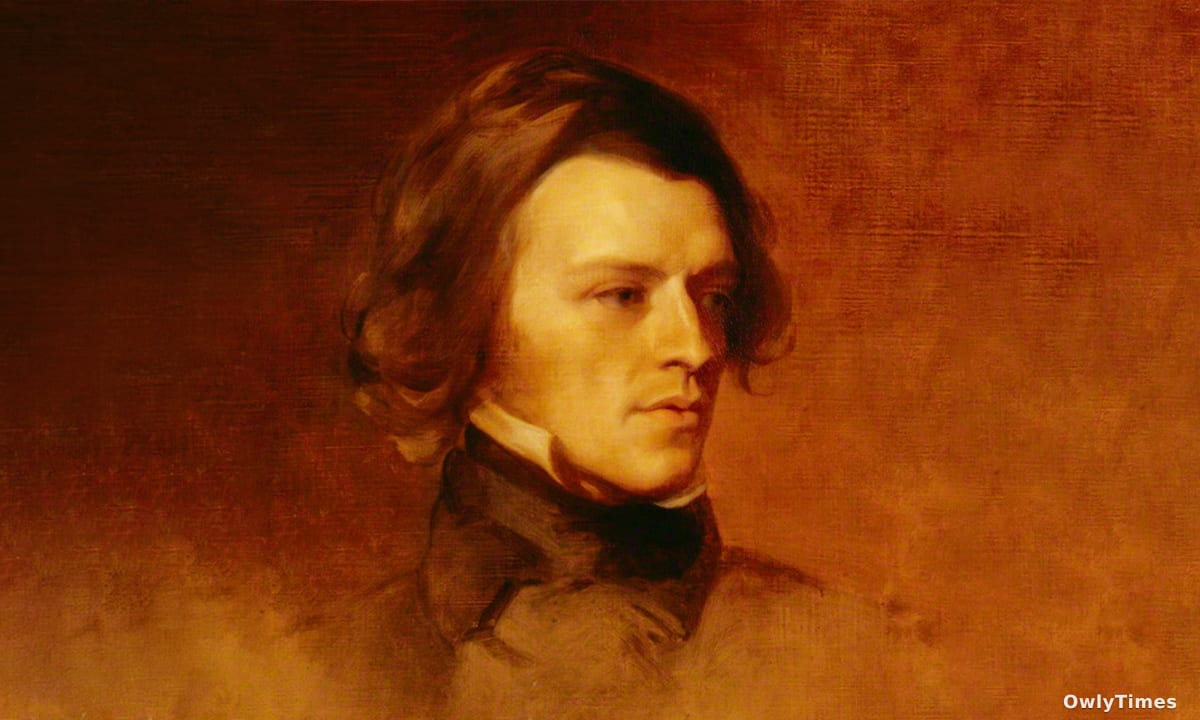

The enduring narrative of a rift between science and the humanities – the “two cultures” – often casts Victorian poet Alfred Lord Tennyson as a figure firmly planted in the realm of sentiment, distant from the burgeoning scientific revolution. But a closer look, prompted by a seemingly idle observation decades ago, reveals a surprisingly intimate connection between the poet’s work and the seismic shifts in 19th-century scientific thought. This isn’t simply a story of influence, but a demonstration of how grappling with radical new understandings of the natural world fundamentally reshaped the emotional and philosophical landscape of the era, and found its most resonant expression in poetry read by tens of thousands. The current interest in bridging STEM and the humanities isn’t new; it’s a revisiting of a conversation that was already happening, powerfully, in the Victorian age.
While researching the interplay between Romantic poets and scientists in 2001, biographer Richard Holmes found himself repeatedly passing a statue of Tennyson at Trinity College, Cambridge. The imposing figure felt, as Holmes recalled, “monolithic, like he had nothing to do with anything.” This initial impression sparked a question: what lay beneath the image of the established, often-memorized poet of “The Charge of the Light Brigade”? Holmes’ subsequent investigation, culminating in his recently published The Boundless Deep: Young Tennyson, Science, and the Crisis of Belief, reveals a young man deeply engaged with the scientific debates of his time, and whose poetry became a crucial vehicle for processing their implications. It’s a corrective to the idea that science displaced art, demonstrating instead how scientific discovery actively fueled artistic creation.
Holmes’ research highlights the surprisingly porous boundaries between scientific and artistic circles in the early 19th century. Figures like chemist Humphry Davy, known for his self-experimentation with nitrous oxide, fostered a collaborative spirit, believing that “imagination, as well as the reason, is necessary to perfection in the philosophic mind.” This wasn’t merely social mingling; it was a shared intellectual project. The poets – Byron, Shelley, Coleridge – weren’t simply aware of scientific advancements in astronomy, chemistry, and electricity; they actively incorporated these revelations into their work, amplifying both the beauty and the terror of a rapidly changing worldview. Coleridge’s famous poem “Kubla Khan,” for example, echoes the “unmingled pleasure” he experienced while experimenting with Davy’s nitrous oxide, a precursor to anesthesia.
However, it’s crucial to understand what Holmes’ work doesn’t claim. This isn’t a case of Tennyson directly translating scientific findings into verse. Rather, Holmes demonstrates how Tennyson’s poetry served as a barometer for the anxieties and existential questions provoked by scientific upheaval. The work of geologist Charles Lyell, particularly his Principles of Geology, proved particularly influential. Lyell’s assertion that species were not immutable, but subject to extinction, challenged the prevailing religious understanding of creation and humanity’s place in the universe. This wasn’t a comfortable realization, and Tennyson’s poetry, especially his lengthy elegy In Memoriam, became a space to grapple with the implications of a universe governed by natural laws rather than divine intervention. The poem sold 60,000 copies in 1850 – a staggering number for poetry at the time – indicating a widespread public hunger to process these unsettling ideas.
Original reporting: nautil.us.
It’s important to acknowledge the limitations to consider when interpreting this historical relationship. Holmes’ own biographical approach, detailed in his 1985 book Footsteps, intentionally blurs the lines between subject and researcher, incorporating his own experiences – like revisiting the North Sea coast that inspired Tennyson – into the narrative. While this adds a layer of personal resonance, it also introduces a degree of subjectivity. Furthermore, focusing on Tennyson, a relatively privileged figure, risks overlooking the diverse ways in which scientific advancements were experienced and understood across different social strata. The “crisis of belief” wasn’t uniformly felt, and its impact varied significantly depending on one’s social position and religious convictions.
The enduring significance of Holmes’ work lies in its demonstration that the tension between science and the humanities isn’t an inherent condition, but a historically contingent one. Tennyson’s poetry, born from a period of intense scientific and intellectual ferment, offers a powerful reminder of the human need to make sense of a changing world. The next crucial research step is to broaden this investigation, examining how other Victorian artists and writers responded to scientific discoveries, and how these responses shaped public understanding of science itself. We should be asking: if Tennyson captured the metaphysical crisis of his era, what contemporary artists are grappling with the ethical and existential challenges posed by our current scientific revolutions – in fields like artificial intelligence, genetic engineering, and climate science? – and how will their work shape our collective future?