
How do we begin to map the chaotic architecture of solar systems beyond our own? For decades, the search for exoplanets has often been framed as a hunt for a "second Earth," but recent findings suggest the true value of our interstellar neighborhood lies in the "weird systems"—those that defy the orderly, predictable configurations of our own planetary home.
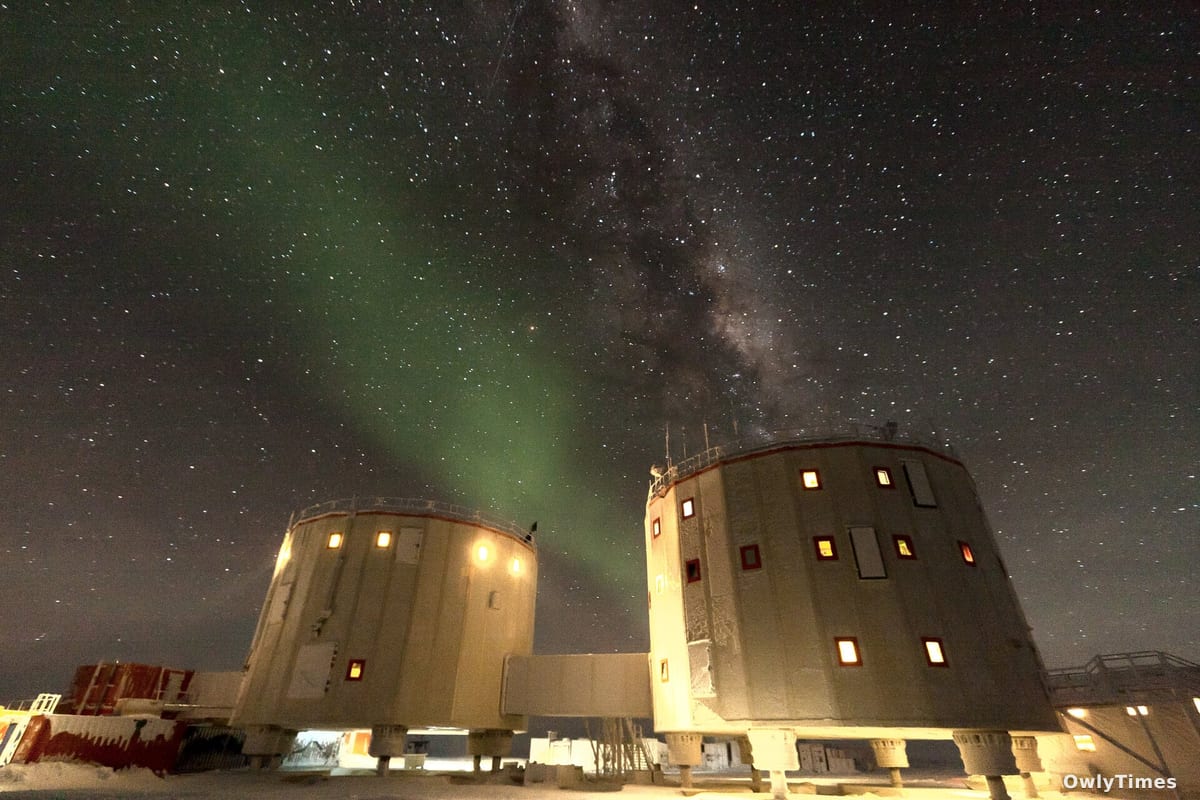
A research effort led by Tristan Guillot of the Observatoire de la Côte d’Azur has turned its attention to the high Antarctic plateau, a site typically bypassed by traditional astronomy. Using the ASTEP (Antarctic Search for Transiting ExoPlanets) telescope, a 40-cm instrument located some 1200km inland, the team has been monitoring the dimming of stars caused by orbiting bodies. By utilizing visible photometry, ASTEP has contributed to the discovery of twenty to thirty transiting extrasolar planets, proving that even the harshest environments on Earth can offer a unique vantage point for peering into the deep cosmos.
The team’s most recent breakthrough, the characterization of the TOI-201 system, challenges our current models of planetary stability. This system orbits an F-spectral type star that is 30 percent more massive and 30 percent larger than our Sun. While the Sun is a mature star, TOI-201 is remarkably young, estimated at only 600 million years old. The system features a "super Earth" six times the mass of Earth on a 5.8-day orbit, a gas giant half the mass of Jupiter on a 53-day orbit, and a brown dwarf—an object 15 times the mass of Jupiter—on a highly elliptical 7.9-year trajectory.
It is important to distinguish the actual scientific findings from the frequent, overly optimistic media claims regarding habitability. While headlines often focus on the search for life-sustaining worlds, the TOI-201 system is, as Guillot notes, "hardly going to be habitable." The real discovery here is dynamic: these objects are gravitationally interacting on orbits that are shifting rapidly enough to be observed in real time. For researchers at the University of Birmingham, the Observatoire de la Côte d’Azur, and the European Space Agency, this system serves as a laboratory for understanding how planetary hierarchies form and eventually stabilize.
Limitations to consider in this research involve the current reach of our detection technology. Of the 7,000-plus extrasolar planets discovered to date, most do not transit their stars, which limits our ability to perform transmission spectroscopy to analyze their atmospheres. Furthermore, as Guillot explains, while we can detect the mass and radius of these bodies, we currently lack the data to determine their specific compositions, leaving the presence of liquid water or biological ingredients as a matter of speculation rather than empirical fact.
The next steps for the team involve upgrading the ASTEP hardware to enhance observational precision. Guillot plans to mount the telescope on a ten-meter tower at the Concordia research station to mitigate the atmospheric interference caused by the ice, with hopes of eventually securing a larger telescope for the site. The continued monitoring of the orbital shifts within the TOI-201 system will act as the primary metric for success; the rate at which these gravitational interactions evolve will dictate our fundamental understanding of how solar systems mature and whether the "failed stars" known as brown dwarfs fundamentally alter the potential for life in their proximity.