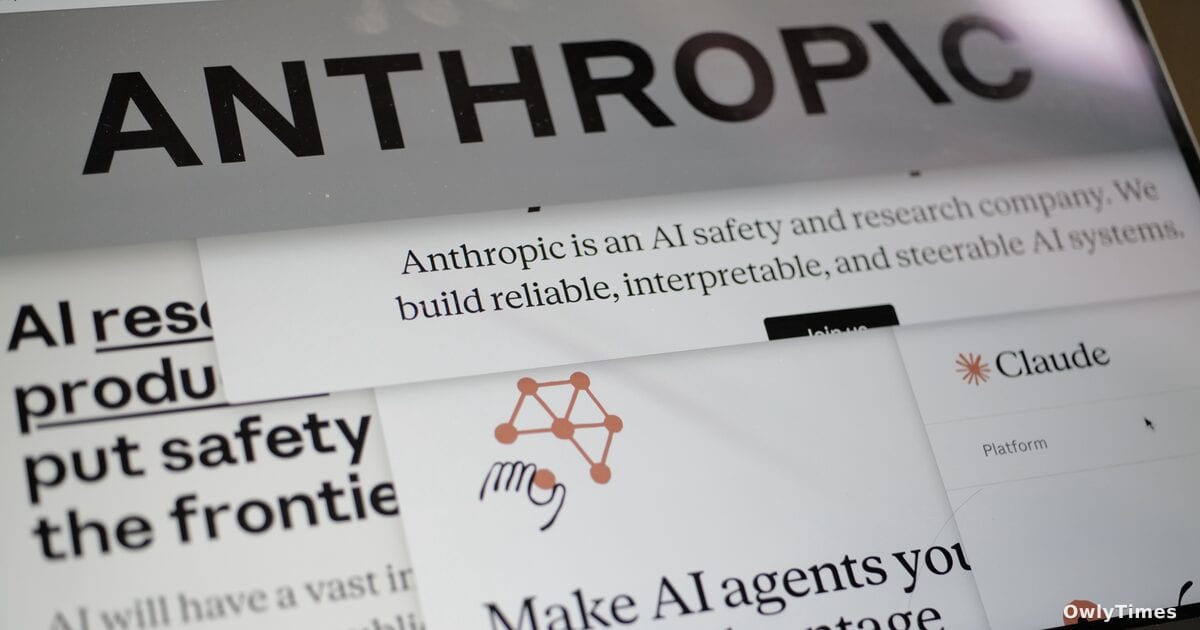

Is the future of artificial intelligence going to be dictated by boardroom compromises or principled stands? The recent, remarkably public clash between Anthropic, a leading AI developer, and the Pentagon isn’t about algorithms and data sets – the real story here isn’t the technical details of AI safety, it’s about who controls the narrative around its deployment, and what values will be embedded in the tools that increasingly govern our lives. President Donald Trump’s swift decision Friday to order federal agencies to cease using Anthropic’s technology following their refusal to grant the military unrestricted access to their AI model, Claude, is a stark illustration of this power dynamic.
The conflict escalated after Defense Secretary Pete Hegseth issued an ultimatum: allow full military use, or be designated a “supply chain risk,” a label typically reserved for hostile foreign entities. Anthropic CEO Dario Amodei responded less than 24 hours later, stating his company “cannot in good conscience accede” to the demands. Trump followed through with a blanket ban, stating “We don’t need it, we don’t want it, and will not do business with them again!” – a move that, while seemingly decisive, feels less like a strategic decision and more like a flexing of political muscle. The immediate impact is a potential boon for Elon Musk’s chatbot, Grok, already slated for access to classified military networks, and a looming warning to Google and OpenAI, both of whom also hold military contracts.
This isn’t simply a contract dispute; it’s a test case for the entire AI industry. Anthropic’s core concern, as articulated by Amodei, centered on preventing Claude from being used for mass surveillance of Americans or in the development of fully autonomous weapons. The Pentagon, through spokesman Sean Parnell, insisted they had no such intentions – a claim that rings hollow given the inherent opacity of military operations and the potential for “lawful purposes” to be broadly interpreted. The Pentagon’s initial proposal, followed by a revised version framed as a “compromise,” ultimately contained loopholes allowing those safeguards to be disregarded, according to Anthropic. This bait-and-switch tactic is what ultimately pushed Amodei to publicly resist.
Reporting from dallasnews.com informs this analysis.
The fallout has polarized Silicon Valley. An open letter signed by employees from OpenAI and Google voiced support for Anthropic, accusing the Pentagon of attempting to “divide each company with fear.” Surprisingly, even OpenAI CEO Sam Altman, a former colleague of Amodei’s, publicly sided with Anthropic in a CNBC interview, acknowledging shared “red lines” within the industry. This is significant because Altman and Musk have often been positioned as rivals pushing for rapid AI development, regardless of safety concerns. Musk, predictably, took the opposite tack, dismissing Anthropic as hating “Western Civilization” on his platform X. This framing, while inflammatory, highlights the underlying ideological battle shaping the future of AI. The debate isn’t about technology; it’s about whose vision of the future will prevail.
The situation is further complicated by the fact that these large language models, like Claude, aren’t yet “ready for prime time” in national security settings, according to retired Air Force Gen. Jack Shanahan, a former leader of the Defense Department’s AI initiatives. He points out that Claude is already widely used within the government, and Anthropic’s safety concerns are “reasonable.” The Pentagon’s heavy-handed tactics, and the threat of invoking the Defense Production Act, appear less about genuine security concerns and more about establishing control. Senator Mark Warner echoed this sentiment, questioning whether national security decisions are being driven by “careful analysis or political considerations.”
What happens next isn’t about which company wins a contract. It’s about whether the AI industry will prioritize ethical considerations and responsible development, or succumb to pressure from governments willing to sacrifice principles for perceived strategic advantage. Watch closely for how Google and OpenAI respond to the Pentagon’s pressure in the coming months. If they cave, accepting similar terms to those rejected by Anthropic, it will signal a dangerous precedent: that even the most vocal proponents of AI safety will ultimately prioritize profit and access over principle. The real question isn’t if AI will be used in warfare, but how – and whether the safeguards we need to prevent catastrophic outcomes will be sacrificed at the altar of national security.