
Beyond Aid: A Shift in US-Madagascar Health Partnership
The recent signing of a $175 million, five-year health Memorandum of Understanding (MoU) between the United States and Madagascar, finalized in December 2025 and now entering its implementation phase with a joint review in Antananarivo, isn’t simply a continuation of foreign aid. It represents a deliberate recalibration of the relationship, one framed not as dependency, but as “mutual health security” and, crucially, Madagascar’s path toward “self-reliance.” While headlines focus on the financial commitment – $134,305,000 from the US Government and $41,216,252 from Madagascar – the underlying strategy, articulated as the “America First Global Health Strategy,” signals a significant shift in how the US approaches global health partnerships. This isn’t about writing checks; it’s about building capacity and, according to the framework, ensuring accountability for results.
Drawn from mg.usembassy.gov.
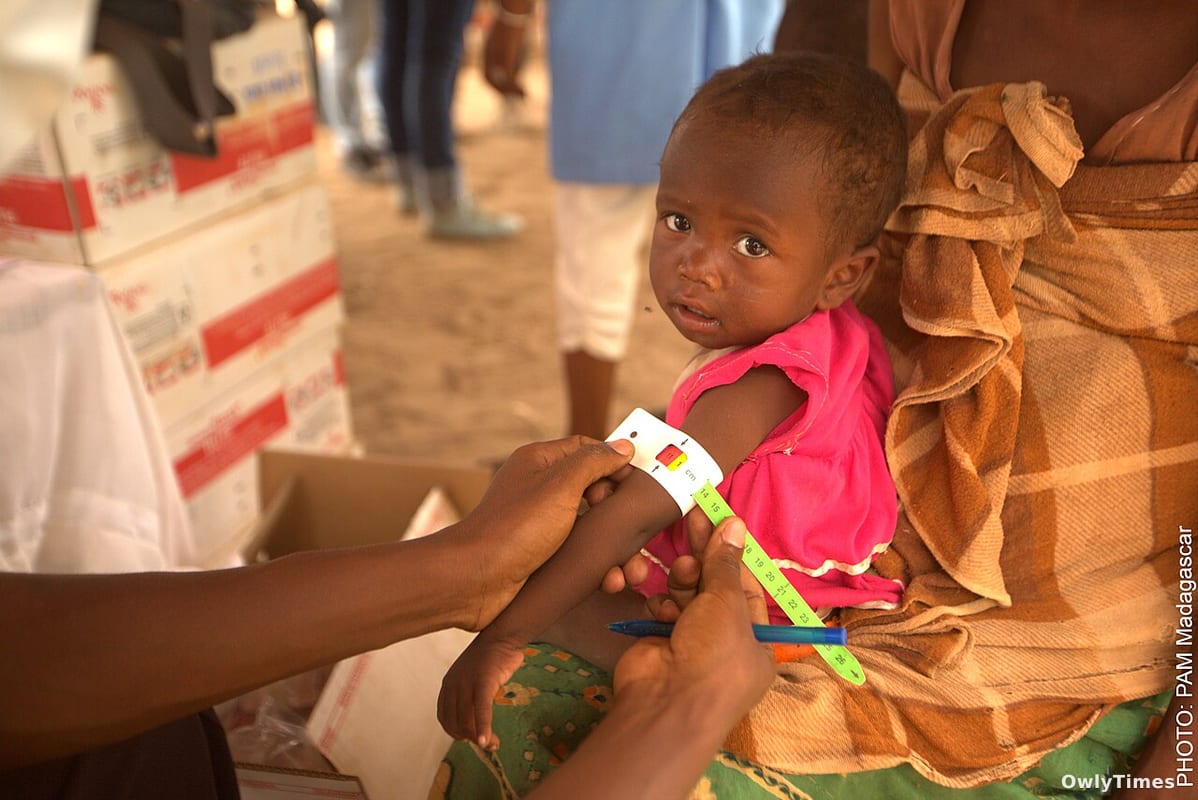
The core of this new approach lies in a re-evaluation of existing programs. Chargé d’Affaires Stephanie Arnold emphasized at the workshop’s opening that the joint review of seven US-funded health programs is intended to “maximize the effectiveness and impact” and ensure “resources provided by U.S. taxpayer dollars are used wisely.” This focus on efficiency and demonstrable outcomes is a departure from previous models often criticized for lacking rigorous performance monitoring. The programs themselves target critical areas: malaria, maternal and child health, polio eradication, and bolstering global health security. However, the emphasis isn’t solely on direct service delivery. The MoU explicitly prioritizes strengthening Madagascar’s own health systems, including its “human resource capacity,” with the stated goal of reducing reliance on external assistance. This is a nuanced objective, as complete independence from aid is rarely achievable, but the intention to foster sustainable, locally-driven solutions is clear.
This emphasis on self-reliance is particularly noteworthy given the recent political shifts within Madagascar. The US government explicitly acknowledges the opportunity for strengthened governance and improved performance under new leadership, framing the MoU as a catalyst for positive change. This acknowledgement, while diplomatic, subtly underscores a conditionality inherent in the partnership: US investment is contingent on Madagascar’s commitment to responsible stewardship of its own healthcare resources. The $41.2 million contribution from the Malagasy government isn’t merely a financial component; it’s a demonstration of that commitment. To put this in perspective, Madagascar’s total health expenditure in 2023 was estimated at 7.8% of its GDP, a figure lower than the African regional average of 9.3%. This MoU, therefore, represents a substantial allocation of resources within a constrained national budget, highlighting the priority placed on health by the current administration.
However, the “America First” framing of the strategy introduces a tension. While the stated goal is mutual benefit – a healthier Madagascar contributing to global health security and, consequently, a healthier US – the language inherently prioritizes US interests. Arnold’s statement that supporting Madagascar’s disease detection capabilities “benefits communities both here and in the United States” frames the partnership through the lens of US security, potentially overshadowing the intrinsic value of improving health outcomes for the Malagasy people. This isn’t necessarily detrimental, but it’s a framing that warrants scrutiny. Furthermore, the success of this strategy hinges on accurate and transparent performance monitoring, a challenge in contexts with limited data infrastructure and potential governance issues.
Looking ahead, the next crucial step is the detailed outcome of the joint review process. Will the recommendations prioritize strengthening primary healthcare infrastructure, or will they focus on targeted interventions like malaria bed net distribution? Will the emphasis be on training Malagasy healthcare professionals, or on importing expertise? The answers to these questions will reveal the true extent to which the MoU’s rhetoric of self-reliance translates into concrete action. More importantly, observers should track whether the promised transparency and accountability mechanisms are effectively implemented, and whether the US commitment remains consistent regardless of future political developments in either country. The real test of this partnership won’t be the initial investment, but whether Madagascar, five years from now, is demonstrably closer to owning and sustaining its own path to a healthier future.