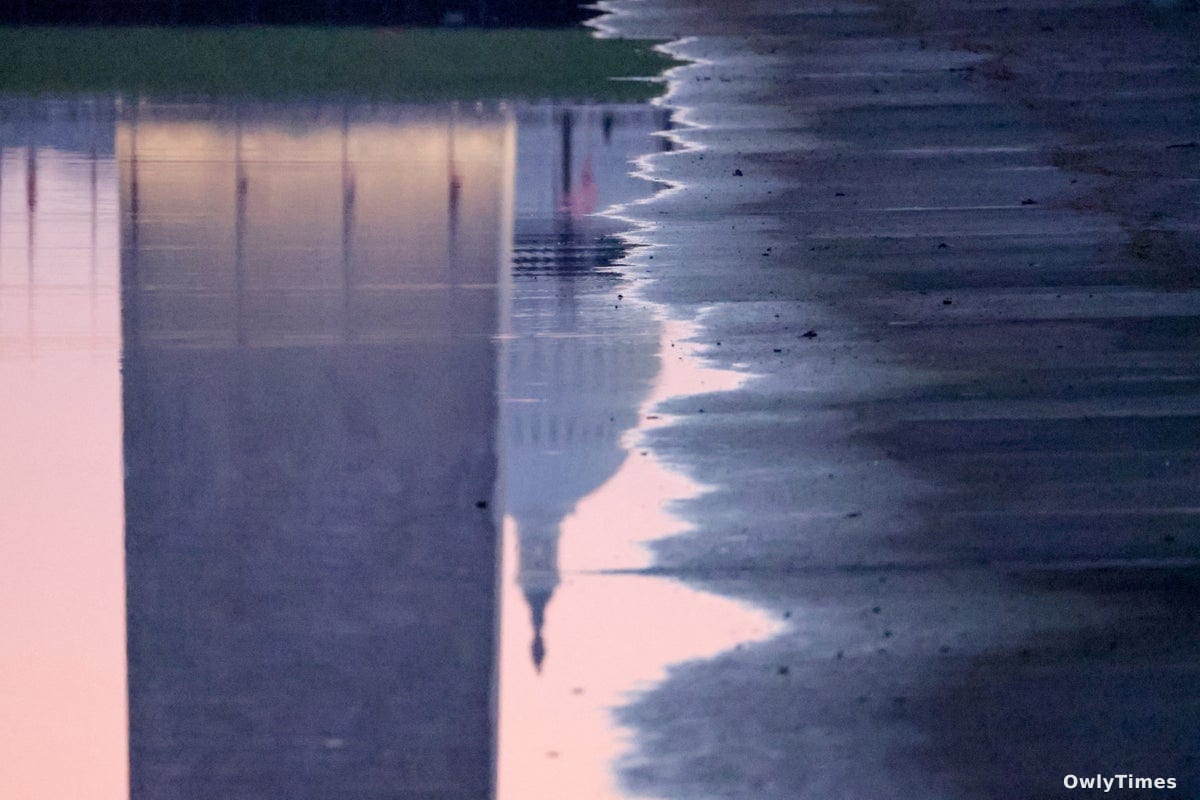

If you’ve ever tried to apply a screen protector to your phone, you know that a single bubble or a stray piece of dust can turn a premium device into an eyesore. Now, imagine that screen protector is a $16 million government contract, the "phone" is the Lincoln Memorial Reflecting Pool, and the fallout has triggered a federal criminal investigation.
The real story here isn't the political theater of "vandals" versus "incompetence"—it’s the stark disconnect between high-stakes infrastructure procurement and the reality of how these materials actually perform in the wild.
President Donald Trump recently announced that the pool has been drained yet again to address ongoing damage, claiming on Truth Social that "thugs" used knives to carve 300-yard slashes into the basin’s floor, according to The Independent. This narrative of sabotage serves as the administration's primary explanation for why the "American Flag Blue" sealant—a key part of a project totaling roughly $16.4 million in contracts—began peeling almost immediately after the pool was refilled, as reported by ABC News.
The Engineering vs. The Narrative
The administration’s account relies heavily on the assertion that external forces are to blame. CBS News notes that the National Park Service reported a June 9 incident involving a blade used on the liner, and six individuals have been arrested in connection with the pool’s damage. Among those charged is former Olympic canoeist David Hearn, who pleaded not guilty to damaging the monument. His legal defense, echoed by other critics of the project, argues that Hearn is being used as a scapegoat to deflect from the fact that the sealant was already failing.
While the President insists these "sleazebags" are responsible for the degradation, the technical reality is more nuanced. The project, which saw Atlantic Industrial Coatings receive $14.7 million for waterproofing and Green Water Solutions secure $1.7 million for purification systems, has faced a series of operational failures. ABC News reports that beyond the peeling sealant, the pool also suffered from significant algae blooms, which the President previously described as "criminally made" via the potential introduction of fertilizer.
A Pattern of Procurement Problems
The discrepancies in how this project is being managed are becoming impossible to ignore. Interior Secretary Doug Burgum confirmed that the current round of repairs will be handled by the same contractors, telling CNN that he believes they "did a fantastic job," despite mounting pressure from lawmakers like Senator Richard Blumenthal, who characterized the project as "a testament to incompetence," according to The Independent.
This situation is a classic example of what happens when a project is fast-tracked to meet a political deadline—in this case, the nation’s 250th birthday—rather than an engineering one. When you prioritize a specific aesthetic, like "American Flag Blue," over the long-term durability of the industrial materials required to keep a massive water feature clean and sealed, you aren't just wasting taxpayer money; you’re setting the infrastructure up for a cycle of failure.
The immediate future of the site remains uncertain. While the administration claims the pool will be "put back into service soon," the ongoing congressional investigations into the project's funding and the no-bid nature of the contracts suggest that the scrutiny will only intensify. Watch for the next round of court appearances for those charged with vandalism; the evidence presented during these trials will likely be the first time the public sees a forensic breakdown of whether the pool’s floor was truly "slashed" by vandals or if it simply suffered from a catastrophic failure of the applied coating.