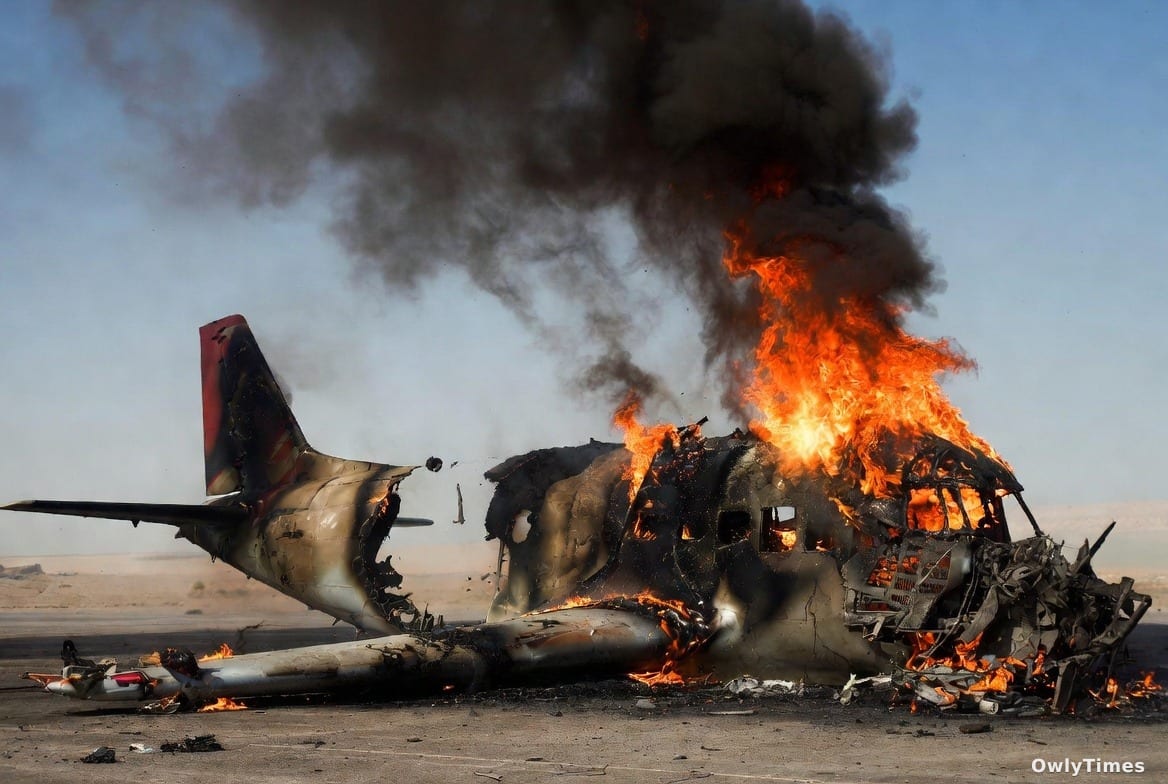

The calculated risk embedded in the recent revelation that the US military disguised a warplane as a civilian aircraft during a Venezuela drug bust isn’t about that specific operation – it’s about establishing a new, and deeply destabilizing, precedent in asymmetric warfare. While framed as a tactic in the “war on narco-terrorism,” the move, confirmed by sources to both The New York Times and Associated Press, fundamentally alters the calculus of risk in contested airspace and invites escalation through miscalculation. The strategic motivation isn’t simply to disrupt drug trafficking; it’s to normalize deception as a core component of US military operations, even if that normalization comes at the cost of civilian air travel safety.
The immediate fallout centers on the violation of the laws of war, specifically the principle of “perfidy.” The US Defense Department’s own rulebook defines perfidy as acts designed to betray trust in protections afforded under the law of war – precisely what disguising a military aircraft achieves. This isn’t a grey area of interpretation; it’s a codified prohibition, rooted in the understanding that such tactics erode the foundations of armed conflict. Kingsley Wilson, the Pentagon press secretary, offered a non-denial, stating only that the US military utilizes “a wide array of standard and nonstandard aircraft depending on mission requirements,” a statement that sidesteps the ethical and legal implications entirely. Who benefits from this ambiguity? The operational flexibility of US special forces, certainly, but at the expense of establishing a norm that any actor – state or non-state – could exploit.
The danger isn’t theoretical. The incident immediately evokes the 1988 downing of Iran Air Flight 655 by the USS Vincennes. In that case, the US Navy, operating in the Persian Gulf during heightened tensions with Iran, mistakenly identified a civilian airliner as a hostile F-14 fighter jet, resulting in the deaths of all 290 passengers and crew. The justification then, as now, hinged on “suspicion” and the perceived threat. The parallel is chillingly direct: a reliance on ambiguous identification, coupled with a hair-trigger response, can have catastrophic consequences. The US provided substantial military support to Iraq during the Iran-Iraq war, and the incident occurred amidst escalating conflict, demonstrating how easily miscalculation can occur in a volatile environment. The key difference now is that the US has intentionally created the conditions for that miscalculation to occur again, by actively blurring the lines between military and civilian aircraft.
See the original eurasiantimes.com story for the full account.
The implications extend beyond direct military confrontation. Russia has repeatedly accused Israel of similar tactics, using civilian airliners as cover during airstrikes in Syria – accusations that, while contested, highlight the vulnerability created by this type of deception. The US action, therefore, doesn’t exist in a vacuum. It validates these accusations, providing a justification for similar behavior by other actors. This creates a cascading effect, where adversaries are compelled to view all aircraft with suspicion, increasing the risk of accidental engagements. Rogue armed militants or state/non-state actors could readily adopt this tactic, further complicating airspace security.
The statement by US Secretary of War Pete Hegseth on X, while predictably supportive, underscores the underlying rationale: a willingness to accept increased risk to civilian air travel in pursuit of strategic objectives. This isn’t a matter of accidental collateral damage; it’s a calculated acceptance of that risk. The US Navy handbook explicitly warns against such actions, stating that “attacking enemy forces while posing as a civilian puts all civilians at hazard.” Yet, the operation proceeded. This contradiction reveals a clear prioritization of operational advantage over adherence to established norms of warfare. The fact that the tactic was previously forbidden by the US Air Force, due to the risk of adversaries neglecting necessary precautions, further highlights the deliberate nature of this reversal.
The political chess move to watch next isn’t a response from Venezuela, or even Iran. It’s the reaction from countries with significant commercial air traffic operating in regions with ongoing conflicts – specifically, those nations that might now feel compelled to adopt similar, equally dangerous, tactics of deception to protect their own interests. Will they publicly condemn the US action, or will they quietly begin to mirror it, further eroding the already fragile framework of international air safety? The answer to that question will determine whether this incident is an isolated lapse in judgment, or the opening move in a new era of aerial warfare.