
Beyond the Trophy Case: Long Island Science Olympiads Signal a Shift in STEM Education
The headlines celebrate victories – Great Neck South, Syosset, and Ward Melville high schools taking first place in the 2026 Long Island Regional Science Olympiads. But focusing solely on the winners obscures a more significant trend unfolding across Long Island schools: a deliberate expansion of hands-on STEM learning opportunities, extending beyond traditional classroom instruction. This year’s competition, involving roughly 150 teams throughout January and February, isn’t just about identifying bright students; it’s about cultivating a generation equipped with the practical skills and collaborative spirit demanded by a rapidly evolving technological landscape. The fact that nearly 700 teams statewide vied for a spot in the March 20-21 New York State Science Olympiad in Syracuse demonstrates a widespread commitment to this approach.
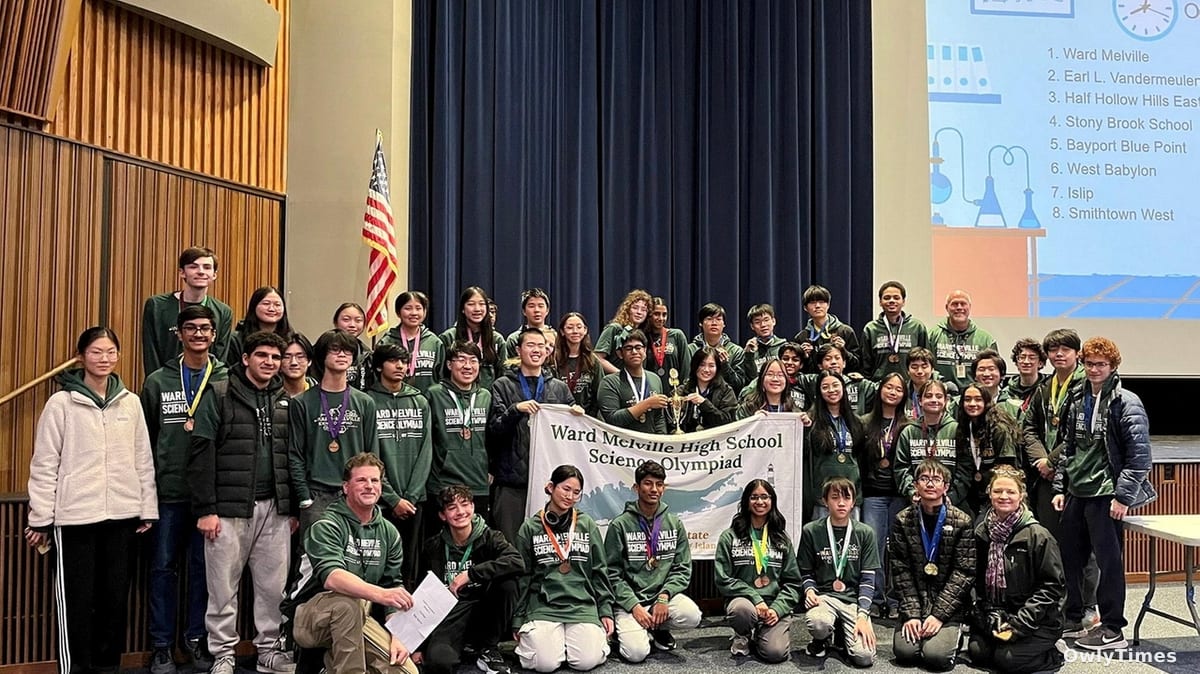
The Science Olympiad format itself is key to understanding this shift. Unlike standardized tests emphasizing rote memorization, the 23 event categories – ranging from “Astronomy” to “Electric Vehicle” and “Rocks and Minerals” – require students to do science. They build, test, analyze, and present. Todd Kettler, coach of the winning Ward Melville team, rightly points out that their success wasn’t luck, but a product of “effort, teamwork and a shared commitment to excellence,” – a formula that prioritizes process over simply achieving a correct answer. This is a departure from the historical emphasis on individual academic performance, and a move towards valuing the skills necessary for innovation. The team’s dominance in 11 of the 23 categories suggests a particularly robust and well-rounded program, but the participation of 16 other qualifying teams from across Long Island indicates a broader strengthening of STEM education.
However, it’s crucial to understand what these results don’t tell us. Qualifying for state doesn’t automatically translate to long-term STEM career paths. While participation undoubtedly fosters interest and builds skills, the socioeconomic factors influencing access to advanced STEM education remain a significant concern. Schools with greater resources can offer more specialized equipment, dedicated lab spaces, and experienced coaching – advantages not equally distributed across the region. The list of qualifying schools – Bayport-Blue Point, John F. Kennedy (Bellmore), Chaminade (Mineola), and others – largely represents districts with established reputations for strong academic programs. This isn’t to diminish the achievements of these students, but to acknowledge that opportunity isn’t universally available.
Source material: newsday.com.
Beyond the Olympiad, other initiatives highlight this proactive approach to STEM education. The Elwood Union Free School District’s new technology internship program, currently offering a single student hands-on experience in hardware diagnostics and repair, is a prime example. Christopher Onorato, the district’s director of instructional and information technology, emphasizes the program’s goal of developing “high-demand technical skills and a strong problem-solving mindset.” This focus on practical application is echoed in Mepham High School’s “Pirate for a Purpose” initiative, which encourages students to identify and address real-world problems within their community, like advocating for a speed-limit sign. These programs aren’t simply adding STEM content; they’re fostering a mindset of innovation and civic engagement.
The recent unveiling of the renovated Holocaust & Genocide Education Center at Plainview-Old Bethpage JFK High School might seem unrelated, but it underscores a critical component of responsible STEM education: ethical considerations. Superintendent Mary O’Meara highlights the center’s role in cultivating “civil-minded learners,” recognizing that scientific advancement must be guided by a strong moral compass. This integration of humanities and STEM is essential to prevent technological innovation from occurring in a vacuum, divorced from its societal implications.
Looking ahead, the expansion of the Elwood internship program to include more students will be a key indicator of its long-term viability. More importantly, we need to see data on the long-term impact of these initiatives – are students who participate in Science Olympiad and similar programs more likely to pursue STEM degrees and careers? Are they better equipped to address complex challenges? The question isn’t simply whether Long Island schools are producing science competition winners, but whether they are cultivating a diverse and skilled STEM workforce prepared to navigate the challenges – and opportunities – of the 21st century. Will these programs demonstrably close the equity gap in STEM access, ensuring that all students, regardless of background, have the chance to contribute to the future of innovation?





