
Beyond the Trophy Case: What Regional Science Olympiads Reveal About STEM Education
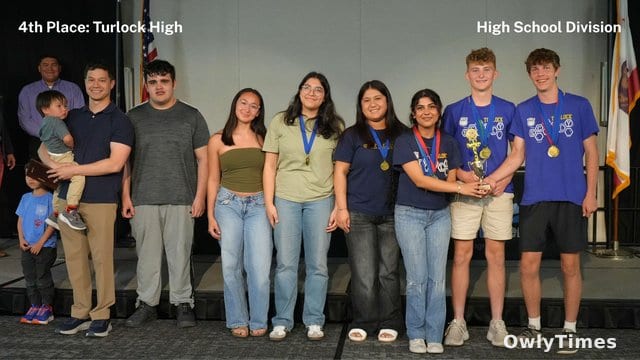
The headlines report on winners – Turlock High School’s impressive fourth-place finish and five first-place awards at the 41st Annual Stanislaus County Regional Science Olympiad on March 14th – but the true story unfolding at Modesto Junior College that day isn’t about who took home medals. It’s about a quiet, persistent effort to cultivate a specific kind of scientific thinking, one that emphasizes practical application and collaborative problem-solving, and the widening gap between where that effort is succeeding and where it’s falling short. More than 500 students, representing schools from Blaker-Kinser to Riverbank, participated, engaging in events designed to test not just recall of scientific facts, but the ability to do science. This isn’t simply about identifying future scientists; it’s about building a scientifically literate populace equipped to navigate an increasingly complex world.
A Spectrum of Skills: Decoding the Science Olympiad Format
The Science Olympiad isn’t a traditional academic competition. Events like “Boomilever” – requiring students to construct the strongest possible structure from limited materials – and “Robot Tour” demand engineering prowess and iterative design. Others, such as “Anatomy & Physiology” and “Material Science,” assess deep understanding of core scientific principles. What’s crucial to understand is the blend. Students aren’t merely memorizing the Krebs cycle; they’re applying that knowledge to diagnose a hypothetical patient. They aren’t just learning about tensile strength; they’re using it to optimize a structural design. This approach, according to event coordinator Dr. Annabelle Chen (a volunteer from a local engineering firm, as reported by event organizers), is intentionally designed to mirror the realities of modern scientific work. “The days of the lone researcher are largely gone,” she explained. “Science is now overwhelmingly a team sport, and these events force students to learn how to collaborate, delegate, and troubleshoot under pressure.” This mirrors a shift in the professional scientific landscape, where interdisciplinary teams are increasingly the norm.
Reporting from turlockjournal.com informs this analysis.
Participation Disparities: Where Are the Missing Students?
While the participation of over 500 students is encouraging, a closer look reveals a concerning pattern. The list of participating schools – encompassing both middle and high schools – demonstrates a clear concentration in certain districts and a noticeable absence from others. Schools like Our Lady of Fatima and Oakdale Charter consistently participate, while others appear less frequently or not at all. This isn’t necessarily a reflection of a lack of interest, but likely a consequence of resource allocation. Science Olympiad requires dedicated teacher time for coaching, funding for materials, and often, transportation to events. Schools facing budgetary constraints or prioritizing other academic initiatives may struggle to support these extracurricular activities. This creates an uneven playing field, potentially limiting opportunities for students in under-resourced communities to develop crucial STEM skills. The fact that Turlock High School secured a spot at the NorCal event alongside three other high school division winners is commendable, but it also highlights the need to broaden access to these opportunities.
Beyond NorCal: The Importance of Longitudinal Data
The immediate next step for Turlock High School and the other qualifying teams is the NorCal Science Olympiad on April 4th at California State University, East Bay in Hayward. However, the long-term value of events like the Stanislaus County Regional Science Olympiad lies in tracking the trajectories of these participants. Do students who consistently participate in Science Olympiad pursue STEM degrees at higher rates? Do they enter STEM careers? Are they more likely to engage in scientific literacy initiatives as adults? Currently, this kind of longitudinal data is largely absent. Collecting this information would provide invaluable insights into the effectiveness of these programs and inform strategies for improvement. It would also allow educators to demonstrate the tangible return on investment for supporting Science Olympiad and similar STEM enrichment activities.
The question we should be asking isn’t just who wins the next competition, but whether we are systematically cultivating the next generation of scientifically-minded citizens – and, crucially, ensuring that all students have the opportunity to participate in that cultivation. Will school districts prioritize equitable access to STEM enrichment programs, or will these opportunities remain concentrated in areas with existing resources? The answer will shape not only the future of scientific innovation, but the future of informed decision-making in our communities.





