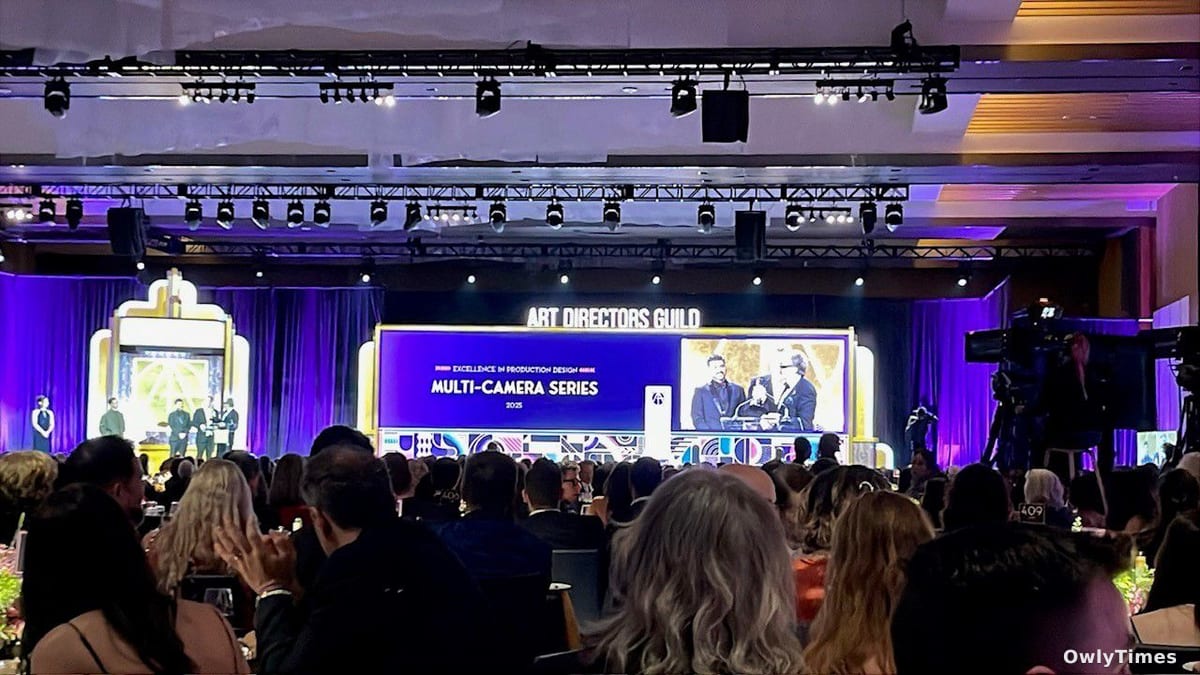

The ballroom at the InterContinental in downtown Los Angeles pulsed with a different kind of energy Saturday night. It wasn’t the flash of celebrity, though plenty of faces from the screen were present – Awkwafina, Frank Grillo, and Samba Schutte among them. It was the quiet, focused pride of artists finally having their moment. The Art Directors Guild (ADG) celebrated its 30th anniversary, but the event felt less like a retrospective and more like a declaration: the people who build the worlds we lose ourselves in are finally demanding – and receiving – their due.
This isn’t simply about handing out awards for “best set design,” though the 13 categories, spanning film, television, commercials, music videos, and shorts, certainly did that. It’s about recognizing a fundamental shift in how Hollywood understands value. For decades, production design was often seen as a supporting player, a necessary expense rather than a creative force. But as audiences become increasingly sophisticated, demanding immersive experiences, the artistry of world-building has moved to the forefront. The wins for Nathan Crowley (“Wicked: For Good”) in Fantasy Feature Film and Don MacAulay (“The Last of Us: Day One”) in One-Hour Fantasy Single-Camera Series aren’t just acknowledgements of beautiful sets; they’re validations of the emotional power of place. These designers didn’t just decorate; they constructed feeling.
Beyond the headlines of glittering gowns and acceptance speeches, the ADG’s celebration was deeply intertwined with a very real political battle. The guild honored Congresswoman Laura Friedman with its President’s Award, recognizing her tireless advocacy for state and federal tax incentives designed to keep entertainment jobs – and the massive economic impact they generate – within California. “Congresswoman Friedman’s advocacy has been resolute,” the ADG stated, pointing to her recent co-authorship of a bill with Senator Adam Schiff for a federal tax incentive. This isn’t a glamorous detail, but it’s a crucial one. The incentives aren’t about rewarding Hollywood; they’re about protecting the livelihoods of the 3,000+ members of the ADG and the countless others who rely on a thriving film and television industry. California is currently losing production to states like Georgia and Louisiana, which offer more generous tax breaks. The ADG’s public acknowledgement of Friedman’s work is a clear signal that the creative community is actively fighting to maintain its foothold in the state.
This piece references the Spectrum News report.
The choice to also honor Jon M. Chu with the Cinematic Imagery Award feels particularly pointed given the current landscape. Chu, known for visually dynamic films like “Crazy Rich Asians” and the upcoming “Wicked,” is now directing the highly anticipated Britney Spears biopic, “The Woman in Me.” This project, based on Spears’ own memoir, is poised to be a cultural moment, and Chu’s involvement suggests a commitment to visual storytelling that will amplify the emotional weight of Spears’ narrative. It’s a smart move by the ADG, aligning itself with a project that promises to be both commercially successful and culturally significant. The award isn’t just about celebrating Chu’s past work; it’s about signaling support for a future project that will undoubtedly push the boundaries of visual storytelling.
Looking at the full list of winners – from the meticulously crafted period details of “The Gilded Age” to the otherworldly landscapes of “Avatar: Fire and Ash” – a pattern emerges. The ADG isn’t simply rewarding technical skill; it’s recognizing designs that actively serve the story. This is a subtle but important distinction. In an era of increasingly sophisticated visual effects, it’s easy to get lost in spectacle. The ADG’s choices suggest a preference for designs that are grounded in narrative, that enhance the emotional impact of the story being told. This shift in emphasis has implications for the entire industry. Will studios prioritize hiring production designers who are true collaborators, artists who can contribute to the storytelling process, rather than simply executing a vision handed down from above? That’s the question everyone in the industry – and anyone who cares about the future of cinematic storytelling – should be watching closely.