
The $20 Million Bet on Late-Night’s New Format
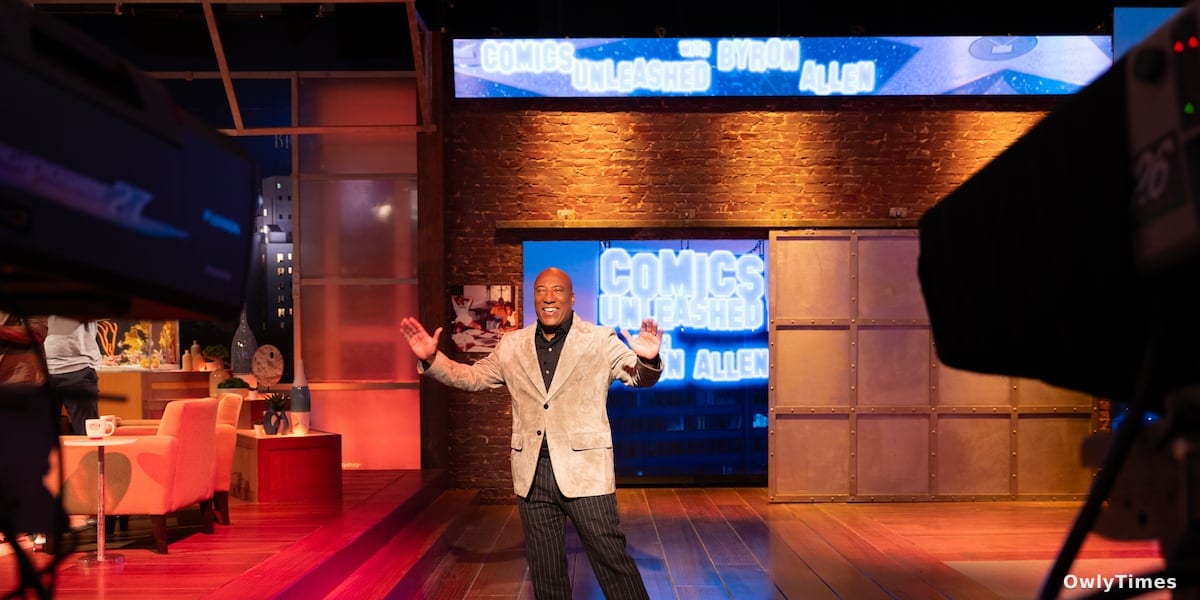
A consistent audience of 417 people, night after night, may not sound like a ratings juggernaut, but that’s precisely the core of a quietly ambitious strategy unfolding in late-night television. Byron Allen’s Comics Unleashed, airing nightly on CBS after The Late Show with Stephen Colbert, isn’t chasing the broad appeal of monologue-driven formats. Instead, it’s betting $20 million annually – a conservative estimate based on production costs for a daily show with a live audience and a rotating cast of established and emerging comedians – on a return to the roundtable comedy model, and the financial implications are far-reaching. This isn’t simply about reviving a nostalgic format; it’s a calculated move to exploit a gap in the market and challenge the dominance of traditional late-night powerhouses.
Drawn from wdbj7.com.
From Roanoke to Hollywood: The Production Value Chain
The show’s success, and its financial viability, hinges on a surprisingly lean production model. While the names attached – Adam Carolla, Chelsea Handler, Cedric the Entertainer among the 500+ performers to date – carry significant brand recognition, Comics Unleashed avoids the exorbitant costs associated with A-list hosts and elaborate sets. This is where the role of executive producer Dylan King, a James Madison University alum originally from Roanoke, becomes critical. King’s background, honed through projects like “Most Daring” and “Mr. Box Office,” demonstrates a focus on efficient production. His involvement isn’t merely creative; it’s a key component of controlling costs. Consider the economics: a typical late-night show with a major host can easily exceed $50 million in annual production expenses, driven by talent fees and elaborate staging. Comics Unleashed operates on a fraction of that budget, relying on a rotating roster and a relatively simple studio setup. This allows Allen to absorb potential losses while building a consistent, if modest, revenue stream.
CBS’s Strategic Play in a Declining Market
The decision by CBS to slot Comics Unleashed after The Late Show isn’t accidental. Late-night viewership, across all networks, has been in a steady decline for years. According to Nielsen data, total viewership for late-night programming decreased by 12% year-over-year in 2023. This decline is particularly pronounced among younger demographics, who are increasingly consuming entertainment through streaming services and short-form video platforms. Comics Unleashed represents a low-risk experiment for CBS: a relatively inexpensive program that can potentially capture a portion of the dwindling audience and offer advertisers a different demographic profile. The roundtable format, with its emphasis on diverse comedic voices, may appeal to viewers seeking an alternative to the often-political and heavily-monologued offerings of competitors. Furthermore, the show’s reliance on a rotating cast allows CBS to test different comedic styles and identify potential breakout stars, creating future content opportunities.
The Comedian Economy: A Microcosm of Industry Shifts
Beyond the network-level strategy, Comics Unleashed is also revealing about the evolving economics of stand-up comedy. The show provides a consistent platform for both established headliners and up-and-coming performers, offering valuable exposure and income. While individual comedian payouts are likely modest – estimates range from $500 to $2,000 per appearance, depending on their profile – the cumulative effect is significant. This consistent work is particularly crucial in a post-pandemic landscape where live performance opportunities remain volatile. The show effectively functions as a feeder system, boosting the visibility of lesser-known comedians and potentially leading to larger touring opportunities and streaming deals. This dynamic highlights a broader trend: the increasing importance of diversified revenue streams for comedians, moving beyond traditional stand-up gigs to include television appearances, podcasting, and digital content creation.
What This Means for Your Wallet
The success of Comics Unleashed isn’t about revolutionizing television, but about recalibrating expectations. It demonstrates that a profitable late-night show doesn’t necessarily require a massive budget or a celebrity host. For consumers, this means a potentially wider range of comedic voices and formats will emerge, challenging the dominance of established stars. More importantly, it signals a shift in advertising spending. If Comics Unleashed can consistently deliver a targeted audience, advertisers may be willing to allocate more resources to niche programming, potentially leading to lower advertising costs and, ultimately, lower prices for consumer goods. The key question now is whether Comics Unleashed can maintain its consistent viewership and demonstrate sustained profitability. Will CBS double down on this model, or will it revert to more traditional late-night strategies if ratings plateau? That’s the metric to watch – and the one that will determine whether this $20 million bet pays off.