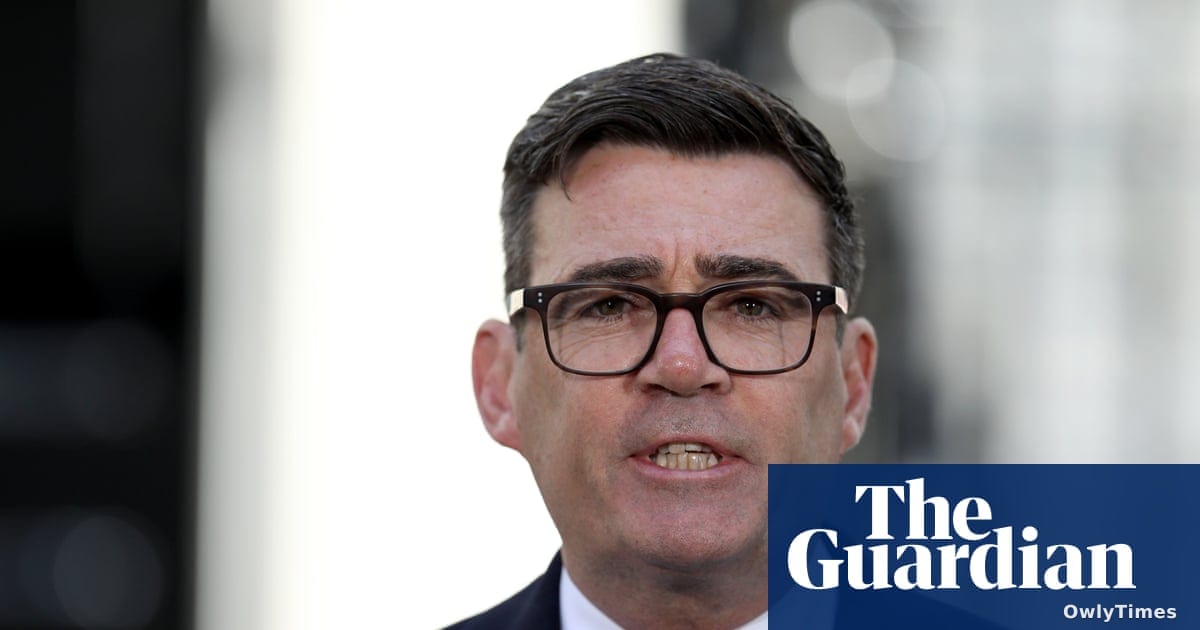

The swift replacement of Keir Starmer by Andy Burnham as Britain’s Prime Minister on July 20, 2026, represents a high-stakes survival strategy by a governing party desperate to arrest its declining public support. By elevating the former Mayor of Greater Manchester, the Labour Party is attempting a structural pivot away from metropolitan technocracy toward a regional, populist-tinged brand of social democracy. This transition, sealed when King Charles III formally invited Burnham to form a government as reported by Euronews, is less about ideological purity and more about executing a "circuit breaker" to restore public trust in a political system defined by rapid turnover at the top.
Rebuilding Power Centers and the Cabinet Chessboard
Who benefits and who loses in this sudden transition defines the immediate power dynamics of the new administration. The immediate losers are the Starmer loyalists, such as former Chancellor Rachel Reeves and Deputy Prime Minister David Lammy, both of whom were swept aside in Burnham’s first hours, as reported by The Guardian. The primary beneficiaries are regional advocates and party traditionalists, spearheaded by Louise Haigh, who takes over as First Secretary of State and Chancellor of the Duchy of Lancaster to run a beefed-up Cabinet Office. In a surprise appointment, John Healey, a 66-year-old former Treasury minister under Gordon Brown, was named Chancellor of the Exchequer, providing a "safe pair of hands" to reassure volatile financial markets. According to The Guardian, UK 10-year gilt prices dipped following Burnham's initial comments about borrowing more for infrastructure, demonstrating the delicate line Healey must walk between fiscal prudence and reindustrialization.
Other key appointments signal a strategic reallocation of administrative weight. Yvette Cooper moves from the Foreign Office to the Department of Health to tackle the social care crisis, while Angela Rayner is reappointed as housing secretary. The Guardian reports that Ed Miliband takes over as Foreign Secretary and Shabana Mahmood remains at the Home Office. This configuration consolidates power within a trusted inner circle while pacifying the party's various factions.
The King of the North and the Devolution Mandate
Burnham’s rise from regional mayor to the country's 59th Prime Minister signals a deliberate challenge to the centralized, London-centric governance model that has dominated British politics for decades. Known widely as the "King of the North" for his tenure in Manchester, the 56-year-old leader intends to relocate a portion of the executive apparatus to a "No. 10 North" office, as detailed by ABC News. His political philosophy, dubbed "Manchesterism," seeks to combine public and private investment to revitalize post-industrial communities. This approach draws a direct historical parallel to the economic restructuring of the Thatcher era in the 1980s, which Burnham explicitly criticized in his Downing Street address for centralizing power and deindustrializing large swaths of the country. To achieve this reset, Burnham must bridge his working-class roots and his education at Cambridge University, translating localized success into national policy.
Managing a Two-Front Domestic War and Global Alliances
While Burnham promises a "new politics based on unity," he inherits a deeply fragmented electorate. As analyzed by CBS News, the new prime minister faces an immediate pincer movement: the populist Reform UK party, led by Nigel Farage, is capturing working-class disaffection on the right, while the Green Party peels away progressive voters on the left. Burnham’s electoral viability was recently demonstrated when he won a special election in Makerfield to return to Parliament, but keeping the national coalition together will require immediate economic relief.
On the global stage, Burnham has quickly moved to stabilize relationships, holding phone calls with Ukrainian President Volodymyr Zelenskyy, European Union chief Ursula von der Leyen, and U.S. President Donald Trump. CBS News reports that Trump, who previously called Burnham "extremely liberal," described their discussion on trade, military issues, and the Strait of Hormuz as a "very good conversation" on social media. This diplomatic outreach is critical as the UK seeks to project stability abroad while undergoing its seventh change of leadership since 2016.
The next critical chess move to watch is how Burnham translates his rhetoric into tangible relief without triggering a market backlash. The government is scheduled to announce a fully funded cost-of-living package on Tuesday, which The Guardian notes is expected to include cuts to energy bills and bus fares. Whether Healey can fund these immediate concessions while managing the long-term target of raising military spending to 3% by 2030 will be the first true test of Burnham’s "Manchesterism" on the national stage.