
If you think digital warfare is limited to firewalls and phishing scams, consider the state of the Strait of Hormuz, where the "internet of things" has been replaced by the very real, very physical internet of tankers. The real story here isn't just the pageantry of a state funeral—it’s the brutal, high-stakes collision between 20th-century geopolitical posturing and a 21st-century global supply chain that is currently being held hostage by a "shaky" ceasefire.
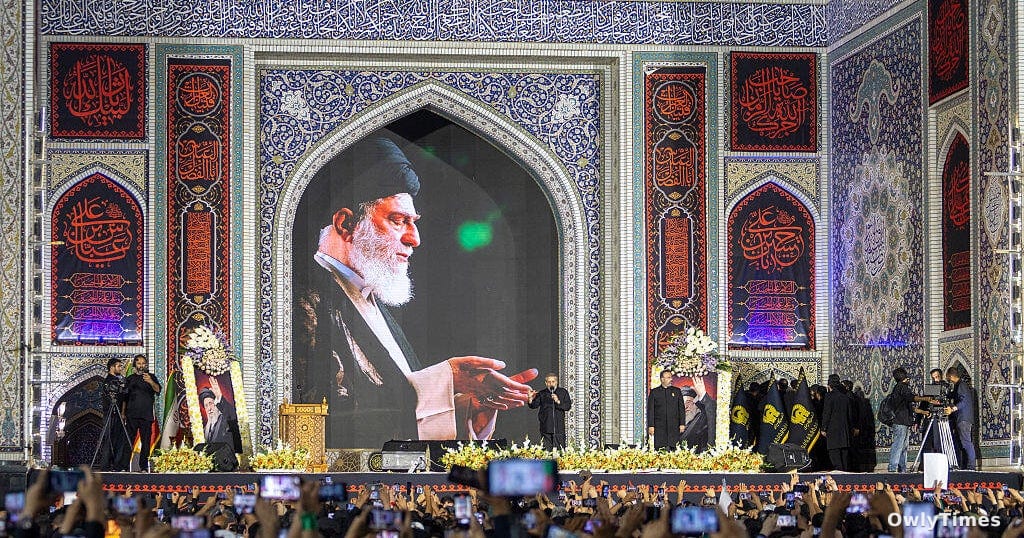
As the late Supreme Leader Ayatollah Ali Khamenei was finally laid to rest in Mashhad this Thursday, the ceremony served less as a moment of mourning and more as a backdrop for a rapid military escalation. While Euronews reports that over one million mourners were expected to attend the burial at the Imam Reza Shrine, the atmosphere was defined by a collapse in diplomatic talks. The Independent notes that Iran accused U.S. forces of striking railway bridges en route to the funeral site, disrupting passenger transit between Tehran and Mashhad.
The Strait: A Bottleneck Under Siege
For the ordinary user, the ripple effects of this tension aren't just headlines; they are reflected in the volatility of global markets. CBS News reports that U.S. Central Command data shows over 800 commercial vessels and 380 million barrels of crude oil have transited the strait since early May. However, that stability has evaporated. The Independent and CBS News both confirm that traffic has ground to a near-halt, with only two tankers recorded passing through as of early Thursday morning. Jorge Leon, head of geopolitical analysis at Rystad Energy, captured the sentiment succinctly, noting that the stoppage speaks more to "risk perception" than any official statement from Washington or Tehran.
A Ceasefire in Name Only
The friction points between the U.S. and Iran are increasingly granular. CBS News cites a U.S. official stating that President Donald Trump views the recent strikes on three tankers as "terrorism" and considers the 60-day performance-based ceasefire to have failed. Conversely, The Independent reports that Iranian officials claim the U.S. has killed 14 people and injured 78 across five provinces since Wednesday, prompting retaliatory Iranian strikes against U.S. assets in Kuwait, Qatar, and Bahrain.
The conflicting rhetoric remains a constant. While President Trump told reporters that Iran "wants to make a deal so badly," The Independent highlights that the Iranian foreign ministry views these U.S. actions as blatant "treaty violations." Meanwhile, CBS News notes that Israeli Defense Minister Israel Katz has publicly promised to respond with "even greater force" if hostilities continue, illustrating just how fragile the regional security architecture has become.
The Signal to Watch
Behind the scenes, the internal state of Iran remains as fractured as its foreign relations. ABC News provides a stark look at the domestic divide, noting that millions of Iranians have turned away from the ballot box, with the last presidential election seeing a hard-line candidate secure 13.5 million votes against 16.3 million for the reformist Masoud Pezeshkian. As the regime attempts to project strength through these funeral processions, the real-world economic pressure—surging unemployment and inflation—continues to erode the government's mandate from within.
The next measurable signal isn't a speech or a social media post; it is the physical volume of shipping through the Strait of Hormuz. If the "near-standstill" reported by The Independent persists into the coming week, expect the current "slap" of military engagement to evolve into a much wider, and far more expensive, disruption of global energy logistics.