
Beyond the Barn: Why Bridging Science and Communication is the Future of Food
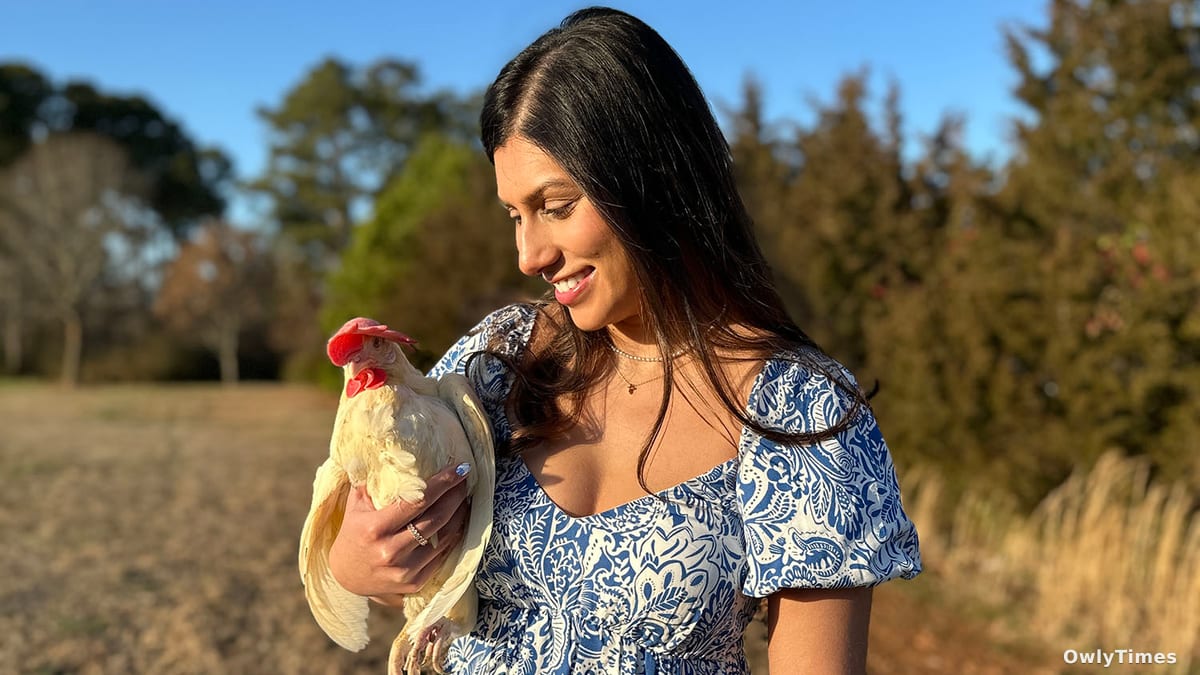
The persistent disconnect between how food is produced and how the public perceives that production is not a knowledge gap, but a communication breakdown. This is the central insight driving the doctoral research of Bhavisha Gulabrai at NC State University, and a growing area of focus within agricultural sciences. While headlines often focus on technological advancements in farming – gene editing, vertical farms, precision agriculture – the success of these innovations hinges on public acceptance, and that acceptance is built on understanding. Gulabrai’s journey, moving from animal science to food systems communication, exemplifies a shift toward recognizing that scientific progress alone isn’t enough; it must be accompanied by effective, transparent dialogue.
Gulabrai’s academic path, beginning with a bachelor’s in animal science in 2022 and followed by a master’s in poultry science in 2024, both from NC State, wasn’t initially directed toward communication. She initially focused on the “science behind food production,” as she puts it, but quickly identified a critical barrier. It wasn’t a lack of scientific rigor in agricultural practices, but a lack of public understanding of that rigor. This realization prompted a conversation with her master’s advisor, leading her to Katie Sanders, assistant professor in the Department of Agricultural and Human Sciences, and the Agricultural Communicators Program. This wasn’t a career pivot born of dissatisfaction with science, but a strategic expansion of its reach. Many researchers remain within their disciplines, publishing in peer-reviewed journals; Gulabrai is actively choosing to translate that research for broader consumption.
Source material: [cals.ncsu.edu](https://cals.ncsu.edu/news/talking-up-the-science-of-food-systems/).
The current landscape of food systems communication is fraught with challenges. Consumer trust in large agricultural corporations remains low, fueled by concerns about animal welfare, environmental impact, and food safety. Often, these concerns aren’t rooted in scientific inaccuracies, but in a lack of accessible information. A 2023 Pew Research Center study, for example, found that only 28% of Americans have a great deal of confidence in food companies, compared to 68% who have confidence in farmers. This 40-percentage-point gap highlights the need for more direct, transparent communication from those involved in food production. Gulabrai’s work, including co-hosting “The Science that Feeds Us” podcast with Sanders, directly addresses this gap, aiming to build trust through evidence-based messaging. Her dissertation research, specifically focusing on consumer perceptions of animal welfare in the laying hen industry, is a concrete example of this effort.
However, it’s crucial to understand what Gulabrai’s research isn’t claiming. It’s not a simple matter of “fixing” public perception with more facts. Her work, alongside that of Dara Bloom, associate professor of agricultural and human sciences, emphasizes the importance of qualitative research – understanding how people process information, what values influence their decisions, and what communication strategies are most effective. Gulabrai’s work with the Southern Sustainable Agriculture Research and Education Farm to Institution project demonstrates this, focusing on understanding food ordering and delivery systems from the perspectives of both farmers and institutions. This nuanced approach acknowledges that communication is a two-way street, requiring active listening and a willingness to address legitimate concerns, not simply disseminate information.
Limitations to consider include the inherent challenges of generalizing research findings. Gulabrai’s work, while valuable, is primarily focused on consumer perceptions within specific geographic regions and demographic groups. Further research is needed to determine the extent to which these findings apply to broader populations. Additionally, the effectiveness of communication strategies can vary significantly depending on the medium used and the individual receiving the message. A podcast, for example, may reach a different audience than a social media campaign or a direct-to-consumer labeling initiative.
Looking ahead, Gulabrai’s future goal – a public-facing communications role within the animal agriculture industry – is particularly significant. The industry has historically been slow to adopt proactive communication strategies, often reacting to crises rather than shaping the narrative. Her training, supported by mentors like Carrie Pickworth, Vivek Fellner, Aaron Kiess, Ken Anderson, and Allison Pullin, positions her to advocate for a more transparent and engaging approach. The critical question now is whether the industry will embrace this shift, recognizing that building public trust isn’t just a matter of public relations, but a fundamental requirement for long-term sustainability. Will we see a future where agricultural communication is valued as highly as agricultural innovation? The answer will likely determine the future of our food systems.